Category: Featured Stories

  • Silicon Valley is building a Chinese-style social credit system

    Silicon Valley is building a Chinese-style social credit system

    Have you heard about China’s social credit system? It’s a technology-enabled, surveillance-based nationwide program designed to nudge citizens toward better behavior. The ultimate goal is to “allow the trustworthy to roam everywhere under heaven while making it hard for the discredited to take a single step,” according to the Chinese government.

    In place since 2014, the social credit system is a work in progress that could evolve by next year into a single, nationwide point system for all Chinese citizens, akin to a financial credit score. It aims to punish for transgressions that can include membership in or support for the Falun Gong or Tibetan Buddhism, failure to pay debts, excessive video gaming, criticizing the government, late payments, failing to sweep the sidewalk in front of your store or house, smoking or playing loud music on trains, jaywalking, and other actions deemed illegal or unacceptable by the Chinese government.

    It can also award points for charitable donations or even taking one’s own parents to the doctor.

    Punishments can be harsh, including bans on leaving the country, using public transportation, checking into hotels, hiring for high-visibility jobs, or acceptance of children to private schools. It can also result in slower internet connections and social stigmatization in the form of registration on a public blacklist.

    China’s social credit system has been characterized in one pithy tweet as “authoritarianism, gamified.”

    At present, some parts of the social credit system are in force nationwide and others are local and limited (there are 40 or so pilot projects operated by local governments and at least six run by tech giants like Alibaba and Tencent).

    Beijing maintains two nationwide lists, called the blacklist and the red list—the former consisting of people who have transgressed, and the latter people who have stayed out of trouble (a “red list” is the Communist version of a white list.) These lists are publicly searchable on a government website called China Credit.

    The Chinese government also shares lists with technology platforms. So, for example, if someone criticizes the government on Weibo, their kids might be ineligible for acceptance to an elite school.

    Public shaming is also part of China’s social credit system. Pictures of blacklisted people in one city were shown between videos on TikTok in a trial, and the addresses of blacklisted citizens were shown on a map on WeChat.

    Some Western press reports imply that the Chinese populace is suffocating in a nationwide Skinner box of oppressive behavioral modification. But some Chinese are unaware that it even exists. And many others actually like the idea. One survey found that 80% of Chinese citizens surveyed either somewhat or strongly approve of social credit system.

    It can happen here

    Many Westerners are disturbed by what they read about China’s social credit system. But such systems, it turns out, are not unique to China. A parallel system is developing in the United States, in part as the result of Silicon Valley and technology-industry user policies, and in part by surveillance of social media activity by private companies.

    Here are some of the elements of America’s growing social credit system.

    Insurance companies

    The New York State Department of Financial Services announced earlier this year that life insurance companies can base premiums on what they find in your social media posts. That Instagram pic showing you teasing a grizzly bear at Yellowstone with a martini in one hand, a bucket of cheese fries in the other, and a cigarette in your mouth, could cost you. On the other hand, a Facebook post showing you doing yoga might save you money. (Insurance companies have to demonstrate that social media evidence points to risk, and not be based on discrimination of any kind—they can’t use social posts to alter premiums based on race or disability, for example.)

    The use of social media is an extension of the lifestyle questions typically asked when applying for life insurance, such as questions about whether you engage in rock climbing or other adventure sports. Saying “no,” but then posting pictures of yourself free-soloing El Capitan, could count as a “yes.”

    PatronScan

    A company called PatronScan sells three products—kiosk, desktop, and handheld systems—designed to help bar and restaurant owners manage customers. PatronScan is a subsidiary of the Canadian software company Servall Biometrics, and its products are now on sale in the United States, Canada, Australia, and the United Kingdom.

    PatronScan helps spot fake IDs—and troublemakers. When customers arrive at a PatronScan-using bar, their ID is scanned. The company maintains a list of objectionable customers designed to protect venues from people previously removed for “fighting, sexual assault, drugs, theft, and other bad behavior,” according to its website. A “public” list is shared among all PatronScan customers. So someone who’s banned by one bar in the U.S. is potentially banned by all the bars in the U.S., the U.K., and Canada that use the PatronScan system for up to a year. (PatronScan Australia keeps a separate system.)

    Judgment about what kind of behavior qualifies for inclusion on a PatronScan list is up to the bar owners and managers. Individual bar owners can ignore the ban, if they like. Data on non-offending customers is deleted in 90 days or less. Also: PatronScan enables bars to keep a “private” list that is not shared with other bars, but on which bad customers can be kept for up to five years.

    PatronScan does have an “appeals” process, but it’s up to the company to grant or deny those appeals.

    Uber and Airbnb

    Thanks to the sharing economy, the options for travel have been extended far beyond taxis and hotels. Uber and Airbnb are leaders in providing transportation and accommodation for travelers. But there are many similar ride-sharing and peer-to-peer accommodations companies providing similar services.

    Airbnb—a major provider of travel accommodation and tourist activities—bragged in March that it now has more than 6 million listings in its system. That’s why a ban from Airbnb can limit travel options.

    Airbnb can disable your account for life for any reason it chooses, and it reserves the right to not tell you the reason. The company’s canned message includes the assertion that “This decision is irreversible and will affect any duplicated or future accounts. Please understand that we are not obligated to provide an explanation for the action taken against your account.” The ban can be based on something the host privately tells Airbnb about something they believe you did while staying at their property. Airbnb’s competitors have similar policies.

    It’s now easy to get banned by Uber, too. Whenever you get out of the car after an Uber ride, the app invites you to rate the driver. What many passengers don’t know is that the driver now also gets an invitation to rate you. Under a new policy announced in May: If your average rating is “significantly below average,” Uber will ban you from the service.

    WhatsApp

    You can be banned from communications apps, too. For example, you can be banned on WhatsApp if too many other users block you. You can also get banned for sending spam, threatening messages, trying to hack or reverse-engineer the WhatsApp app, or using the service with an unauthorized app.

    WhatsApp is small potatoes in the United States. But in much of the world, it’s the main form of electronic communication. Not being allowed to use WhatsApp in some countries is as punishing as not being allowed to use the telephone system in America.

    What’s wrong with social credit, anyway?

    Nobody likes antisocial, violent, rude, unhealthy, reckless, selfish, or deadbeat behavior. What’s wrong with using new technology to encourage everyone to behave?

    The most disturbing attribute of a social credit system is not that it’s invasive, but that it’s extralegal. Crimes are punished outside the legal system, which means no presumption of innocence, no legal representation, no judge, no jury, and often no appeal. In other words, it’s an alternative legal system where the accused have fewer rights.

    Social credit systems are an end-run around the pesky complications of the legal system. Unlike China’s government policy, the social credit system emerging in the U.S. is enforced by private companies. If the public objects to how these laws are enforced, it can’t elect new rule-makers.

    An increasing number of societal “privileges” related to transportation, accommodations, communications, and the rates we pay for services (like insurance) are either controlled by technology companies or affected by how we use technology services. And Silicon Valley’s rules for being allowed to use their services are getting stricter.

    If current trends hold, it’s possible that in the future a majority of misdemeanors and even some felonies will be punished not by Washington, D.C., but by Silicon Valley. It’s a slippery slope away from democracy and toward corporatocracy.

    In other words, in the future, law enforcement may be determined less by the Constitution and legal code, and more by end-user license agreements.


    via Fast Company https://ift.tt/2Pa0dmX
  • Pete Santilli Publishes White Paper – Cure For Google’s “Algorithmic Discrimination” Psychosis

    Pete Santilli Publishes White Paper – Cure For Google’s “Algorithmic Discrimination” Psychosis

    Some crackpot Silicon Valley-ite had the bright idea of hiring privacy and psychology experts to write a paper on how to treat “Algorithmic Discrimination” caused by Google.

    I read the entire document & shook my head.

    What a worthless bunch of overpaid mentards.

    Algorithmic Discrimination From an Environmental Psychology Perspective Stress-Inducing Differential Treatm… by Pete Santilli on Scribd

    I decided to write my own paper to solve the problem.  Read the document below: (Disclaimer: I called it a white paper to trigger the Libtards into calling me a racist…which I’m not.)

    Pete Santilli’s “White Paper” – ALGORITHMIC DISCRIMINATION by Pete Santilli on Scribd

  • Big Tech Firms Meet With “World Leaders” To Talk About The New Internet Government

    Big Tech Firms Meet With “World Leaders” To Talk About The New Internet Government

    Judging by how they’ve conducted themselves thus far, do we really want Tech Giants anywhere near decisions having to do with our online content?

    Every time we see a major “terrorist event”; we plug our ears for the secondary explosion of tyrants who subscribe to the adage “you never want a good crisis to go to waste”.  Governments and corporations wasted no time after the New Zealand mosque shooting to begin gun-grabbing, propagandizing on behalf of the Islamic political lobby (yes, it’s a major political movement wrapped in a religion — so that we can’t talk about it without being called “Islamo-phobic”)

    Now we see phase 3 of the marxist plan for seizing global dominance: internet government.  Mind you; these marxist sling the word “democracy” around in the public rhealm while they meet behind closed doors with an unelected body of Tech Giant leaders to install tyranny

    This is likely why President Trump’s administration opted out of these secret meetings; because as long as Trump is President, we will remain a Constitutional Republic.

    I can honestly say that this one snuck up on me.  Hat tip to Faith Goldy for bringint it to my attention.


    The internet bridges divides and helps us build a more open, inclusive world. But it has also increasingly become a tool for terrorism and violent extremism. The March 2019 terror attack in Christchurch was a harrowing reminder that we need to take coordinated action to prevent social media and other online platforms from being used as a tool to incite, publish and promote terrorism, violence, and hatred.

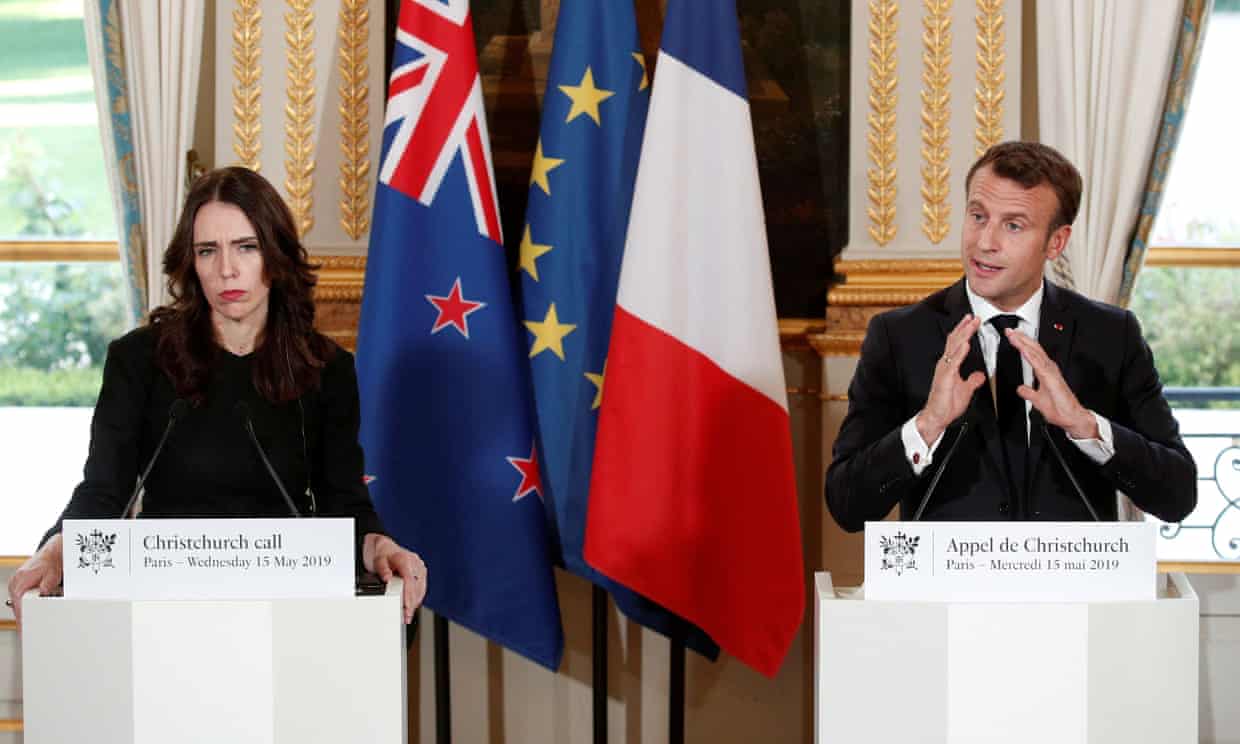
    Today, Prime Minister Justin Trudeau joined Prime Minister of New Zealand Jacinda Ardern, President of France Emmanuel Macron, other government leaders, and industry leaders to adopt the Christchurch Call to Action – a global pledge to eliminate terrorist and violent extremist content online.

    Through the Christchurch Call, governments and online services providers are making voluntary, collective commitments to prevent people from abusing the internet to promote and sensationalize acts of terrorism. These commitments include:

    • Building more inclusive, resilient communities to counter violent radicalization
    • Enforcing laws that stop the production and dissemination of terrorist and extremist content online
    • Encouraging media to apply ethical rules when reporting on terrorist events to avoid amplifying terrorist and violent extremist content

    Many of the Christchurch commitments match the priorities of the National Strategy on Countering Radicalization to Violence, which the Government of Canada launched in December 2018. Through the National Strategy and the Christchurch Call, the Government of Canada will continue to provide international leadership on countering radicalization to violence and eliminating terrorist and violent extremist content online.

    Quote

    “Terrorist and extremist content online continues to spill out into the real world with deadly consequences. Today, we are stepping up to eliminate terrorist and violent extremist content online. Together, we can create a world where all people – no matter their faith, where they live, or where they are from – are safe and secure both on and offline.”
    —The Rt. Hon. Justin Trudeau, Prime Minister of Canada

    Quick Facts

    • In December 2018, the Government of Canada launched the National Strategy on Countering Radicalization to Violence, which outlines Canada’s approach and priorities to prevent the kind of radicalization that leads to violence.
    • The Canada Centre for Community Engagement and Prevention of Violence leads the Government of Canada’s efforts to counter radicalization to violence, and works with all levels of government, not-for-profit organizations, communities, youth, frontline practitioners, academia, law enforcement, and international organizations.
    • Radicalization to violence happens when a person or group takes on extremist beliefs that lead them to promote violence and, possibly, taking part in terrorist activity.


    Leaders and tech firms pledge to tackle extremist violence online

    Jacinda Ardern and Emmanuel Macron host Christchurch Call summit in Paris

    World leaders and heads of global technology companies have pledged at a Paris summit to tackle terrorist and extremist violence online in what they described as an “unprecedented agreement”.

    Wednesday’s event, two months to the day since the Christchurch massacre in New Zealand, drew up a “plan of action” to be adopted by countries and companies to prevent extreme material from going viral on the internet.

    Known as the Christchurch Call, it was organised by New Zealand’s prime minister, Jacinda Ardern, and the French president, Emmanuel Macron, in response to the attack on the Christchurch mosque on 15 March in which 51 people were killed.

    The gunman, a 28-year-old Australian, livestreamed the attack on Facebookfrom where it was shared online around the world. The footage was picked up by some international media outlets who initially published excerpts of the video and links to the gunman’s extremist “manifesto” before quickly dropping them in the face of political and public outrage.

    Macron and Ardern met ministers from G7 nations and leaders of internet companies including Google, Facebook, Microsoft and Twitter. Facebook’s CEO, Mark Zuckerberg, did not attend.

    The initiative calls on signatory nations to bring in laws that ban offensive material and to set guidelines on how the traditional media report acts of terrorism. However, as a voluntary initiative it is for individual countries and companies to decide how to honour their pledge.

    Launch ceremony for the Christchurch Call
    Pinterest
     At the table, from left: Jean-Claude Juncker, Theresa May, Norway’s Erna Solberg, Senegal’s Macky Sall, Jacinda Ardern and Emmanuel Macron. Photograph: Charles Platiau/pool/EPA

    Britain, Canada, Australia, Jordan, Senegal, Indonesia, Norway and Ireland signed the pledge, along with the European commission, Amazon, Facebook, Google, Microsoft, Twitter, YouTube, Daily Motion and Quant.

    France’s Elysée Palace said Germany, India, Japan, Holland, Spain and Sweden had expressed support for the Christchurch Call.

    The US has reportedly refused to sign up because of concerns about freedom of speech.

    At a press conference after the Paris meeting, Macron made reference to recent attacks in Sri Lanka and the killing of two French soldiers by terrorists in Burkina Faso.

    He said: “Our aim is simply that what has happened in each of these places never happens again. Christchurch was not just an abject terrorist attack, it was the transformation once again of the internet into a crazy propaganda machine used for the fracture of our society.

    “The war of everyone against everyone else [is] an objective of extreme right and Islamist terrorists. The objective of our joint initiative is to enlarge the field of action. We have decided to act.”

    Ardern said the Christchurch attack was “truly unprecedented in its use of social media and subsequent spread of the terrorist’s message. Fifty-one men, women and children from the New Zealand Muslim community were killed, and were killed online. Initially the live stream was watched by only a few hundred people but it was then shared and spread online at such a pace that YouTube recorded one upload per second on their platform in the first 24 hours.”

    She added: “Never have so many countries and tech companies come together in reaction to such an attack to work together to use new technology and develop new technology so our communities are safer.

    “Today must be day one of change. The Christchurch Call is a roadmap for action. It’s a nine-point commitment that I hope will bring lead to further change … to eliminate terrorism from the networks.”

    She said she hoped it would lead to a “more human internet that cannot be used by terrorists for their hateful purposes”.

    Macron said things were moving in the right direction and the presence of the Canadian prime minister, Justin Trudeau, and his “personal engagement” was encouraging.

    “They said they support the objectives they will do all to cooperation, they haven’t formally signed up to the Christchurch Call but we will do all we can to have a more concrete and formal engagement. The fact the US administration has said it shares our objectives is a positive element,” Macron said.

    He said the Christchurch Call differed from previous initiatives to clean up the internet, because of the involvement of tech companies and its worldwide appeal.

    Ardern said Facebook had made a changes to its livestreaming, announced at the same time as the summit, under which the Christchurch terrorist “would not have been able to livestream his act of violence”.

    She said: “That is just one element of the work of we must do. Ultimately we want to be in a position to prevent harm in the first place, to make sure that lives aren’t lost.”


    Christchurch Call: details emerge of Ardern’s plan to tackle online extremism

    New Zealand PM will reportedly urge nations to enforce laws banning extremist material and set rules for reporting on terrorism

    Details have emerged of a plan by New Zealand prime minister Jacinda Ardern and French president Emmanuel Macron to eliminate terrorist and violent content online.

    Ardern and Macron will meet in Paris this week on the sidelines of a meeting of digital ministers from the Group of 7 nations to discuss the plan – named the “Christchurch Call” – and urge other leaders to sign up.

    The New Zealand prime minister announced the project in the wake of the Christchurch mosque attacks on 15 March. The worst mass-murder in the nation’s modern history, in which 51 people were killed, was streamed live online and shared thousands of times.

    On Monday the New York Times reported that the initiative would call on signatory nations to adopt and enforce laws that ban objectionable material, and set guidelines on how traditional media can report acts of terrorism without amplifying them.

    However, the pledge does not contain any enforcement or regulatory measures, and it would be up to each individual country and company to decide how it would honour its voluntary commitments.

    A definition of violent extremist content was not included in a draft version of the pledge, and it would be up to individual companies to decide on what constituted objectionable material, the paper said. The pledge asked tech companies to enforce their terms of service, as well as “re-evaluate their algorithms that direct users to extremist content, and commit to redirecting people looking for extremist material”.

    At the summit in Paris on Wednesday, Ardern will meet the leaders of global tech giants including Google, Facebook, Microsoft and Twitter. Facebook CEO Mark Zuckerberg will not attend the event.

    Before leaving New Zealand, Ardern said her country of fewer than 5 million people had been “left reeling” after the Christchurch attack, and despite free speech principles being a central tenet of western democracy, no one has “a right to livestream the murder of 50 people”.

    “This was a terrorist attack that was designed to go viral,” said Ardern in a video discussing the Christchurch Call.

    Ardern said many people did not seek out the video of the attack, but saw it unwittingly because “the proliferation of it was so extreme”. Ardern herself saw parts of the video when it appeared on her Facebook page shortly after the attack.

    It was important to New Zealanders that the internet remained “free, open and accessible”, Ardern said, and the Christchurch Call would not impinge on those rights, but seek to patrol the dissemination and spread of terrorist and extremist material online.

    New Zealand government officials have already visited the White House and the state department to discuss the pledge and urge the US to sign, the Times reported, although the US has indicated it would not.

    Britain, Canada, Australia, Jordan, Senegal, Indonesia, Norway and Ireland have indicated they intend to sign the pledge.

    The news came as New Zealand opened a royal commission into the Christchurch attacks.

    The inquiry will look into the suspected gunman’s activities, use of social media and international connections, as well as whether there was inappropriate priority settings in counter terrorism resources.

    “The commission’s findings will help to ensure such an attack never happens here again,” Ardern said in a statement. Its findings will be handed to the government on 10 December.

    • This article was amended on 13 May 2019 to remove an incorrect reference to Australia not supporting the “Christchurch Call”. Australia has endorsed the call, as the article now makes clear.

    SOURCE LINK

  • White House considering deploying 120,000 troops to Middle East

    White House considering deploying 120,000 troops to Middle East

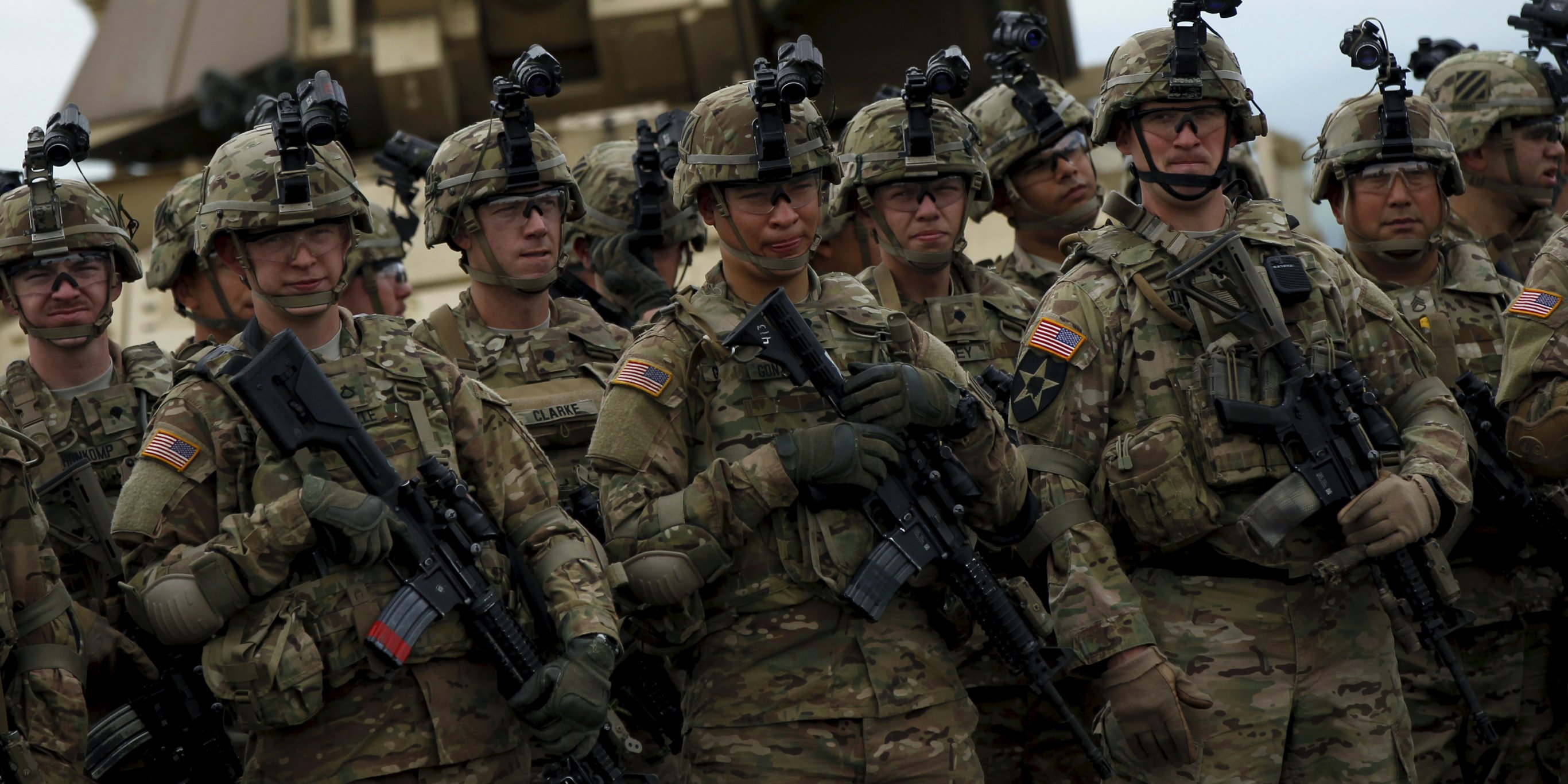
    The White House is considering a military plan that would include sending 120,000 troops to the Middle East in response to what the Trump Administration has called a dangerous threat from Iran, a report said on Monday.

    Acting Defense Secretary Patrick Shanahan made the proposal to President Trump’s top military aides last Thursday as a deterrent to Iran launching an attack of their own or continuing to develop nuclear weapons, according to The New York Times.

    The aggressive stance was reportedly backed by Trump’s national security adviser, John R. Bolton.

    Earlier this month, Bolton issued a stern warning to Iran while announcing the deployment of the USS Abraham Lincoln carrier strike group along with a bomber task force to the Persian Gulf.

    “The United States is not seeking war with the Iranian regime, but we are fully prepared to respond to any attack, whether by proxy, the Islamic Revolutionary Guard Corps, or regular Iranian forces,” Bolton said in the statement.

    The proposed deployment of 120,000 troops would be nearly equal to the amount of US troops that invaded Iraq in 2003.

    A spokesman for the National Security Council told the Times that the president does not seek “military conflict with Iran” but that they are ready to defend US interests in the region.

    SOURCE LINK: http://ow.ly/tFGM30oJ4BJ

  • Study Reveals Madison, Wisconsin, Is The New Mecca For Millennials

    Study Reveals Madison, Wisconsin, Is The New Mecca For Millennials

    SOURCE: Zero Hedge

    The National Association of Realtors’ (NAR) 2019 report examined employment increases, population trends, income growth, and housing market conditions in the top 100 metropolitan areas across the country to identify millennial migration trends. The top ten cities NAR labeled were selected for their high concentration of millennial residents, expanding employment opportunities and affordable housing.

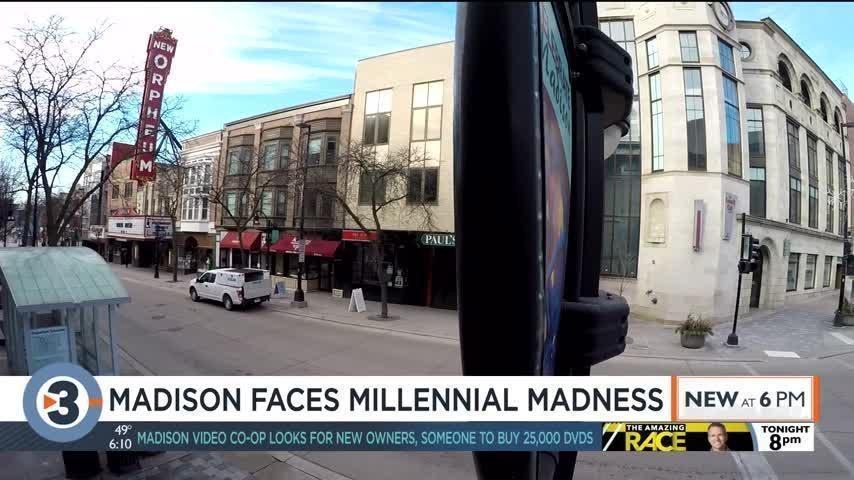
    NAR determined that Madison, Wisconsin, is the mecca for millennials. The report showed 75% of recent moves in 2017 had been by millennials.

    Regions of the San Diego metropolitan area had 67.1% of them move to the area in the same timeframe, making it the No. 13 destination for millennials out of 100 cities analyzed.

    Despite being No. 13 destination for millennials, San Diego had the most significant population (27% above the national average) of millennials in the country.

    The 2017 data showed millennials were flocking to, in addition to, Madison (74.98% of new moves), New Haven-Milford, Connecticut (74.70% of new moves); Syracuse, New York (73.30% of new moves); Grand Rapids-Wyoming, Michigan (72.70% of new moves); Richmond, Virginia (70.50% of new moves), Urban Honolulu, Hawaii (70.20% of new moves); Seattle-Tacoma-Bellevue, Washinton (69.60% of new moves); Etc.

    “We see that millennials are moving to areas with strong employment and wage growth,” NAR economist Nadia Evangelou told the Chicago Tribune.

    NAR said only 2% of millennials who moved to San Diego could afford the median home price ($528k to $ $572k in 2017 prices). Making this super popular West Coast city one of the worst places for millennials to live in terms of affordability.

    The most affordable metro for millennials was Dayton, Ohio, located in the Rust Belt, where decades of deindustrialization have kept home prices relatively depressed. In 2017, 56% of new moves were millennials, and 54% of those youngsters could comfortably afford a home.

    The cities millennials avoided the most were all located in Florida: Fort Myers, Lakeland, Palm Bay-Melbourne, North Port-Sarasota, and Tampa.

    The report noted that business leaders frequently warn about a loss of jobs to Texas from California, but it appears millennials aren’t moving to the Lone Star State. Dallas placed No. 39 destination for millennials in 2017, due to only 10% of millennials could afford a home. Austin was the No. 48 destination with less than 3% of millennials able to purchase a new home.

    Evangelou told the Tribune that the study’s purpose was to identify millennial migration trends and understand if they stay in one place. If youngsters can’t afford to purchase a home and income growth wanes, this heavily indebted generation will migrate to the next city where affordability and wages are much better. And the report concludes by saying Madison, Wisconsin, is becoming the most popular city for millennials, due to decent wage growth and an affordability factor of 29% can buy homes.

    “They don’t stay in some places because they can’t afford to buy (a home) and raise a family,” she said. “We’re looking for those people that want to raise a family in those places.”

    Top Metro Areas Millennials Are moving To (Based on 2017 Census American Community Survey):

    Madison, Wisc. – 74.98%
    New Haven-Milford, Conn. – 74.70%
    Syracuse, N.Y. – 73.30%
    Grand Rapids-Wyoming, Mich. – 72.70%
    Richmond, Va. – 70.50%
    Urban Honolulu, Hawaii – 70.20%
    Seattle-Tacoma-Bellevue, Wash. – 69.60%
    Toledo, Ohio – 69.40%
    Los Angeles-Long Beach-Anaheim, Calif. – 68.50%
    Durham-Chapel Hill, N.C. – 67.90%
    Omaha-Council Bluffs, Neb.-Iowa – 67.50%
    Provo-Orem, Utah – 67.30%
    San Diego-Carlsbad, Calif. – 67.10%
    San Jose-Sunnyvale-Santa Clara, Calif. – 67.10%
    Boston-Cambridge-Newton, Maine-N.H. – 66.80%

    With millennials deeper in debt than any other generation, a job environment that is stalling, and a home affordability crisis in major coastal cities, it certainly seems that this deadbeat generation is giving up on their West Coast dreams and moving to affordable regions inland.

  • HAMAS, ISLAMIC JIHAD: ‘WE’RE CLOSE TO OPEN WAR WITH ISRAEL’

    HAMAS, ISLAMIC JIHAD: ‘WE’RE CLOSE TO OPEN WAR WITH ISRAEL’

    The warning came as leaders of the two Palestinian groups continued their discussions in Cairo with senior Egyptian intelligence officials on ways of ending the current round of fighting with Israel.

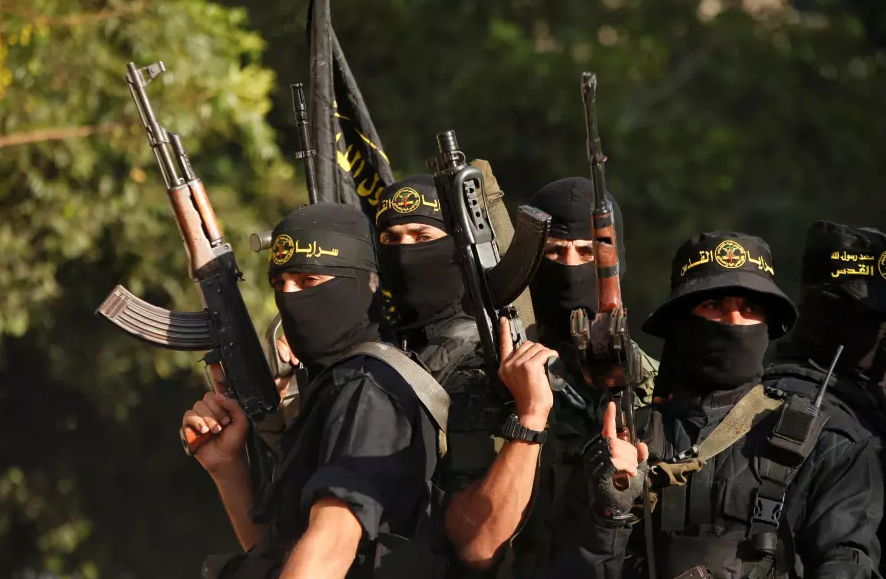
    Defiant Hamas and Islamic Jihad officials said on Sunday that they don’t rule out the possibility that the current round of fighting in the Gaza Strip could lead to an all-out war with Israel.

    The warning came as leaders of the two Palestinian groups continued their discussions in Cairo with senior Egyptian intelligence officials on ways of ending the current round of fighting with the Jewish state.

    Unconfirmed reports on Sunday evening claimed that Hamas has indicated its readiness for a ceasefire with Israel. Hamas officials in the Gaza Strip did not comment on the reports.

    Islamic Jihad spokesman Musab al-Braim said that the “resistance was on the threshold of a new phase in repelling the [Israeli] aggression that could lead to an open war.” He said that in light of the continued “aggression on our people and the targeting of children, houses and the implementation of the policy of assassinations, we are on the threshold of this phase, and we will not have mercy on this enemy.”

    Ahmed al-Mudalal, a senior Islamic Jihad official, said that the “current Zionist escalation on the Gaza Strip is a serious attempt to break the will of the Palestinian people and divert attention from the March of Return [weekly protests near the border with Israel].”

    Mudalal warned that the Palestinian terror groups will not stand idly by toward the “Zionist aggression against the Palestinian people, and have the full right to respond to these attacks.”

    In a statement issued on Sunday evening, Islamic Jihad said that it was ready to wage an “open confrontation” with Israel. It said that the continuation of Israeli military strikes “will be met with a similar and large-scale response” targeting all Israel.

    In a separate statement, Islamic Jihad announced that six of its men were killed in Israeli military strikes in the past few hours. It identified the men as Mahmoud Subhi Issa, 26; Fawzi Abdel Halim Bawadi, 24; Bilal Mohammed al-Banna, 28; Abdullah Nofal Abu al-Ata, 21; Mohammed Abdel al-Nabi Abu Armaneh, 32; and Mahmoud Samir Abu Armaneh, 27.

    Israel’s threats against the Palestinian “resistance don’t scare us,” said Mushir al-Masri, a senior Hamas official. “We are confident that the resistance is capable of teaching the enemy harsh and painful lessons.”

    Israel, he added, will not “see security as long as the blockade, sanctions and aggression continue.”

    The Hamas official called on the Palestinian Authority to lift the sanctions it imposed on the Gaza Strip about two years ago.
    Hamas spokesman Fawzi Barhoum held Israel fully responsible for the “consequences of its crimes and violations against the Palestinians and failure to implement the recent Egyptian-sponsored ceasefire understandings. “The resistance won’t allow Israel to repeat its crimes and will continue to defend the Palestinian people,” Barhoum said.

    Another Hamas official, Fathi Kar’awi, condemned the “cowardly” Israeli military strikes against the Gaza Strip and called on the international community to hold Israel to account for its “crimes against the people of the Gaza Strip.”

    Meanwhile, Palestinian political analyst Hassan Lafi told the Islamic Jihad-affiliated Palestine Today news site that by resorting to targeted assassinations in the Gaza Strip, Israel could pave the way for a new stage that may lead to an open war. Israel, he said, has “changed the rules of engagement that followed the 2014 war” – a reference to Operation Protective Edge. Lafi, however, said he believes that Israel’s decision to resume targeted assassinations “proves that it wants to end this round of escalation quickly.”

  • 15 Questions Robert Mueller Must Answer

    15 Questions Robert Mueller Must Answer

    Authored by Peter van Buren via The American Conservative,

    Why the cryptic wording on the Steele Dossier? Why wasn’t Trump given an opportunity to defend himself in court?

    Authored by Peter van Buren via The American Conservative,

    Why the cryptic wording on the Steele Dossier? Why wasn’t Trump given an opportunity to defend himself in court?

    You know that movie with Bruce Willis and the kid who says “I see dead people”? In the end, it turns out everyone is already dead. Now imagine there are people who don’t believe that. They insist the story ends some other way. Spoiler alert: the Mueller Report ends with no collusion. No one is going to prosecute anyone for obstruction. That stuff is all dead. We all saw the same movie.

    Yet there seem to still be questions from those who don’t get it. And while it’s doubtful that the stoic Robert Mueller will ever write a tell-all book, or sit next to Seth Meyers and Trevor Noah to dish, he may be called in front of Congress. If he is, here’s some of what he should be asked.

    1) You didn’t charge President Donald Trump with “collusion,” obstruction, or any other new crime. Tell us why. If the answer is “the evidence did not support it,” please say so.

    2) Your Report did not refer any crimes to Congress, the SDNY, or anyone else. Again, tell us why. If the answer is “the evidence did not support it,” please say so again.

    3) Despite making no specific referrals, the Report does state, “The conclusion that Congress may apply the obstruction laws to the President’s corrupt exercise of the powers of the office accords with our constitutional system of checks and balances and the principle that no person is above the law.” Why did you include such a restating of a known fact? Many have read that line to mean you could not indict a sitting president and so you wanted to leave a clue to Congress. Yet you could have just spelled it out—”this is beyond my and the attorney general’s constitutional roles and must/can only be resolved by Congress.” Why didn’t you?

    4) Similarly, many believe they see clues (a footnote looms as the grassy knoll of your work) that the only reason you did not indict Trump was because of Department of Justice and Office of Legal Counsel guidance against indicting a sitting president. Absent that, would you have indicted? If so, why didn’t you say so unambiguously and trigger what would be the obvious next steps?

    5) When did you conclude there was no collusion, conspiracy, or coordination between Trump and the Russians such that you would make no indictments? You must have closed at least some of the subplots—the Trump Tower meeting, the Moscow Hotel project—months ago. Did you consider announcing key findings as they occurred? You were clearly aware that there was inaccurate reporting, damaging to the public trust. Yet you allowed that to happen. Why?

    6) But before you answer that question, answer this one. You made a pre-Report public statement saying Buzzfeed’s story that claimed Trump ordered Michael Cohen to lie to Congress was false. You restated that in the Report, where you also mentioned that you privately told Jeff Sessions’ lawyer in March 2018 that Sessions would not be charged. Since your work confirmed that nearly all bombshell reporting on Russiagate was wrong (Cohen was never in Prague, nothing criminal happened in the Seychelles, and so on), why was it only that single instance that caused you to speak out publicly? And as with Sessions, did you privately inform any others prior to the release of the Report that they would not be charged? What standard did you apply to those decisions?

    7) A cardinal rule for prosecutors is to not publicize negative information that does not lead them to indict someone—”the decision does the talking.” James Comey was criticized for doing this to Hillary Clinton during the campaign. Yet most of your Report’s Volume II is just that, descriptions of actions by Trump that contain elements of obstruction but that you ultimately did not charge. Why did you include this information so prominently? Some say it was because you wanted to draw a “road map” for impeachment. Why didn’t you just say that? You had no reason to speak in riddles.

    8) There is a lot of lying documented in the Report. But you seemed to only charge people with perjury (traps) early in your investigation. Was that aimed more at pressuring them to “flip” than at justice per se? Is one of the reasons several of the people in the Report who lied did not get charged with perjury later in the investigation because by then you knew they had nothing to flip on?

    9) In regard to the June 2016 Trump Tower meeting, where derogatory information on Hillary Clinton was offered (but never given), you declined prosecution. You cited in part questions over whether such information constituted the necessary “thing of value” that would have to exist, inter alia, to make its proffering a campaign finance violation. You don’t answer the question in the Report, but you do believe information could be a “thing of value” (the thing of value must exceed $2,000 for a misdemeanor and $25,000 for a felony). What about withholding information? Could someone saying they would not offer information publicly be a “thing of value” and thus potentially part of a campaign finance law violation? Of course I’m talking about Stormy Daniels, who received money not to offer information. Would you make the claim that silence itself, non-information, is a “thing” of value?

    10) You spend the entire first half of your Report, Volume I, explaining that “the Russians” sought to manipulate our 2016 election via social media and by hacking the Democratic National Committee. Though there is a lot of redacted material, at no point in the clear text is there information on whether the Russians actually did influence the election. Even trying was a crime, but given the importance of all this (some still claim the president is illegitimate) and the potential impact on future elections, did you look into the actual effects of Russian meddling? If not, why not?

    11) Everything the Russians did, according to Volume I, they did on Obama’s watch. Did you investigate anyone in the Obama administration in regard to Russian meddling? Did you look at what they did, what was missed, whether it could have been stopped, and how the response was formed? Given that Trump’s actions towards Russia followed on steps Obama took, this seems relevant. Did you look? If not, why not?

    12) Some of the information gathered about Michael Flynn was picked up inadvertently under existing surveillance of the Russian ambassador. As an American, Flynn’s name would have been routinely masked in the reporting on those intercepts in order to protect his privacy. The number of people with access to those intercepts is small, and the number inside the Obama White House with the authority to unmask names is even smaller. Yet details were leaked to the press and ended Flynn’s career. Given that the leak may have exposed U.S. intelligence methods, that it had to have been done at a very high level inside the Obama White House, and that the leak violated Flynn’s constitutional rights, did you investigate? If not, why not?

    13) The New York Times wrote that “some of the most sensational claims in the [Steele] dossier appeared to be false, and others were impossible to prove. Your report contained over a dozen passing references to the document’s claims but no overall assessment of why so much did not check out.” Given the central role the Steele Dossier played in your work, and certainly in the investigation that commenced as Crossfire Hurricane in summer 2016, why did you not include any overall assessment of why so much did not check out inside such a key document?

    14) Prosecutors do not issue certificates of exoneration. The job is to charge or drop a case. That’s what constitutes exoneration in any practical sense. Yet you have as your final line that “while this report does not conclude that the President committed a crime, it also does not exonerate him.” Why did you include that, and so prominently?

    15) You also wrote, “if we had confidence after a thorough investigation of the facts that the president clearly did not commit obstruction of justice, we would so state.” You argue elsewhere in the Report that because Trump is a sitting president, he cannot be indicted, so therefore it would be unjust to accuse him of something he could not go to court and defend himself over. But didn’t you do just that? Why did you leave the taint of guilt without giving Trump the means of defending himself in court? You must have understood that such wording would be raw meat to Democrats, and would force Trump to defend himself not in a court with legal protections, but in an often hostile media. Was that your intention?

  • IT’S HAPPENING: President Trump Warned Obama Back in November Something Big Is About to Drop that “I Will Never Forgive Him For”

    IT’S HAPPENING: President Trump Warned Obama Back in November Something Big Is About to Drop that “I Will Never Forgive Him For”

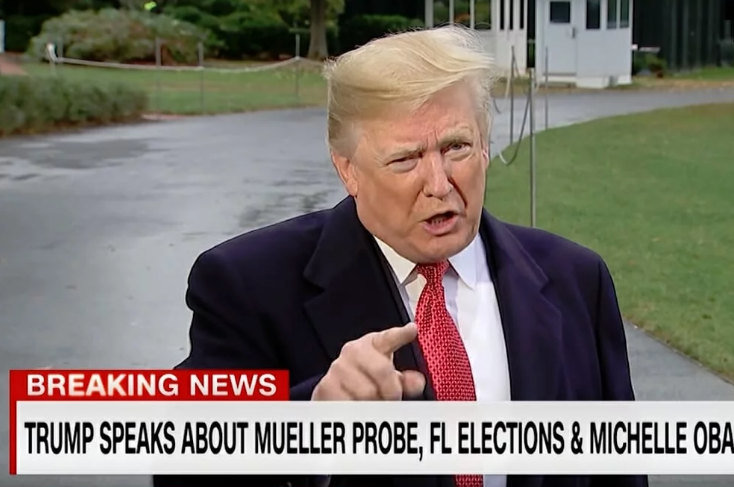
    Back in November President Trump met with reporters the morning after another attack by former First Lady Michelle Obama.

    President Donald Trump unloaded on his predecessor, former President Barack Obama when asked about the former First Lady’s comments.

    President Trump was asked about the former First Lady’s attacks.
    He hit back twice as hard — Saying he will never forgive her husband for letting down the military.

    Then President Trump shot a warning at the Obamas.
    Something BIG is about to be revealed.

    President Trump: So I’ll never forgive him for what he did to our military. I’ll never forgive him for what he did in many other ways which I will talk to you about in the future. But what he did, what he did to this military made this country very unsafe for you and you and you.

    It is widely known but not widely reported that Obama spied on President Trump during the 2016 election.
    But it is not known to what extent or the number of spies the Obama administration unleashed on the Trump campaign.

    President Trump is not through with Obama.

  • FACEBOOK DEFENDS CALLS FOR TRUMP ASSASSINATION

    FACEBOOK DEFENDS CALLS FOR TRUMP ASSASSINATION

    Platform suspends woman bringing attention to violent leftists calling for president’s murder

    Jamie White | Infowars.com – MAY 5, 2019

    A woman’s account has been suspended by Facebook for demanding the platform ban users calling for President Trump’s assassination.

    “Do any of you remember a day when talking about assassinating the President resulted in getting arrested?” Marjorie Greene wrote Sunday, who included a screenshot of users calling for Trump’s murder.

    Rather than delete or address the individuals inciting violence against the president, Facebook issued a 3-day suspension notice to Greene after she brought attention to the left’s incitements of violence.

    Without elaborating, Facebook’s notice said Greene violated its community standards and therefore will be blocked for 3 days, and that she’d be locked out for a week if she continued.

    No action has been taken against these individuals who actually have violated Facebook’s community guidelines.

    “They say impeach Trump, I say assassinate Trump,” said one user.

    “Someone please assassinate Trump I promise you won’t get in as much trouble as you think shit you might even get away with it,” wrote another user.

    This incident highlights the simple fact that Facebook has no intention of fighting “hate” or making its platform safer and more inclusive for everybody.

    Facebook’s censorship program is instead meant to suppress and ultimately eradicate conservative viewpoints, whether they violate its community guidelines or not.

    Its permanent banning of Paul Joseph Watson is proof positive of that fact — no video or article he’s made has ever called for violence on any level.


    Big Tech has been caught using moderators to flag and censor images of conservatives online. Raheem Kassam joins attorney Robert Barnes and Alex Jones via Skype to expose this Orwellian tactics now being used against patriots.