Category: Economy

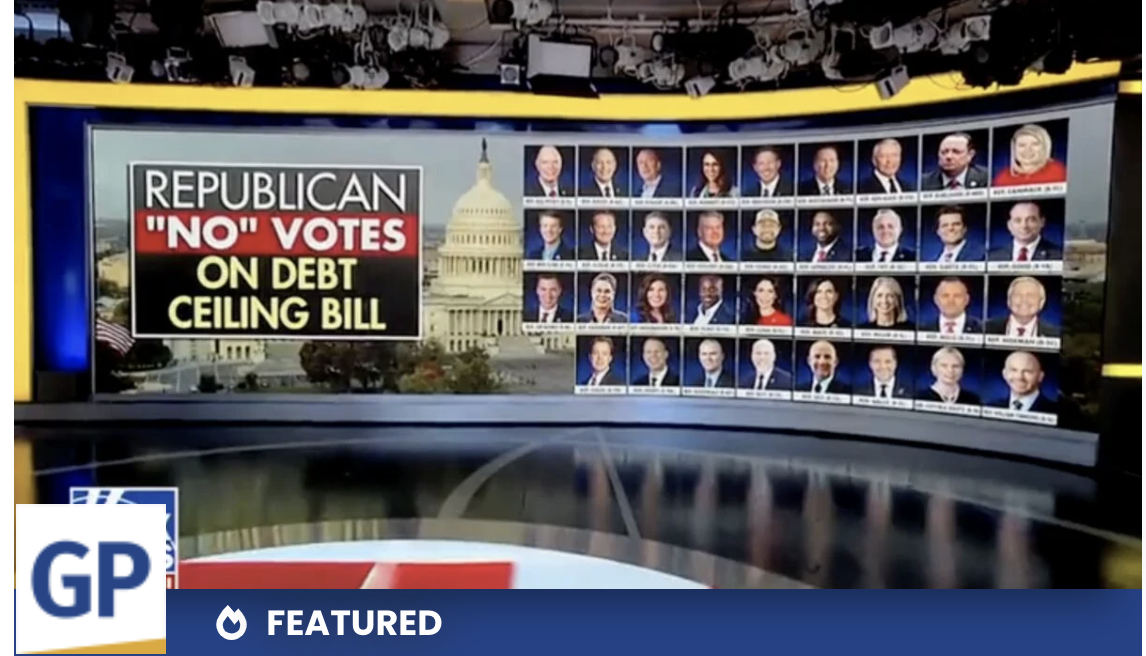
  • UPDATE: Here are the 44 Republicans Who Stand with “We the People” and Won’t Vote for Biden & McCarthy’s Flawed Uniparty Bill

    UPDATE: Here are the 44 Republicans Who Stand with “We the People” and Won’t Vote for Biden & McCarthy’s Flawed Uniparty Bill

    UPDATE: Here are the 44 Republicans Who Stand with “We the People” and Won’t Vote for Biden & McCarthy’s Flawed Uniparty Bill | The Gateway Pundit | by Jim Hoft

    On Tuesday night, the House Rules Committee on Tuesday voted to advance the McCarthy-Biden Fiscal Responsibility Act.

    The 9-majority and 4-minority committee voted 7-6 to advance the bill with Reps. Chip Roy and Ralph Norman voted against the measure. “House Rules Cmte approves rule to govern floor debate on debt ceiling bill tomorrow. The vote was 7-6. Roy and Norman defected Rep. Thomas Massie (R-KY) votes yes on the rule. Reps. Chip Roy (R-TX) and Ralph Norman (R-SC) were nays,” Fox News Congress reporter Chad Pergram reported. See below:

    The full House of Representatives will vote on the bill Wednesday night.

    House Freedom Caucus Chairman Scott Perry on Tuesday left open the possibility of filing a motion to vacate and get rid of McCarthy if the Speaker pushes through the debt deal.

    Under new House rules, it only takes one member of Congress, from either party, to bring a ‘motion to vacate’ which forces a vote on removing the Speaker of the House.

    It would only take a simple majority vote to remove McCarthy.

    So far, 44 Republicans are a “no” vote on the Biden-McCarthy scam debt bill.

    UPDATE: Rep. Lance Gooden (R-TX), Rep. Bill Posey (R-FL), Rep. Jim Banks (R-IN), Rep. Jim Banks (R-IN), Rep. Debbie Lesko (R-AZ), Rep. Pete Sessions (R-TX), Rep. Tom Tiffany (R-WI), Rep. Pat Fallon (R-TX), Rep. Greg Steube (R-FL), Rep. Jeff Van Drew (R-NJ) will also vote against the bill.

    Below is the list of Republicans who agreed with the “We the People.”

    Rep. Andy Biggs (R-Ariz.) – “The McCarthy-Biden plan doesn’t stop, or even slow down, deficit spending. The plan doesn’t bend the spending curve down. The plan keeps us moving over the debt cliff with the GOP leadership’s mantra of “We’ll fight harder next year!” Americans deserve better.”

    Rep. Dan Bishop (R-N.C.) – “This is a lousy deal for the American people. When you read the text of the bill, none of the purported benefits are there!”

    Rep. Lauren Boebert (R-Colo.) – “The debt limit deal is a bad deal for America. As the bill is currently presented, my vote will be NO on tomorrow’s anti-deal. Unit then, I hope the House will either amend it or kill it entirely.”

    Rep. Vern Buchanan (R-Fla.) – “Nobody wants to default on our debt, but neither can we afford to keep spending money we don’t have. Very disappointed to see this bill increase the national debt by $4 trillion in half as many years and do very little to actually get our fiscal house in order. I will be voting NO. Enough is enough!”

    Rep. Ken Buck (R-Colo.) – “This is just a bad deal. I won’t vote to add $4 trillion more to the deficit within the next 20 months. This is a plan for continuing the bipartisan bankruptcy in Washington D.C.”

    Rep. Eric Burlison (R-Mo.) – “After carefully reviewing the bill text and fielding phone calls from my constituents, I will not be supporting H.R. 3746.”

    Rep. Kat Cammack (R-Fla.) – “Absolutely no one wants to default but this current deal is unacceptable. I have read this bill twice and as the language currently stands, I will be voting no to raise the debt ceiling.”

    Rep. Andrew Clyde (R-Ga.) – “The Biden Admin is openly admitting that they will take full advantage of the PAYGO waiver authority in the debt ceiling deal. They didn’t just steamroll us in negotiations. They’re laughing at the concessions that were made. NO Republican should vote for this nonsense.”

    Rep. Mike Collins (R-Ga.) – “And while there are good pieces to the deal, it doesn’t go far enough. Supporting this legislation would send the wrong message about how seriously we must take our debt problem. For those reasons, I will vote against the bill.”

    Rep. Eli Crane (R-Ariz.) – “Adding $4 trillion to our debt isn’t a deal “worthy of the American people. It’s a sell-out of the American people.”

    Rep. Byron Donalds (R-Fla.) – “This bill keeps all of Joe Biden’s policy, all of Joe Biden’s spending intact. This bill does nothing for the Green New Deal subsidies that are going to cripple our electric grid. To my Republican colleagues, vote no, vote no. And do the right thing. And let’s go find a better deal.”

    Rep. Russell Fry (R-S.C.) – “President Biden jeopardized our nation’s fiscal stability by refusing to come to the negotiating table for far too long. While the Fiscal Responsibility Act includes some positive economic policies, it does not go far enough to gain my vote.”

    Rep. Matt Gaetz (R-Fla.) – “I will be voting NO on the Biden/McCarthy debt limit legislation this week.”

    Rep. Bob Good (R-Va.) – “This debt “deal” is bad for the country. It will increase our debt by at least 10% over 2 years without substantial reforms to our long-term fiscal situation—making an eventual default even more likely.”

    Rep. Harriet Hageman (R-Wyo.) – “Republicans do not need to negotiate with ourselves” when it comes to the debt ceiling situation, but also said that McCarthy had “gone above and beyond” in his negotiations with Biden.

    Rep. Diana Harshbarger (R-Tenn.) – “I am voting NO on passing down trillions more in debt to our children and grandchildren while giving Democrats a blank check to pay for their radical agenda, including the weaponization of federal agencies. Its time to get our fiscal house in order and rein in wasteful spending.”

    Rep. Wesley Hunt (R-Texas) – “For these reasons and more, I will be voting NO on the Biden-McCarthy proposal to raise our nation’s Debt Ceiling. I urge my Republican colleagues to do the same.”

    Rep. Anna Paulina Luna (R-Fla.) – “I’m voting NO on the $4T debt bill. BTW If you’re on social security, with the current debt and irresponsible spending, social security will be gone within 10 years.”

    Rep. Nancy Mace (R-S.C.) – “Washington is broken. Republicans got outsmarted by a President who can’t find his pants. I’m voting NO on the debt ceiling debacle because playing the DC game isn’t worth selling out our kids and grandkids.”

    Rep. Mary Miller (R-Ill.) – “I will vote NO on increasing the debt on our children and grandchildren by $4 trillion because this deal does not contain anywhere near the CUTS and policy changes we need in order to stop Joe Biden’s war on the American people.”

    Rep. Cory Mills (R-Fla.) – “It sets the record high emergency spending as baseline, eliminates debt ceiling through 2025, clawbacks are weak. $1.3B of $80B for IRS under IRA and Biden’s EO for student debt is still in the deal. Encourage your Rep to vote NO if you care about Americans financial future.”

    Rep. Ralph Norman (R-S.C.) – “This “deal” is insanity. A $4T debt ceiling increase with virtually no cuts is not what we agreed to. Not gonna vote to bankrupt our country. The American people deserve better.”

    Rep. Matt Rosendale (R-Mont.) – “The Fiscal Irresponsibility Act is an insult to the American people. It adds $4 trillion to our existing $31 trillion national debt and continues to fund the Democrats’ and Biden Administration’s radical agenda. I will NOT be supporting this deal crafted by the Swamp!”

    Rep. Chip Roy (R-Texas) – “I think [McCarthy’s debt ceiling deal] is a betrayal of the power sharing arrangement we put in place that would protect the House GOP to make sure we could advance the ball forward.”

    Rep. William Timmons (R-S.C.) – “I am voting NO on the debt ceiling deal which does nothing to reform Washington’s spending addiction or address the core drivers of our nation’s nearly $32 trillion (and growing!) national debt.”

    Rep. Mike Waltz (R-Fla.) – ““We have to stop this out of control spending, that’s what this bill seeks to do, and I’ll look to have everything that’s in it, in some future deal.”

    Rep. Josh Brecheen (R-Okla.) – “I cannot in good conscience vote for a deal that continues to kick the can down the road at the expense of our kids and grandkids. This is a huge missed opportunity to turn our nation away from a fiscal cliff and I urge my colleagues to vote NO on the Biden-McCarthy agreement as it currently stands.”

    Rep. Michael Cloud (R-Texas) – “It’s very simple. When you come to Washington, you do what you say you’re going to, If you say you’ll get rid of 87,000 agents, you do it. You don’t play a shell game…at best this outcome funds the same leftist, woke, weaponized government at 99%.”

    Rep. Scott Perry (R-Pa.) – “No Deal”

    Rep. Keith Self (R-Texas) – “Biden’s debt ceiling deal surrenders almost EVERYTHING Republicans fought for in the Limit, Save, Grow Act. Americans deserve better. I am voting NO on this bill.”

    Rep. Bill Posey (R-FL) – “For too long Washington has kicked this can down the road ignoring hard choices while putting future generations at risk. Now, at $31.8 trillion in debt, we are feeling the effects of Washington’s insatiable appetite for overspending as inflation is driving up prices and is eating away at the American dream and our quality of life.“

    Rep. Ben Cline (R-Va) – “I came to Washington four years ago to drain the Swamp, not to make it deeper. That’s why I CANNOT in good conscience vote for a roughly $4 trillion debt increase “deal,” which can only be characterized as a capitulation to the Liberal Left.”

    Rep. Jim Banks (R-IN) – “Doesn’t add up to me. So today I’m going to vote against this new deal. It falls way short of what I expected and had hoped for to do something to send us back on a path to bring down the national debt, not to allow it to grow even further.”

    Rep. Debbie Lesko (R-AZ) – “Although I appreciate the hard work put into negotiating a debt ceiling deal with the president, I cannot in good conscience vote for the current version of the debt ceiling bill.”

    Rep. Pete Sessions (R-TX) – from TGP reader, “I just called my representative – Rep. Pete Sessions office in Washington, DC & his assistant said he is against the Biden-McCarthy debt limit deal & is going to vote NO tonight.”

    Rep. Tom Tiffany (R-WI) – “The latest debt limit deal is a missed opportunity that: Adds $4 trillion to our national debt. Keeps $1.2 trillion in unreliable green energy giveaways. Forces 87% of Americans without federal student loan debt to pay for those that do. That’s why I am voting NO.”

    Rep. Pat Fallon (R-TX) – “I’m a NO on this $4 trillion debt limit deal. Why? Because the bill: – Won’t repeal billions for Biden’s weaponized IRS – Keeps in place Biden’s student loan bailout for gender studies degrees – Fails to ensure our defense spending keeps pace with Bidenflation.”

    Rep. Greg Steube (R-FL) – “I’m a no. While I was originally optimistic about some of the conservative wins found in the negotiated debt ceiling package, I have read the bill, heard from hundreds of my constituents, and ultimately cannot in good conscience vote for this legislation.”

    Rep. Jeff Van Drew (R-NJ) – “The Limit, Save, Grow Act, passed by House Republicans, responsibly raised the debt limit while reining in spending. The Fiscal Responsibility Act simply does not live up to the expectations we set, and I cannot in good conscience vote for it. I will be a no vote.”

    Potential Republican ‘no’ votes:

    Rep. Tim Burchett (R-Tenn.)
    Rep. Clay Higgins (R-La.)
    Rep. Andy Ogles (R-Tenn.)
    Rep. Victoria Spartz (R-IN)
    Rep. Lance Gooden (R-TX)

    A simple majority – at least 218 votes if all members are present – will be needed for passage. The Democrats will all likely vote in favor of the passage, excluding AOC (D-N.Y.) and Greg Casar (D-Texas). Democrats have 212 seats in the House of Representatives.

    Some of the Republican congressmen who have been outspoken in their support of the deal are Rep. Carlos Gimenez (R-FL, Miami-Dade), Rep. Nick Langworthy (R-NY), Rep. Anthony D’Esposito (R-NY), Rep. Chuck Edwards (R-NC), Rep. Mike Lawler (R-(NY), Rep. Thomas Massie (R-KY), Rep. Jim Jordan (R-OH), Rep. Warren Davidson (R-OH), Rep. Elise Stefanik (R-NY), Rep. Laurel Lee (R-FL), Rep. Ken Calvert (R-CA), Rep. David Valadao (R-CA), REp. Greg Murphy (R-NC), Rep. Marjorie Taylor Greene (R-GA).

    The deal includes keeping a portion of the $80 billion increase in IRS funding and the 87,000 additional agents tasked with going after middle-class families.

    Only $1.9 billion of the $80 billion to fund 87,000 IRS agents were removed from the budget. 98% of the 87,000 agents are here to stay.

    “Of the $80 billion Democrats appropriated to the IRS over ten years, the “deal” rescinds $1.9 billion. You read that right. That’s the kind of “get” that’s so good McCarthy agreed to increase the debt ceiling $4 trillion,” said Rep. Dan Bishop (R-NC).

    CALL YOUR REP NOW AND TELL THEM TO VOTE NO. 

    You can call Congress at 202.224.3121. Tell the Members to vote NO on the rule and vote no on the bill.

    Let us know if your state’s representative will vote against the Fiscal Responsibility Act. Send us an email at [email protected].

    Here is a visual from FOX News on 31 of the no-votes.

    via The Gateway Pundit

    May 31, 2023 at 05:16PM
  • BUCKLE UP: The U.S. Dollar Just Got Some Of The Worst News In Its History…

    BUCKLE UP: The U.S. Dollar Just Got Some Of The Worst News In Its History…

    BUCKLE UP: The U.S. Dollar Just Got Some Of The Worst News In Its History…

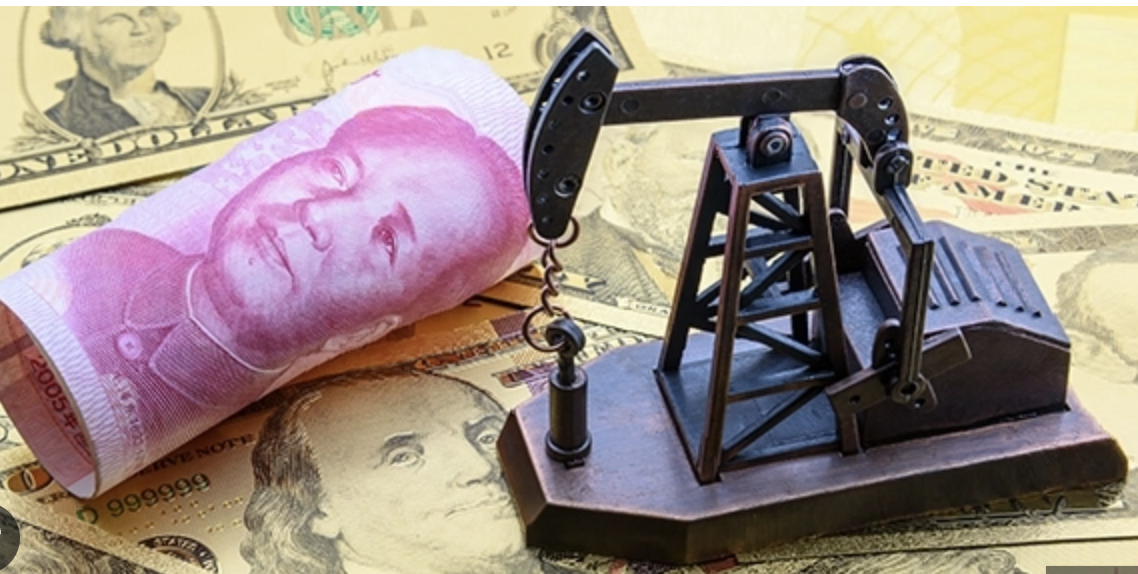
    I have long warned of the collapse of the petrodollar reserve system that currently undergirds the global economic system.

    Up until very recently, every nation on the planet coveted and hoarded U.S. dollars to settle oil transactions—all countries were required to sell and buy oil in U.S. dollars—massively driving up demand for the currency. …

    Hence the term ‘global reserve currency’—the dollar was the common denominator in global energy trade.

    However, due to rampant monetary printing, sustained military campaigns abroad, and the Biden administration’s absolute weakness, that system has now collapsed. …

    You won’t hear these exact words in the news, yet this is exactly what has happened. …

    Early last year, Russia announced that it would price oil in rubles, and Saudi Arabia also announced similar plans to move away from the U.S. dollar in favor of the Chinese yuan.

    Additionally, the entire energy paradigm is shifting, as the U.S. Department of Energy announced a breakthrough in nuclear fusion technology late last year, placing additional pressure on the petrodollar and leaving the future of the entire oil industry in doubt.

    What this means is that at least half the world no longer has a use for the U.S. dollar, beyond using it for legitimate foreign-exchange business transactions—guess where all those excess dollars are going to go?

    They’re going to be sent here, they’re going to come back home—causing untold levels of inflation—potentially hyperinflation.

    If you don’t believe this system has collapsed, take a look at these headlines and these latest developments over the last week:

    According to Watcher Guru:

    Talking on the sidelines of the Russian-Indian Strategic Partnership for Development and Growth Business Forum, Babakov said,

    “I think that at the BRICS [leaders’ summit], the readiness to realize this project will be announced, such works are underway.”

    “The transition to settlements in national currencies is the first step. The next one is to provide the circulation of digital or any other form of a fundamentally new currency in the nearest future.”

    Merco Press shared this seismic report from the World Bank:

    The United States dollar status as the world’s single reserve currency will end by 2025, according to a new report by the World Bank.

    “By 2025, six major emerging economies—Brazil, China, India, Indonesia, South Korea, and Russia—will account for more than half of all global growth, and the international monetary system will likely no longer be dominated by a single currency.

    As economic power shifts, these successful economies will help drive growth in lower income countries through cross-border commercial and financial transactions.” the report noted.

    So….what to do?

    As usual, we don’t leave you hanging.

    We have real, actionable next steps to keep you and your family safe!

    Keep reading…

    Gold Is About To Become “Unobtainium”?

    Ok, so I have to admit something…

    I’m not sure if you spell it Unobtainium or Unobtaineum since it’s a made-up word, but the point remains: there could very well be a time fast approaching where you can’t obtain Gold.

    You either have it or you don’t.

    Hence: un-obtain-ium.

    That’s a message I’ve heard repeated by many people in recent weeks, most recently just today by Steve Quayle on Greg Hunter’s show.

    I always love listening to these two chat, even though they got a little chippy at the end, with Quayle chipping back “Did you not just hear me?”

    That’s ok, stress and tensions running high.

    But there was a LOT in this one and I will try to summarize a couple main points.

    First, Quayle points out that China has been absolutely DUMPING U.S. Treasuries in recent months, and then accelerating the sales this week.

    According to Quayle, they dumped so much this week they sold them for 15 cents on the dollar just to get out.

    As Bo Polny keeps warning us, a failure of the U.S. Dollar (USD) $ is coming and this is how you get a failure.

    When the second largest holder of U.S. Treasuries rage quits the market and dumps them at fire sale.

    Take a look at this:

    Ok, so to everyone who just tuned out when I started talking about Treasuries, let me explain to you why this matters.

    DISCLAIMER: no, I am not a Financial Advisor and I’m definitely not YOUR Financial Advisor.  But I am a reporter and I report it like I see it.  Fair and honest.

    Because the US Dollar is likely going down hard….

    But that also means Gold is likely about to Moonshot.

    Check this out:

    As for that last one, that would be going from $2,000/oz to $8,000/oz.

    We call that a 4x move, or a 400% gain.

    Wow.

    You can watch the full interview here on Rumble:

    If you already have gold, that’s great!

    For everyone else….keep reading:

    A Faith-Driven, Conservative Precious Metals Company You Can Use With Your IRA!

    For the last year, central banks across the globe have been buying up as much gold (and often silver) as they can acquire without raising alarm bells. Now, we see why.

    The recent bank runs and ongoing collapse of the U.S. banking system was anticipated by the “elites” and the central bankers who run things behind the scenes. They saw it coming and knew the best way to protect their assets was through physical precious metals.

    If you’ve been waiting for me to bring you a solution about what YOU can do to protect yourself and you’re family, I’m happy to introduce you to something I absolutely love!

    Precious metals.

    I just talked about precious metals this week with Bo Polny and now I’m bringing you a solution that you can utilize right away if you’re so inclined…

    A faith-driven, conservative precious metals company is currently helping Americans tap into the rising precious metals market through self-directed IRAs backed by physical precious metals. And while this service is not unique to Genesis, their adherence to Biblical stewardship of money makes them singularly qualified to receive a sponsored recommendation from this site.

    Unlike most companies offering similar services, Genesis deals only with physical precious metals. They do not offer “virtual” or “paper” gold or silver.

    With Genesis and their depositories, customers can see and touch the precious metals that back their retirement accounts. When it comes time to take distributions, Genesis customers can cash in some or all of their precious metals or have them delivered to their door.

    Central bankers aren’t slowing down. In fact, nations like China and even U.S. states like Tennessee are quickly but quietly buying up gold to back their own treasuries. When the writing on the wall is this clear, it’s understandable why these governments are moving quickly to get ahead of any potential economic catastrophes in store.

    Working with Genesis is the best way our readers can explore the physical precious metals market through self-directed IRAs. It benefits us as well when our readers work with this America-First company.

    Visit genesiswlt.com or call 866-292-0443 today.

    Don’t wait too long, we might have more bank failures right around the corner.

    You know what has NEVER “failed”?

    Gold.  Precious metals.  Indestructible.

    There’s a reason they call it “God’s money”.

    Watch this for more:

    Stay safe!

    via We Love Trump

    March 31, 2023 at 04:24PM

  • BREAKING! FEDS SEIZE BANK – MAJOR BANK WITH $173 BILLION IN DEPOSITS COLLAPSES | EP 3362-6PM

    BREAKING! FEDS SEIZE BANK – MAJOR BANK WITH $173 BILLION IN DEPOSITS COLLAPSES | EP 3362-6PM

    Feds Seize Silicon Valley Bank

    Did you know the Pro Trump News homepage has 60 new headlines every 24 hours? Click here to check it out!

    The feds seized control of Silicon Valley Bank on Friday.

    The bank lost a record 6o% of its value on Thursday.

    Fox Business reported:

    The Federal Deposit Insurance Corporation says it has seized control of Silicon Valley Bank, confirming the lender was shut down by California regulators amid a run on the bank.

    The FDIC said in a press release that SVB was closed by the California Department of Financial Protection and Innovation on Friday, and confirmed it is now the receiver of all insured deposits of the bank.

    The ban provided funding for 44% of all venture capital-backed tech and healthcare companies.

    Markets Insider reported:

    SVB is a Santa Clara-based bank that lends money to and takes deposits from Silicon Valley tech startups.

    It provided funding to 44% of all venture capital-backed tech and healthcare companies that publicly listed on a stock exchange last year, according to its website.

    They hold $173 billion in deposits.

    The FDIC released this statement.

    FDIC statement:

    Silicon Valley Bank, Santa Clara, California, was closed today by the California Department of Financial Protection and Innovation, which appointed the Federal Deposit Insurance Corporation (FDIC) as receiver. To protect insured depositors, the FDIC created the Deposit Insurance National Bank of Santa Clara (DINB). At the time of closing, the FDIC as receiver immediately transferred to the DINB all insured deposits of Silicon Valley Bank.

    All insured depositors will have full access to their insured deposits no later than Monday morning, March 13, 2023. The FDIC will pay uninsured depositors an advance dividend within the next week. Uninsured depositors will receive a receivership certificate for the remaining amount of their uninsured funds. As the FDIC sells the assets of Silicon Valley Bank, future dividend payments may be made to uninsured depositors.

    Silicon Valley Bank had 17 branches in California and Massachusetts. The main office and all branches of Silicon Valley Bank will reopen on Monday, March 13, 2023. The DINB will maintain Silicon Valley Bank’s normal business hours. Banking activities will resume no later than Monday, March 13, including on-line banking and other services. Silicon Valley Bank’s official checks will continue to clear. Under the Federal Deposit Insurance Act, the FDIC may create a DINB to ensure that customers have continued access to their insured funds.

    As of December 31, 2022, Silicon Valley Bank had approximately $209.0 billion in total assets and about $175.4 billion in total deposits. At the time of closing, the amount of deposits in excess of the insurance limits was undetermined. The amount of uninsured deposits will be determined once the FDIC obtains additional information from the bank and customers.

    Customers with accounts in excess of $250,000 should contact the FDIC toll-free at 1-866-799-0959.

    The FDIC as receiver will retain all the assets from Silicon Valley Bank for later disposition. Loan customers should continue to make their payments as usual.

    Silicon Valley Bank is the first FDIC-insured institution to fail this year. The last FDIC-insured institution to close was Almena State Bank, Almena, Kansas, on October 23, 2020.

    Advertisement
    Advertisement

    via Pro Trump News https://ift.tt/KJ6Yh4A

    March 10, 2023 at 05:24PM

  • Whistleblower: US Government Covering Up WEF Attack On The Food Supply (Video)

    Whistleblower: US Government Covering Up WEF Attack On The Food Supply (Video)

    Whistleblower: US Government Or WEF Is Attacking The Food Supply (Video)

    A whistleblower has revealed that the ruling class of the United States is behind the food shortages and attacks on the food supply chain. Eco Health Alliance whistleblower, bioterrorism expert, military veteran, and scientist Dr. Andrew Huff has a possible explanation for the food supply fires.

    Dr. Huff has access to government information on simulating a food supply attack. The information comes from the U.S. Department of Homeland Security’s Food and Agriculture Sector Criticality Assessment Tool (FASCAT). This also includes which places are particularly at risk. According to Huff, who ruling-class sociopaths have harassed due to the nature of his work since 2019, the U.S. government coordinated the attacks on the food facilities in order to make things much harder on the slaves. But, in addition, something remarkable happened: the hard disk with the FASCAT data disappeared.

    Since this information was published, there have been about 200 food factory attacks around the world, most of them in the U.S., he explained.

    Huff had another backup and analyzed the attacks. It turned out that the attacks exactly matched the most critical systems in his data set. He reported this to the Department of Homeland Security and the FBI but never received a response.

    Huff knows that the FBI and the food industry have tried to investigate what he calls “terrorist attacks,” but they’re getting nowhere. He suspects that a government-funded actor or a globalist group like the World Economic Forum is behind it. -Rair Foundation

    Watch Huff’s interview on Rumble:

    U.S. Food Production Just Keeps Getting Slammed By One Disaster After Another…

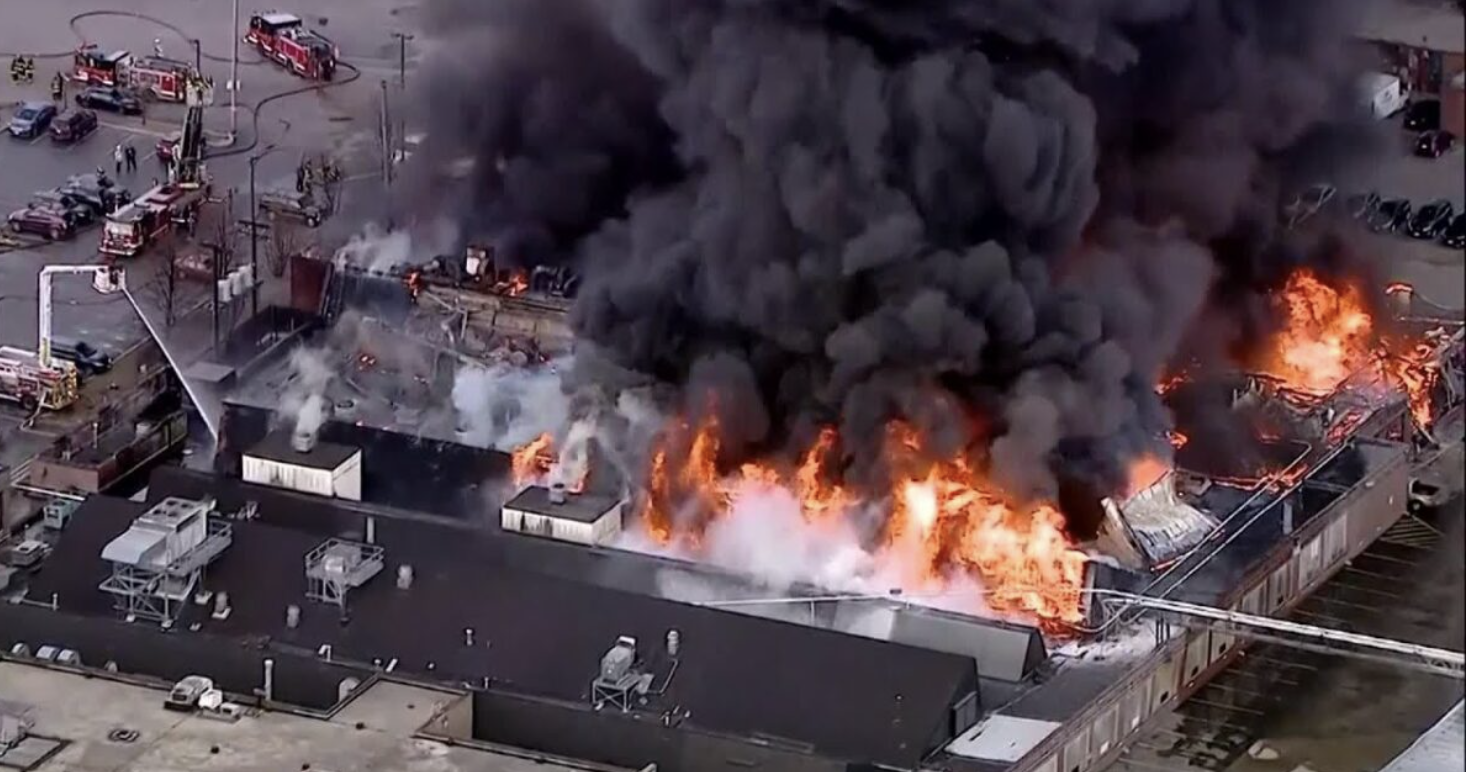
    Another Food Processing Plant Burns Down

    Coincidence? Two Separate Fires Destroy Chicken Farm & Agricultural Equipment Dealer In MN

    There have been an uncanny amount of coincidences that have affected the food supply in the United States. But we also saw this coming.

    PREPPING FOR THE UPCOMING GOVERNMENT-INDUCED FOOD SHORTAGES

    The ruling class wants one thing: power or control over other people. In order to do it they need to be able to control the food supply and implement Central Bank Digital Currencies. They can accomplish both with the issuance of a CBDC, but the food supply chain destruction will make things difficult enough that it’ll push many toward the CBDC and their total enslavement.

    The Endgame: Central Bank Digital Currency

    Article posted with permission from Mac Slavo


    via The Washington Standard

    January 31, 2023 at 06:57AM

  • Russian President Dimitry Medvedev Releases 2023 Predictions: Oil will Reach $150 per Barrell and US Dollar will Lose Its Status as Global Reserve Currency

    Russian President Dimitry Medvedev Releases 2023 Predictions: Oil will Reach $150 per Barrell and US Dollar will Lose Its Status as Global Reserve Currency

    December 27, 2022 at 04:15PM. Russian President Dimitry Medvedev Releases 2023 Predictions: Oil will Reach $150 per Barrell and US Dollar will Lose Its Status as Global Reserve Currency

    Former Russian President and current Russian official Dmitry Medvedev released his top 10 predictions for 2023 on Twitter.  The Putin ally predicted oil will reach $150 per barrel.  He also predicts the US dollar will lose its status as the global reserve currency.

    That should concern every American.  But as Democrats and Uniparty RINOs like Mitch McConnell continue to pass trillion-dollar spending bills with no attempt ever to reduce the national debt this looks more and more likely in the future at some point.

    Here is Medvedev’s list of 2023 predictions:

    TRENDING: BREAKING: Maricopa County and Katie Hobbs Seek MORE THAN $500,000 For Hillary Attorney Marc Elias in Sanctions for Kari Lake and Her Lawyers

    China has called for the end of the US dollar as the global reserve currency for years now.

    China Calls to End Use of US Dollar as International Reserve Currency

    via The Gateway Pundit

  • Bannon on Collapse of Civilization: Great Reset ‘So Destructive You’re Not Going To Be Able to Turn This Around’

    Bannon on Collapse of Civilization: Great Reset ‘So Destructive You’re Not Going To Be Able to Turn This Around’

    August 29, 2022 at 07:06AM Bannon on Collapse of Civilization: Great Reset ‘So Destructive You’re Not Going To Be Able to Turn This Around’

    Former White House Chief Strategist Steve Bannon outlined how the globalist elite are imposing policies that are “so destructive” to America that economic recovery from their radical Great Reset agenda may soon become impossible.

    “The most important thing we’ve got to do is look reality in the face now and understand exactly what’s going on in the world because there are decisions being made by people in power that are not just simply destructive, they’re so destructive you’re not going to be able to turn this around,” Bannon said on his show “War Room” on Saturday.

    Bannon noted how, for example, Federal Reserve Chairman Jerome Powell is suddenly talking about fighting inflation regardless of the economic ramifications, when just a year ago he assured the public that inflation wasn’t even a threat.

    “And a year ago yesterday in Jackson Hole at the same set of microphones, that clown stood there and said no, inflation is transitory,” Bannon said. “And today it was fire and brimstone, that he’s got to choke it all down now and invoking Paul Volker’s name and I call it the house of pain now.”

    Bannon also pointed out how French President Emmanuel Macron, after painting a rosy picture while recently running for reelection, is suddenly warning that the “end of abundance” has come due to the energy shortages brought about by their sanctions against Russia amid the Ukraine conflict.

    “Where was that 90 days ago, when he was on the campaign trail? Did something change in 90 days?” Bannon mocked.

    Energy prices are surging to a point where mass protests are taking place across Europe as experts estimate the cost of natural gas and coal in the winter will skyrocket by orders of magnitude.

    Additionally, 20 million households in the U.S. are falling behind on their utility bills, leading to a “tsunami of shutoffs,” according to Bloomberg.

    “This is what your leaders have done. Biden, Mark Kelly, and the guys at the World Economic Forum and these fantasy people that have led you down the path of total and complete destruction,” Bannon added.

    RELATED: Steve Bannon Issues an Emergency Message Concerning Alex Jones and the Future of the World


    Twitter: @WhiteIsTheFury
    Truth Social: @WhiteIsTheFury
    Gettr: @WhiteIsTheFury
    Gab: @WhiteIsTheFury
    Minds: @WhiteIsTheFury

    via Infowars

  • “You Can’t Fake This!” Even Fake-News CNN Is Fed Up With Biden Recession-Deniers   

    “You Can’t Fake This!” Even Fake-News CNN Is Fed Up With Biden Recession-Deniers   

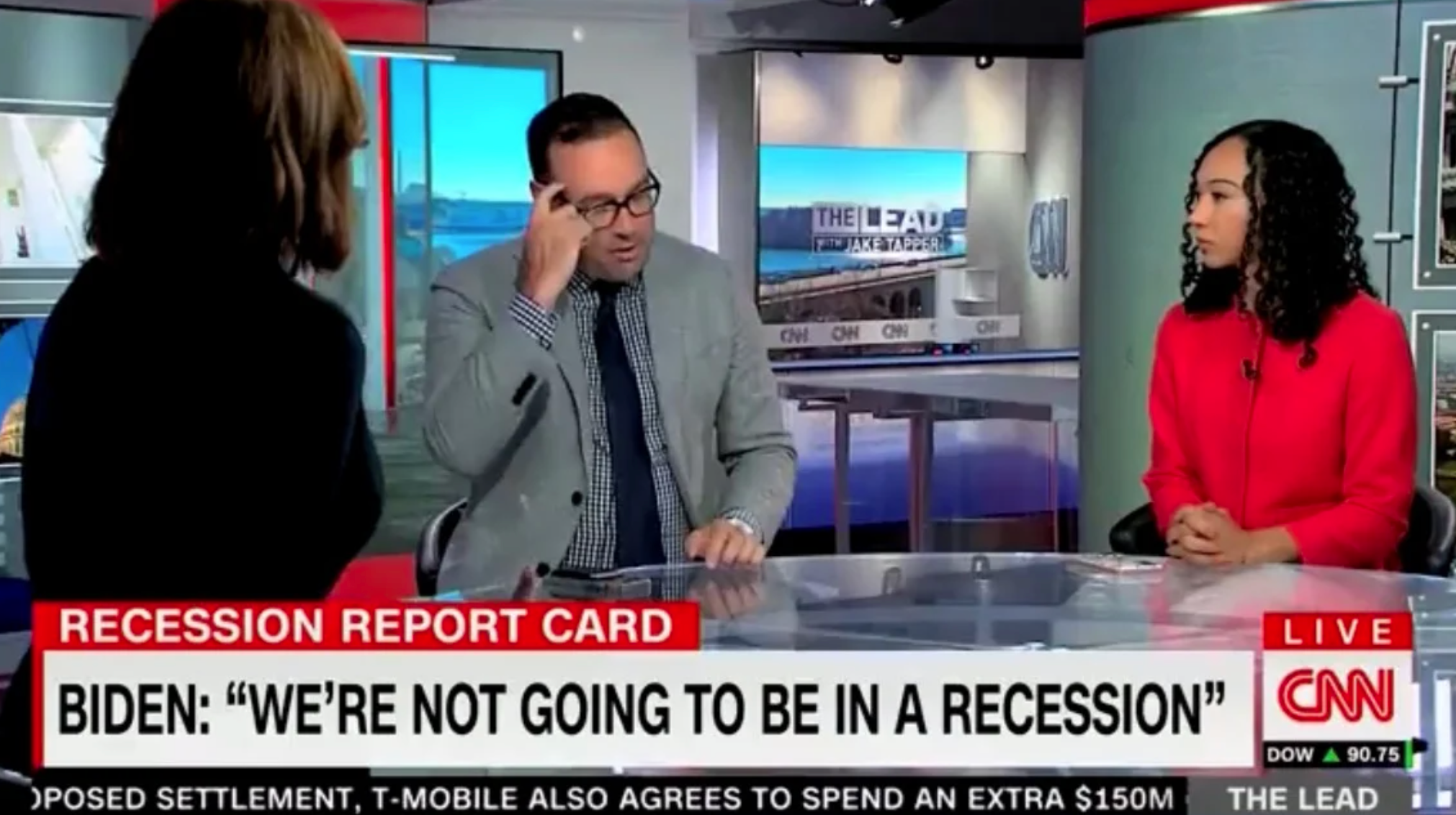
    CNN slammed the Joe Biden administration for denying the definition of a recession and said, “you can’t fake this!,” during a segment on CNN’s “The Lead” with Jake Tapper on 7/25/2022.

    A panel on CNN Monday slammed the Biden administration’s attempt to change the definition of a recession as incoming GDP numbers may signal an economic downturn. 

    Data being released on Thursday will show whether the U.S. economy shrank for two consecutive quarters, which has long been how economists defined what a recession is. However, several White House officials have already pushed their talking points as a preemptive spin on the likely bad headlines they will face. 

    On “The Lead,” CNN anchor Kasie Hunt began the discussion by telling the panel she’s “struggling” with what the White House is putting out there. 

  • “Shockingly Naive”: Bloomberg’s Tom Keene Wrecks Biden Official Over Absurd Gas-Price Blame-Game

    “Shockingly Naive”: Bloomberg’s Tom Keene Wrecks Biden Official Over Absurd Gas-Price Blame-Game

    July 9, 2022 at 08:33AM “Shockingly Naive”: Bloomberg’s Tom Keene Wrecks Biden Official Over Absurd Gas-Price Blame-Game

    You know it’s bad when…

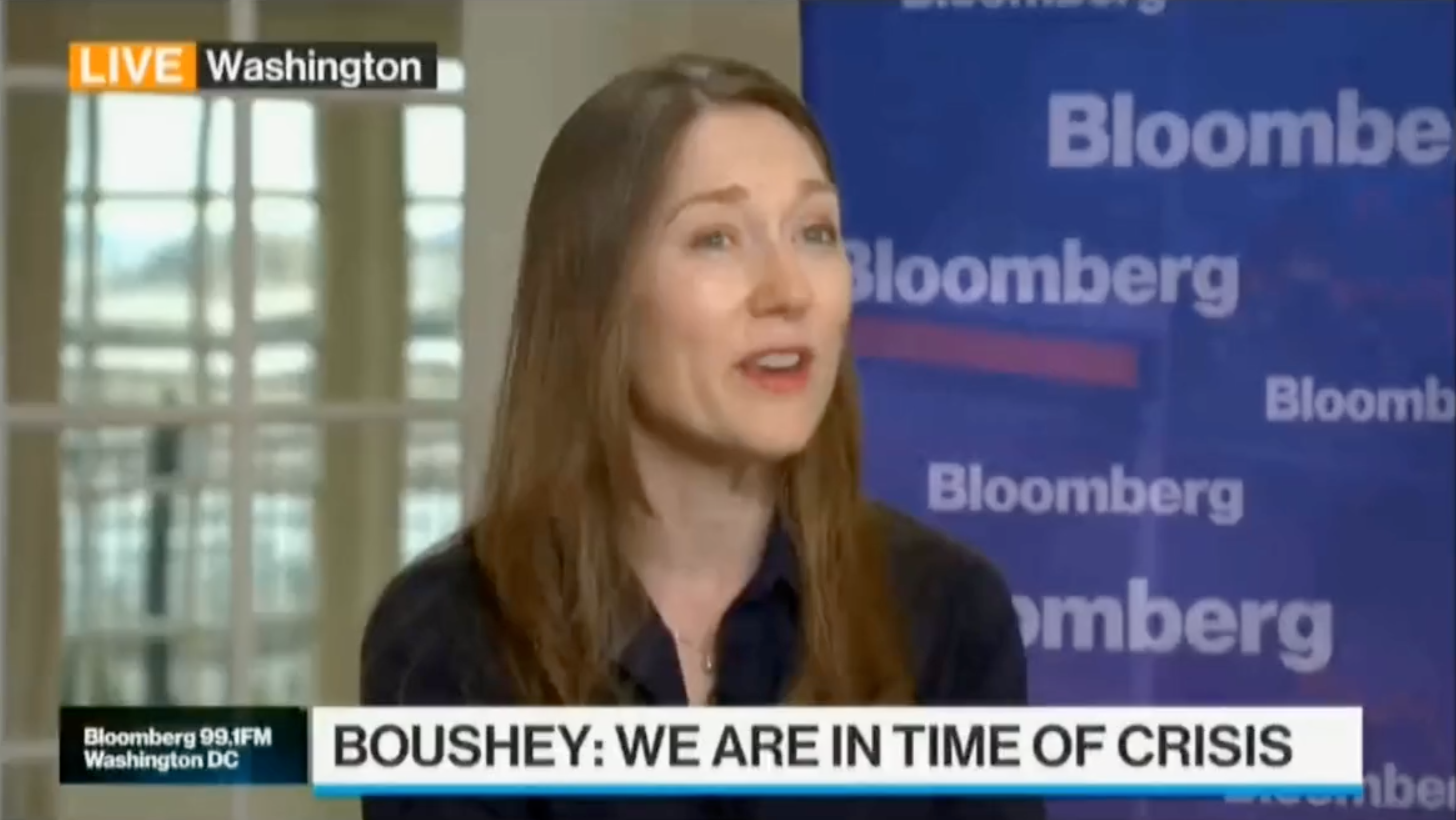
    In a recent interview on Bloomberg TV, Biden official Heather Boushey, who sits on the Council of Economic Advisers, was asked by host Jonathan Ferro about economically illiterate comments from the administration regarding the price of gas at the pump.

    Ferro laid out how the Biden admin’s latest scapegoat, gas station owners, was so poorly received that Amazon owner Jeff Bezos called them out on it.

    “Where’s that messaging coming from?” asked Ferro, to which Boushey returned word salad.

    Unsatisfied with her bullshit, host Tom Keene held her feet to the fire – asking “You didn’t answer his important question – everyone in the nation wants to know the answer to the question Mr. Farro just asked you, which is ‘who is advising the president on shockingly naive price theory over a gallon of gas.’

    To which Boushey robotically returned to the ‘time of global crisis’ talking points.

    “Is this central planning now?” asked Ferro.

    Answer? More word salad.

    Watch:

    via Zerohedge

  • ‘America, The Beautiful’ Is Broken

    ‘America, The Beautiful’ Is Broken

    July 5, 2022 at 06:34AM ‘America, The Beautiful’ Is Broken

    Authored by David Haggith via The Great Recession blog,

    The twaddle that comes out of the White House is deep right now. When our tottering president isn’t out enjoying a bike ride and falling down because Putin put gum in his stirrup so that he couldn’t get his foot out to steady himself, he is assembling a colorful team of Frisco-style professionals highly qualified in the field of transition to guide us through the vicissitudes of war, plague and famine that are swirling around the entire globe right now. (“Frisco” is the name the city loves to hate, so I chose it intentionally for a city I once found beautiful.)

    The LGBTQRS+++ hip chick that is the president’s talking mop at the press secretary’s podium spent her morning yesterday assuring us all that we are experiencing a “period of transition” right now — something I am sure she has much experience with — going from times of economic strength in which the vast majority of us are doing great into even better times. Thank goodness for people who can guide us through transition to understand what we are going through and where we will end up, which will be — if we follow MoJoe & Co. — coming out the opposite sex from whatever we we were when we came into this world:

    The primary accomplishment of Team Biden by the end of his one term that has somehow managed to be even more divisive than Trump will be to recolor the flag behind her with prettier inclusive rainbow stripes than the binary red and white that it historically displays. Until then, at least, we now know what “Build Back Better” looks like. According to Jean-Pierre, we are already there and clearly moving into even better times.

    It would be my own analysis, on the other hand, that if she and her colleagues don’t see a recession anywhere in sight, I can recommend an eye doctor for all of them. Their own Dr. Powell Fauci Magoo, who, incidentally, was also Trump’s White House physician, doesn’t seem to be serving them well. In the very least, I recommend they step outside the White House for a few moments to escape the curling rings of herb smoke that cloud their vision and take a look around. Perhaps I can provide a guided tour for her, though I am sure she will hallucinate some deep state of Democratic delusions she wants to see so that her trip is not as bad as mine or yours is and is about to be:

    What is the true state of the disunion?

    While we continue to hear, albeit less confidently now, about the economy being strong, what I see is that the economy has rarely looked worse in numerous ways. Obviously, I am not smoking the right stuff to enjoy the “economy as it ought to be” trip; but here is what I see in black and white when not blinded by so many pretty colors swimming around my head as MoJoe & Co. apparently see in theirs.

    First, I note that increasingly a number of voices in the financial press — some mainstream, some not — are starting to hum along to my familiar tune — not very loudly or clearly yet, BUT they are starting to pick it up:

    Phoenix Capital now says, “The U.S. is Already In a Recession… Here’s How to Profit From It!“

    Everything else is imploding and has been for months.

    At least, some people can see the obvious that it does not pay to see when your job (or next term) depends on your convincing everyone they are seeing something else.

    Phoenix presents as evidence the rather sharp decent of Walmart and Amazon into the ashes of retail.

    Bill “the Dud” Dudley, a former New York Fed chief and one-time vice chair of the Fed’s money-printing FOMC, says with a friendly smile, “Welcome To The Recession.” For a moment there, it almost sounded like he agreed with me that a recession is already here, but in typical bansker safety-net style he adds “in another 12-18 months.” Still, that is better eyesight than can be found in the White House. He, at least, is certain the blurry blob he sees up ahead is a recession, and for a Fed guy he’s speaking rather out of turn:

    While the Fed’s forecasts have become more plausible over time, I see several reasons to expect a much harder landing. Much like Wile E. Coyote heading off a cliff, the US economy has plenty of momentum but rapidly disappearing support. Falling back to earth will not be a pleasant experience.

    Zero Hedge

    That’s hardly anywhere near as comforting as Jean-Pierre. I think I’ll have what she’s having.

    Just to be clear, Dudley states,

    If you’re still holding out hope that the Federal Reserve will be able to engineer a soft landing in the US economy, abandon it. A recession is inevitable within the next 12 to 18 months.

    So, not only can some people see a recession up ahead, but they are certain that it is “inevitable” and that a soft landing is a dream to be abandoned.

    The determining factors for the quality of our landing that Dudley lays out (the reasons we had better hope they line Powell’s runway with lots of bouncy houses and foam to soften the landing) are as follows:

    • First, persistent price increases have forced the Fed to shift its focus from supporting economic activity to pushing inflation back down. (“The central bank’s employment mandate is now subservient to its inflation mandate.”)
    • Second, the new focus on price stability will be relentless. (“Fed officials recognize that failing to bring inflation back down would be disastrous.”)
    • Third, the current economic expansion is uniquely vulnerable to a sudden stop. (“It’ll take time and a considerable monetary policy tightening to reduce demand and for that to translate fully into weaker production of goods and services. But when that time comes, the production adjustment is likely to be abrupt…. As inflation outstrips wage growth, the personal savings rate has plummeted, from 26.6% in March 2021 to 4.4% this April, significantly below its long-run average. No wonder consumer sentiment has fallen to levels last reached in the aftermath of the 2008 financial crisis, and Google searches for the word “recession” are hitting new records.”)
    • Finally, economic history points to a hard landing. (“The Fed has never tightened enough to push up the unemployment rate by 0.5 percentage point or more without triggering a recession.”)

    In other words, this:

    Biden and his talking mop on the other hand assured us that “recession is not inevitable” and is nowhere in sight. That is because, like the coyote, they forgot to look right beneath themselves. Oops.

    Some others also see a recession as “inevitable” and see happening in the near term as “more likely than not”:

    Since people are not inclined to take my word for it, let my have a Nobel economist (I realize they cannot usually see a recession until it is behind them) reiterate the points for me as he did earlier this week:

    Biden, on the other hand, assured everyone on the same day that another prize of an economist, Larry Summers, assured him “there’s nothing inevitable about a recession.” Never mind that even Summers did say a recession now looks highly likely … but just not … “inevitable.”

    Over the weekend, Nomura became the first bank to place the recession squarely within 2022.

    The Atlanta Fed, meanwhile, is now prognosticating the 2nd quarter of 2022 closes with precisely zero economic growth, which will still leave us in a trough that began last quarter. If that is the case, then GDP will have continued to scrape along a ceiling that is 1.5% lower than GDP was at the start of the year, now half a year gone by, meaning we entered and remained in a GDP trough since the start of the year.

    Nomura believes a mild recession starting in Q4 2022 is now more likely than not (ZH: expect the mood to deteriorate further as “mild” eventually becomes “jarring”)…. Consumers are experiencing a significant negative sentiment shock, energy and food supply disruptions have worsened and the outlook for foreign growth has deteriorated. All these factors will likely contribute to the expected downturn.

    Zero Hedge

    Amazing. People are starting to look up and see what has been obvious all around them for months now and are finally whipping up the courage to say what they are seeing.

    Nomura believes the Fed will skid right on past the QT stopping point as predictably as Wile E. Coyote skids past the cliff edge. Biden believes, if you don”t look down, what’s down there can’t hurt you. Of course that was what he believed when he was out riding his bike, too.

    Goldman Sachs is another bank that now joins those who are humming the same tune to say, at least,

    We now see recession risk as higher and more front-load…. We are increasingly concerned that the Fed will feel compelled to respond forcefully to high headline inflation and consumer inflation expectations.

    Yahoo!

    How “front-load[ed]” they don’t say. They, of course, expect it to be shallow and clear up like a short cloudburst.

    Piper Sandler … shows that the typical bear market follows the start of a recession with a delay of 95 days, and eventually exhaust itself with an average total drawdown of 40% which means that current recession probably already started some time in March:

    Zero Hedge

    Of course, following the worst start for stocks to a year since the Great Depression…

    … and also the worst start since 1932 in total return terms across all asset classes…

    … one would be excused to ask if instead of a garden variety recession, the US isn’t rushing straight into a depression.

    Summarizes the New York Post,

    Wall Street bets are growing that the U.S. economy tumbles into a recession next year as the Federal Reserve raises interest rates at the fastest pace in two decades in order to cool scorching-hot inflation. Bank of America Global Research strategists have ratcheted up the odds of an economic downturn to 40% in 2023…. “Our worst fears around the Fed have been confirmed: They fell way behind the curve and are now playing a dangerous game of catch up.”

    OK. Well, none of the banks, except the Atlanta Fed, are quite with me yet, but they are all getting closer and closer by the day.

    Now that the experts are lining up on the recession side of the fence, let’s look at a short list of major weaknesses I see in the US economy that are screaming recession is here or near:

    The auto industry remains a wreck

    In a recent article titled “The Real GDPig was a Whole Lot Uglier than it Looked!” I dug deep beneath the Bureau of Economic Asininity’s surface GDP numbers to reveal how the auto industry has been in a long slouch and was, contrary to overt claims by the BEA, a major factor in pulling the economy down last quarter and the quarter before. There was something I noted, based on loads of evidence from the BEA, that was seriously wrong with the BEAs claims about automobiles driving GDP up in Q4 and then down in Q1, probably because the industry is in such disarray that BEA doesn’t know how to sort out the anomalies in its own numbers.

    The auto industry has also been a major factor in the superheated CPI reports because scarcity due to lack of production has been driving up prices. Many tried to claim the auto industry was turning around, using it as a sign that the negative GDP print in Q1 was a one-off. I did not believe evidence bore that out, and that has turned out now to be the case:

    The S&P Global Sector PMI™ revealed that Automobiles & Auto Parts sector output contracted worldwide for a second successive month amid the sharpest reduction in new orders since the COVID-19 pandemic and renewed supply disruptions linked to the pandemic and Russia-Ukraine war.

    Seeking Alpha

    While that is a global production situation, it doesn’t look any better in the US:

    The U.S. light-vehicle market doesn’t appear to be in the best health. While many automakers now opt against issuing monthly sales reports, those that still do are posting some pretty brutal numbers. This does not bode well for an industry that seemed pretty certain that 2022 would be its recovery year.

    The Truth about Cars

    Manufacturers are still warning about supply constraints and an inability to manufacture at full scale. The auto industry has always been a major component in GDP and is continuing to pull it down. Some economists thought the industry would start getting back up to cruising speed this quarter. That does not appear to have been the case.

    As for sales volume, most automakers were posting double-digit declines for the month of May. Overall, the seasonally adjusted, annualized rate of sales (SAAR) for May fell dropped to a crippling low of 12.81 million, according to Motor Intelligence. That’s to be contrasted against April’s 14.6 million units and over 17 million average from May of 2021…. “The market faces a real risk of turning negative from 2021.”

    Well, that just doesn’t sound good at all, and that was the area where the optimists were most expecting some reprieve after the negative Q1 GDP print, which they chose to believe was the anomaly, rather than accept the idea that the high GDP increase in the quarter before was the clear outlier from the trend.

    Retail remains a mixed bag

    In another recent article titled “The Retail Apocalypse was Bloodier than it Looked,” I similarly described how the retail industry was a much bloodier picture than what many economists were making of it. It seemed like major retailers got ready to throw a party and one one came. Last quarter they stocked up all they could and remained laden with inventory from imports that are mistakenly thought to subtract from GDP, but that is a misunderstanding of how they are merely reconciled back out of other GDP inputs in which they are embedded.

    This quarter major retailers are threatening to unload, and that is seen by some as possible hope for a boom in retail; but at what price?

    America’s top retailers messed up – particularly the ones that focus on durable goods rather than groceries. Most of them released their earnings reports last month, saw shares take a beating and moved on….

    Then, the mega-retailer [Target] did something no one was expecting. On Tuesday, Target told investors it anticipated a profit margin more around 2%. It would slash prices on certain goods and cancel incoming orders. It’s highly unusual for a company to slash its profit expectations within weeks of its earnings report.

    Target said in its Tuesday press release that the profit slash comes from a need to “right-size” inventories. People aren’t buying items like televisions, outdoor furniture and kitchen appliances like they were last year….

    It’s all leading to what Forbes’ Madeline Halpert called “markdown mania,” and not just at Target. Gap is hawking $60 leggings for just $12. Target is selling televisions for 25% off and patio sets at a 52% markdown….

    The demand for random crap suddenly vanished, taking everyone by surprise.

    Freightwaves

    It is hard to imagine how massive price slashing to near-zero profit margins to unload inventory no one wants to buy is going to prove to be a positive for GDP! As reported in the headlines, GDP is measured in inflation-adjusted dollars, so I suppose the impact of the mess in retail inventories and sales will depend on how much prices are slashed and how successfully that gets consumers to pick up the unwanted merchandise. Regardless of how it impacts the GDP number, this extreme dislocation clearly speaks of a badly broken economy, not one humming along like a new car … or like new cars used to hum along. Sounds more like one that’s humming my tune.

    [ZH: An example of this is the fact that while we started the year with relatively ‘low’ inventory-to-sales, that has since exploded higher amid the ‘bullwhip’ effect…

    Why does this matter? Well, for a simple but critical reason: if one year ago we saw the hyperinflationary start of the bullwhip effect, we have entered the terminal phase of the “bullwhip effect”, where plunging inventory-to-sales ratios reverse violently higher, where supply chains unclog suddenly and rapidly amid a sudden chill in the economy, and where prices for so-called “core” goods collapse almost overnight, even as non-core prices (food and energy) explode even higher.]

    Something is broken. Likely it means that backlogged inventory arrived all at once a day late and many dollars short for the retailer. Lest you think I’m the only one who is struggling to rightly understand the peculiarities here, let me quote the expert in the article:

    To end, I’d like to emphasize that the vibes are abruptly off and no one really knows what’s happening.

    That’s a mess, not strength. That is log jams clearing through the ports then jamming up in warehouses, causing aberrations in how things are reported. Dysfunctional is not strong. Even executives at the…

    Gartner supply chain conference in Florida this week … were confused and not feeling very zesty…. Transportation managers canceled orders in early 2020 predicting a recession, then found their hastiness left shelves empty and consumers furious. Now that they’ve built back up, customers aren’t buying anymore and their balance sheets are destroyed. The whiplash is baffling.

    The truth is retail sucks so bad right now that even the retailers have no idea what to make of it, neither do the shippers. It’s just baffling whiplash. “Destroyed balance sheets” are not the stuff of strong economies. What we have is a trainwreck or a shipwreck, and retailers and shippers alike are struggling to figure out what to do with it and what it really means.

    Housing slides

    Housing prices and housing sales are already falling as mortgage interest has more than doubled. Consumer sentiment is already at an all-time low. (Hence the need for Jean-Pierre to tell us things are not as bad as they feel right now, and we are transitioning from great economic strength to strength that is even built back better.)

    The housing market isn’t at a level that will by itself put us into recession just yet, but it is certainly sliding rapidly that way … and rather all of a sudden, given that Fed interest rates are still on the hot stimulus end of the Fed’s normal scale. That is because mortgage rates our outpacing the Fed’s tweaks, anticipating where things are headed:

    The highest share of sellers on record dropped their list price during the four weeks ending June 12 as mortgage rates shot up to levels not seen since 2008….

    “The housing market isn’t crashing, but it is experiencing a hangover as it comes down from an unsustainable high,” said Redfin deputy chief economist Taylor Marr. “Housing demand has already cooled significantly to the point that the industry has begun facing layoffs.

    “Demand from homebuyers was still extremely high as recently as February, but rates are making it really tough. Going from 3% to nearly 6% almost instantly has scared a lot of people out of the market.”

    Redfin

    Prices have stalled and have begun to follow sales down in some areas. Employment in the industry definitely has started to fall. What housing moves now foretell is that, as all the other forces mentioned above drive us quickly into recession, housing will be bringing up the rear to stomp us down deeper, given that housing the biggest GDP drivers in the US economy, being a major factor even in retail sales of all the items that get built into a house, plus all the new furniture that fills the new homes.

    So, while the Biden-Powell team are calling all of this a strong and resilient economy, you had better think twice if they try to sell you choice waterfront real estate in Florida. It’s probably not in Miami or on the Gold Coast.

    The golden oldie of America’s pride

    If America’s economy is looking strong, why is America’s most golden of all cities now referred to in The Atlantic as a “failed city?” Herb Caen, San Francisco’s “beloved old chronicler,” once said that, If he ever got to heaven, he’d look around and say, “It ain’t bad, but it ain’t San Francisco.” To read The Atlantic’s description today and many others I’ve read over the past two years, he might say today upon opening his eyes in San Francisco, “I knew I’d wind up in hell.” It’s such pretty beaten up version of the city he once loved that he would only recognize it as some upside down version of the old San Fran.

    Says a modern-day liberal chronicler,

    Progressive leaders here have been LARPing left-wing values instead of working to create a livable city. And many San Franciscans have had enough.

    Today’s scene looks so bad it may finally liberate liberals from their own liberalism. Here, too, the smoke of herb has long circled the heads of those that lead, and look at how colorfully banal it has all become:

    On a cold, sunny day not too long ago, I went to see the city’s new Tenderloin Center for drug addicts on Market Street. It’s downtown, an open-air chain-link enclosure in what used to be a public plaza. On the sidewalks all around it, people are lying on the ground, twitching. There’s a free mobile shower, laundry, and bathroom station emblazoned with the words dignity on wheels. A young man is lying next to it, stoned, his shirt riding up, his face puffy and sunburned. Inside the enclosure, services are doled out: food, medical care, clean syringes, referrals for housing. It’s basically a safe space to shoot up. The city government says it’s trying to help. But from the outside, what it looks like is young people being eased into death on the sidewalk, surrounded by half-eaten boxed lunches.

    The Atlantic

    I used to think San Francisco was America’s most beautiful major city — the golden lady in my opinion — even if too liberal for my taste. Not now. Even the people who used to feel privileged to live there want to get out of town and head for the hills … forever. As they do, Californians are taking the values that destroyed their great cities and transporting them like transplanted cancer cells to Idaho, Montana, Colorado and Wyoming so they can wreck all that is beautiful about those places, too, replacing farmlands and ranches with MacMansions and shopping centers in order to do it all over again.

    But I digress. Let it suffice for now to say, the picture of San Francisco as it has become is a pretty good metaphor for the US economy as it has become. I’ll leave you, then, with words of the modern-day chronicler above:

    During the first part of the pandemic, San Francisco County lost more than one in 20 residents—myself among them. Signs of the city’s pandemic decline are everywhere—the boarded-up stores, the ghostly downtown, the encampments. But walking these streets awakens me to how bad San Francisco had gotten even before the coronavirus hit—to how much suffering and squalor I’d come to think was normal.

    Stepping over people’s bodies, blurring my eyes to not see a dull needle jabbing and jabbing again between toes—it coarsened me. I’d gotten used to the idea that some people just want to live like that. I was even a little defensive of it: Hey, it’s America. It’s your choice….

    I’d gotten used to the crime, rarely violent but often brazen; to leaving the car empty and the doors unlocked so thieves would at least quit breaking my windows. A lot of people leave notes on the glass stating some variation of Nothing’s in the car. Don’t smash the windows….

    A couple of years ago, one of my friends saw a man staggering down the street, bleeding. She recognized him as someone who regularly slept outside in the neighborhood, and called 911. Paramedics and police arrived and began treating him, but members of a homeless advocacy group noticed and intervened. They told the man that he didn’t have to get into the ambulance, that he had the right to refuse treatment. So that’s what he did. The paramedics left; the activists left. The man sat on the sidewalk alone, still bleeding. A few months later, he died about a block away…

    In lockdown the beauty became obscene. The city couldn’t get kids back into the classroom; so many people were living on the streets; petty crime was rampant. I used to tell myself that San Francisco’s politics were wacky but the city was trying—really trying—to be good. But the reality is that with the smartest minds and so much money and the very best of intentions, San Francisco became a cruel city. It became so dogmatically progressive that maintaining the purity of the politics required accepting—or at least ignoring—devastating results….

    If you’re going to die on the street, San Francisco is not a bad place to do it. The fog keeps things temperate. There’s nowhere in the world with more beautiful views. City workers and volunteers bring you food and blankets, needles and tents. Doctors come to see how the fentanyl is progressing, and to make sure the rest of you is all right as you go.

    It’ll all get so much better when the water from the parched Colorado River is completely shut off later this summer, driving LA water-mob slobs to storm SF to get their hand’s on some liquid that may soon sell for more than the city’s old gold. The old lady, drowning in wokeness and tears and suffocating in the worn-out wraps of her own regulations and process has been laid to rest in a graveyard of intentional squalor for the sake of the impoverished at a cost of $60,000 per tent space born by the SF taxpayers. I’m sure the tolerance of criminal decline seen in the “smash and grabs” I wrote about at the start of the year for RT.com didn’t help. May she Rest In Rainbows as a testament to all that is dying in liberal, woke Amerika.

    via Zerohedge

  • Biden’s Economy Sees Worst First Half for Stocks Since 1872

    Biden’s Economy Sees Worst First Half for Stocks Since 1872

    July 2, 2022 at 08:34AM Breitbart Business Digest: Biden’s Economy Sees Worst First Half for Stocks Since 1872

    Back when Jesse James prowled the land, the savings of the citizenry was constantly under threat by bandits looking to heist their money. These days, the money itself is stealing the savings of people in the form of high inflation and crashing financial markets.

    Yesterday, we pointed out that the first half of the year was the worst for stocks since 1970. The S&P 500 dropped by around 20 percent, just shy of the 1970 bear market record of 21 percent. The Nasdaq Composite was down by 29.5 percent, the worst decline ever. The Dow Jones Industrial Average fell 15.3 percent, the worst since 1962.

    We must confess, however, that things were even worse than we thought. Those declines are in nominal terms, meaning they do not take into account the massive inflation we’ve experienced in the first half of this year. Stocks were falling in dollars terms, but those dollars themselves were declining in value. As we’ve pointed out again and again, inflation introduces chaos into financial calculations that can often conceal deep points of economic stress.

    Michael Hartnett, the chief investment strategist at Bank of America Securities, ran the inflation-adjusted numbers in a note for clients this morning. He found that this has been the worst start of the year for the S&P since 1872, the year Jesse James and Cole Younger led their gang to rob a bank in Columbia, Kentucky, and ended up shooting a teller who refused to open the vault.

    The James Boys, Jesse and Frank, sit in front of the Younger Brothers, Cole and Bob. The four men formed a gang that robbed trains and banks across the American midwest. (Corbis via Getty Images)

    At the time, the country was led by President Ulysses S. Grant, a military hero who was not exactly an ace at economic policy. The following year, the country fell into what was then known as the “Great Depression.” This severe downturn lasted from 1873 to 1879. At 65 months, it is still to this day the longest-lasting contraction identified by the National Bureau of Economic Research, outlasting the 43-month contraction of the Great Depression of the 1930s. Ten states, scores of railroads, hundreds of banks, and thousands of businesses went bankrupt during the 1870s Great Depression.

    As bad as that sounds, Hartnett points out that 2022 is looking like the worst year for government bonds since 1865. Government bonds fell 15.4 percent in the first half of the year, even before adjusting for inflation. Year over year, they were down by around twice that. And that is before adjusting for inflation (which is hard to do when measuring bonds issued in a variety of currencies from all around the globe.)

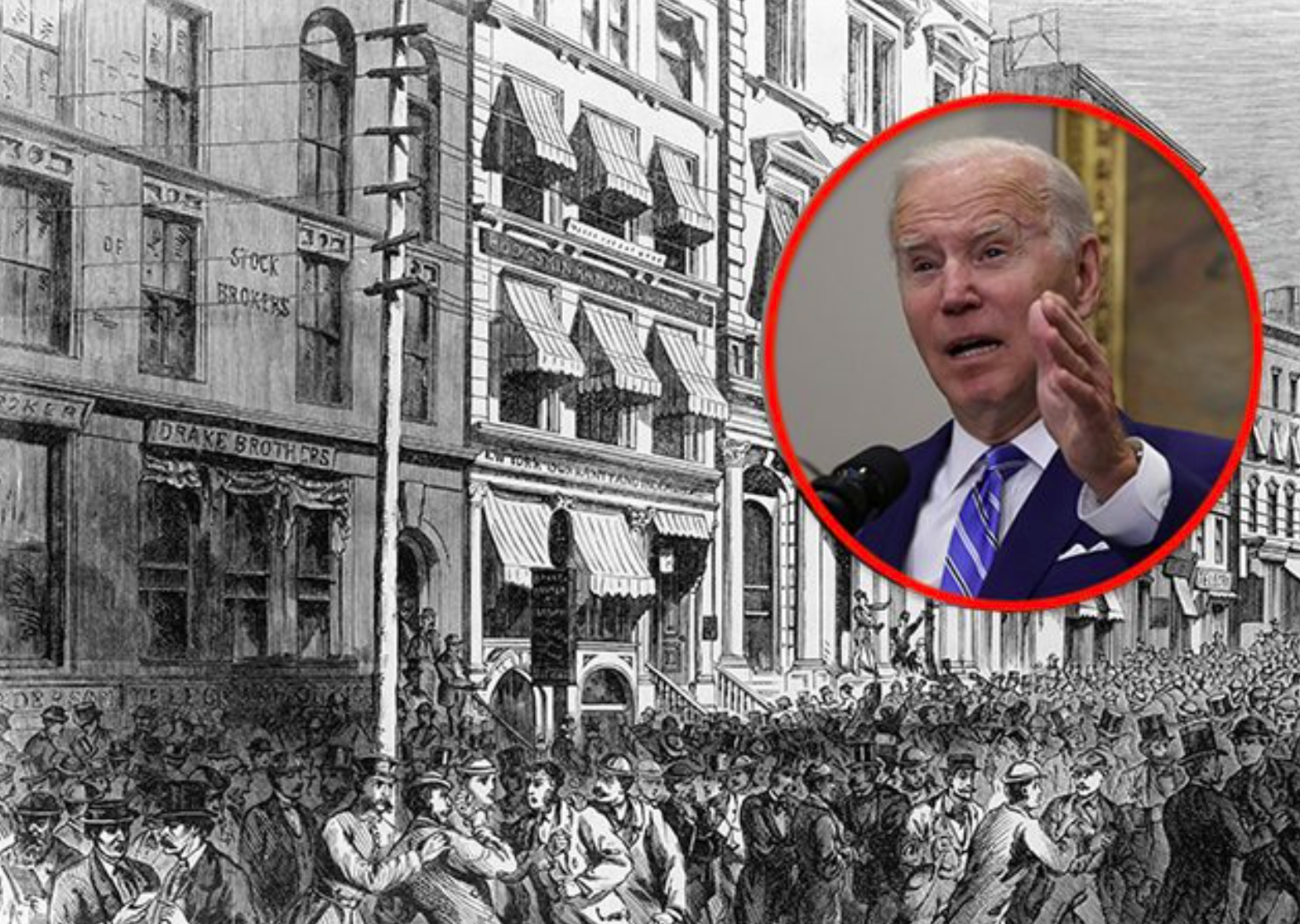
    A panicked crowd on Broad Street, New York City, after the closing of the stock exchange doors during the Panic of 1873 on September 20, 1873, an event that triggered a period economists refer to as the Long Depression. (Kean Collection/Archive Photos/Getty Images)

    A political cartoon by Thomas Nast showing the financial Panic of 1873 being caused by abnormal growth in the railroad industry. The image depicts an explosion blowing up the Northern Pole Railroad Company, The Bank of Inflation, and the Fire and Brimstone Company. The inscription below reads: “The ‘Long’ and ‘Short’ of it is a general ‘Bust’ up in the ‘Street.’” (Interim Archives/Getty Images)

    This does not mean that there was no money to be made in the first half of the year. As everyone knows, oil and gas prices have exploded higher. Commodities overall had their best inflation-adjusted first half of the year since 1946, according to Hartnett. Oil rose 46 percent, natural gas 74 percent, and iron ore 28.2 percent.

    Certainly, recent economic data will do little to reassure investors about the economy. Construction spending unexpectedly declined in May, the first drop in eight months. Strikingly, single home construction spending was flat for the month—before adjusting for inflation. In inflation adjusted terms, then, construction has rolled over and is declining rapidly. The Institute for Supply Management’s assessment of manufacturing showed growth continued, albeit at the slowest pace since May 2020, in June. But both employment and new orders fell into contraction territory.

    The Federal Reserve Bank of Atlanta’s GDPNOW economy tracker had fallen into negative territory on Thursday. On Friday, it plunged even deeper to minus 2.1. Bank of America slashed its forecast for second quarter GDP to zero—before it got a look at construction and the ISM report.

    Next week’s focus will be on the nonfarm employment report. All signs point to ongoing strength in the labor market, with the consensus for job growth at 250,000 and the unemployment rate at 3.6 percent. A big question mark is how long it will take for negative GDP growth, sharply rising interest rates, and high inflation to throw sand into the gears of the labor market.

    via Breitbart