Tag: SBN

  • Pete Santilli Was Right! Facebook, Youtube, Twitter Have Given Marxists Back-end Censorship Portals

    Pete Santilli Was Right! Facebook, Youtube, Twitter Have Given Marxists Back-end Censorship Portals

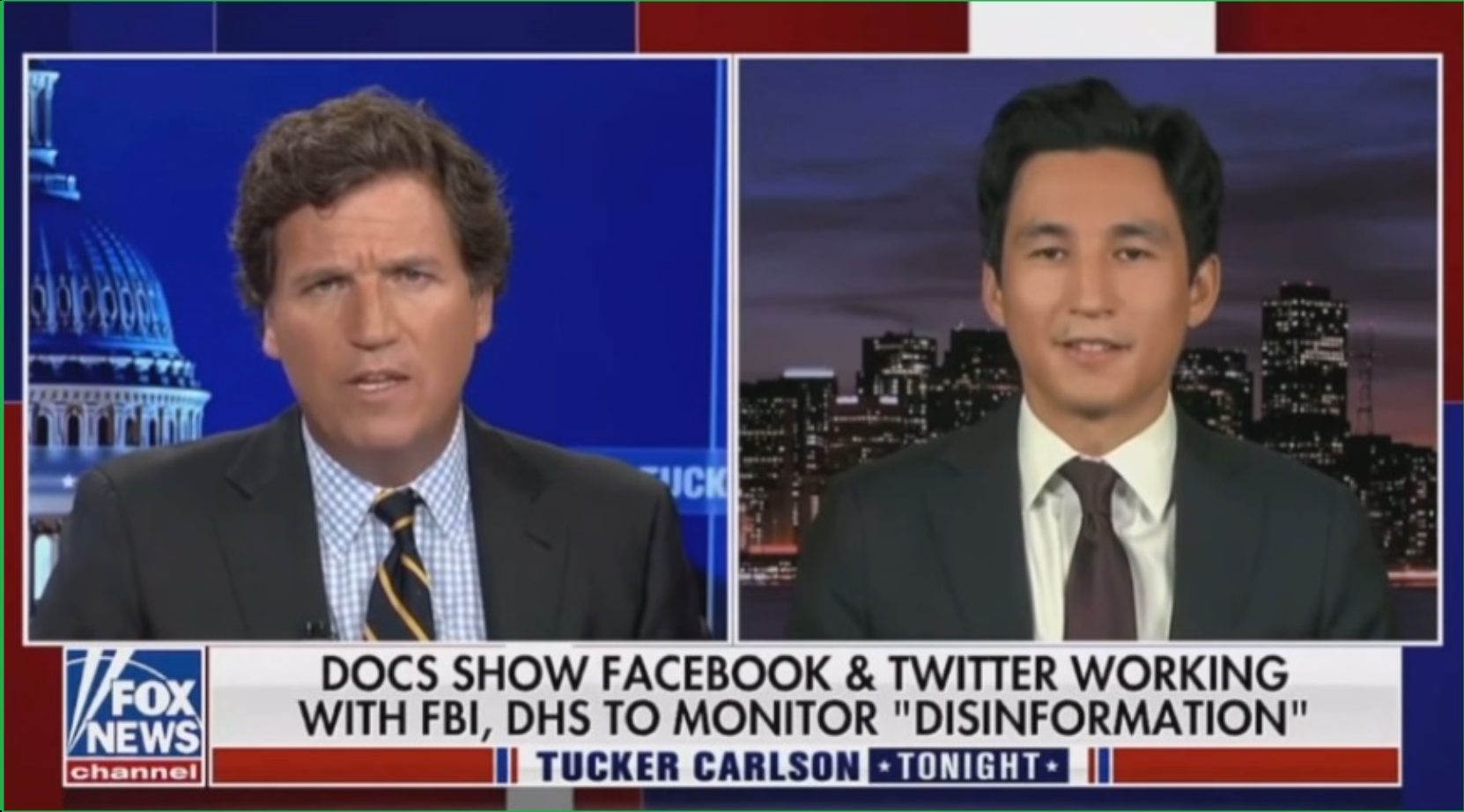
    Tucker Carlson Discusses Leaked Documents Reflecting Direct DHS Portals to Social Media Companies

    My suspicious cat sensibilities are triggered by the timing of these “leaked explosive documents,” in relation to the Elon Musk Twitter takeover.  That said, here is Tucker Carlson interviewing Intercept journalist Lee Fang. {Direct Rumble Link} – WATCH:

    .

    Lee Fang… “Over the last five years“… Yeah, bulls**t on that. Sorry.  CTH has outlined in painstakingly granular detail, the weaponization of the networks involved began immediately after January 2009 – specifically right after Obama’s Cairo speech that kicked off the ‘Arab Spring‘ movement.  That’s when Facebook and Twitter were recruited for participation in the construct.

    After a few years of beta-testing the govt-corporate relationship, and simultaneously measuring the influence factor, things sped up, and by 2011 Obama-era DHS operatives began collaborating with Big Tech in constructing the modern surveillance and influence system for domestic rollout.

    This system didn’t just pop-up “over the past five years.”   A timeframe which, not coincidentally according to the Intercept, removes Barack H Obama from the era of accountability.  The effort to construct a fraudulent timeline makes me even more suspicious of this “leak.”

    Tucker Carlson saying “I’m not sure why you wrote this“… indicates to me his own awareness of the suspicious timing.   Watch the other hand.

    via The Last Refuge

    November 1, 2022 at 06:00AM

    Leaked Documents Outline DHS’s Plans to Police Disinformation

    The Department of Homeland Security is quietly broadening its efforts to curb speech it considers dangerous, an investigation by The Intercept has found. Years of internal DHS memos, emails, and documents — obtained via leaks and an ongoing lawsuit, as well as public documents — illustrate an expansive effort by the agency to influence tech platforms.

    The work, much of which remains unknown to the American public, came into clearer view earlier this year when DHS announced a new “Disinformation Governance Board”: a panel designed to police misinformation (false information spread unintentionally), disinformation (false information spread intentionally), and malinformation (factual information shared, typically out of context, with harmful intent) that allegedly threatens U.S. interests. While the board was widely ridiculed, immediately scaled back, and then shut down within a few months, other initiatives are underway as DHS pivots to monitoring social media now that its original mandate — the war on terror — has been wound down.

    Behind closed doors, and through pressure on private platforms, the U.S. government has used its power to try to shape online discourse. According to meeting minutes and other records appended to a lawsuit filed by Missouri Attorney General Eric Schmitt, a Republican who is also running for Senate, discussions have ranged from the scale and scope of government intervention in online discourse to the mechanics of streamlining takedown requests for false or intentionally misleading information.

    Key Takeaways

    • Though DHS shuttered its controversial Disinformation Governance Board, a strategic document reveals the underlying work is ongoing.
    • DHS plans to target inaccurate information on “the origins of the COVID-19 pandemic and the efficacy of COVID-19 vaccines, racial justice, U.S. withdrawal from Afghanistan, and the nature of U.S. support to Ukraine.”
    • Facebook created a special portal for DHS and government partners to report disinformation directly.

    “Platforms have got to get comfortable with gov’t. It’s really interesting how hesitant they remain,” Microsoft executive Matt Masterson, a former DHS official, texted Jen Easterly, a DHS director, in February.

    In a March meeting, Laura Dehmlow, an FBI official, warned that the threat of subversive information on social media could undermine support for the U.S. government. Dehmlow, according to notes of the discussion attended by senior executives from Twitter and JPMorgan Chase, stressed that “we need a media infrastructure that is held accountable.”

    “We do not coordinate with other entities when making content moderation decisions, and we independently evaluate content in line with the Twitter Rules,” a spokesperson for Twitter wrote in a statement to The Intercept.

    There is also a formalized process for government officials to directly flag content on Facebook or Instagram and request that it be throttled or suppressed through a special Facebook portal that requires a government or law enforcement email to use. At the time of writing, the “content request system” at facebook.com/xtakedowns/login is still live. DHS and Meta, the parent company of Facebook, did not respond to a request for comment. The FBI declined to comment.

    DHS’s mission to fight disinformation, stemming from concerns around Russian influence in the 2016 presidential election, began taking shape during the 2020 election and over efforts to shape discussions around vaccine policy during the coronavirus pandemic. Documents collected by The Intercept from a variety of sources, including current officials and publicly available reports, reveal the evolution of more active measures by DHS.

    According to a draft copy of DHS’s Quadrennial Homeland Security Review, DHS’s capstone report outlining the department’s strategy and priorities in the coming years, the department plans to target “inaccurate information” on a wide range of topics, including “the origins of the COVID-19 pandemic and the efficacy of COVID-19 vaccines, racial justice, U.S. withdrawal from Afghanistan, and the nature of U.S. support to Ukraine.”

    “The challenge is particularly acute in marginalized communities,” the report states, “which are often the targets of false or misleading information, such as false information on voting procedures targeting people of color.”

    The inclusion of the 2021 U.S. withdrawal from Afghanistan is particularly noteworthy, given that House Republicans, should they take the majority in the midterms, have vowed to investigate. “This makes Benghazi look like a much smaller issue,” said Rep. Mike Johnson, R-La., a member of the Armed Services Committee, adding that finding answers “will be a top priority.”

    How disinformation is defined by the government has not been clearly articulated, and the inherently subjective nature of what constitutes disinformation provides a broad opening for DHS officials to make politically motivated determinations about what constitutes dangerous speech.

    The inherently subjective nature of what constitutes disinformation provides a broad opening for DHS officials to make politically motivated determinations about what constitutes dangerous speech.

    DHS justifies these goals — which have expanded far beyond its original purview on foreign threats to encompass disinformation originating domestically — by claiming that terrorist threats can be “exacerbated by misinformation and disinformation spread online.” But the laudable goal of protecting Americans from danger has often been used to conceal political maneuvering. In 2004, for instance, DHS officials faced pressure from the George W. Bush administration to heighten the national threat level for terrorism, in a bid to influence voters prior to the election, according to former DHS Secretary Tom Ridge. U.S. officials have routinely lied about an array of issues, from the causes of its wars in Vietnam and Iraq to their more recent obfuscation around the role of the National Institutes of Health in funding the Wuhan Institute of Virology’s coronavirus research.

    That track record has not prevented the U.S. government from seeking to become arbiters of what constitutes false or dangerous information on inherently political topics. Earlier this year, Republican Gov. Ron DeSantis signed a law known by supporters as the “Stop WOKE Act,” which bans private employers from workplace trainings asserting an individual’s moral character is privileged or oppressed based on his or her race, color, sex, or national origin. The law, critics charged, amounted to a broad suppression of speech deemed offensive. The Foundation for Individual Rights and Expression, or FIRE, has since filed a lawsuit against DeSantis, alleging “unconstitutional censorship.” A federal judge temporarily blocked parts of the Stop WOKE Act, ruling that the law had violated workers’ First Amendment rights.

    “Florida’s legislators may well find plaintiffs’ speech ‘repugnant.’ But under our constitutional scheme, the ‘remedy’ for repugnant speech is more speech, not enforced silence,” wrote Judge Mark Walker, in a colorful opinion castigating the law.

    The extent to which the DHS initiatives affect Americans’ daily social feeds is unclear. During the 2020 election, the government flagged numerous posts as suspicious, many of which were then taken down, documents cited in the Missouri attorney general’s lawsuit disclosed. And a 2021 report by the Election Integrity Partnership at Stanford University found that of nearly 4,800 flagged items, technology platforms took action on 35 percent — either removing, labeling, or soft-blocking speech, meaning the users were only able to view content after bypassing a warning screen. The research was done “in consultation with CISA,” the Cybersecurity and Infrastructure Security Agency.

    Prior to the 2020 election, tech companies including Twitter, Facebook, Reddit, Discord, Wikipedia, Microsoft, LinkedIn, and Verizon Media met on a monthly basis with the FBI, CISA, and other government representatives. According to NBC News, the meetings were part of an initiative, still ongoing, between the private sector and government to discuss how firms would handle misinformation during the election.

    US Secretary of Homeland Security Kirstjen Nielsen stands alongside US President Donald Trump as he speaks prior to signing the Cybersecurity and Infrastructure Security Agency Act in the Oval Office of the White House in Washington, DC, November 16, 2018. - The act creates the Cybersecurity and Infrastructure Security Agency (CISA). (Photo by SAUL LOEB / AFP)        (Photo credit should read SAUL LOEB/AFP via Getty Images)

    Homeland Security Secretary Kirstjen Nielsen stands alongside President Donald Trump as he speaks prior to signing the Cybersecurity and Infrastructure Security Agency Act in the Oval Office of the White House in Washington, D.C., on Nov. 16, 2018.

    Photo: Saul Loeb/AFP via Getty Images

    The stepped up counter-disinformation effort began in 2018 following high-profile hacking incidents of U.S. firms, when Congress passed and President Donald Trump signed the Cybersecurity and Infrastructure Security Agency Act, forming a new wing of DHS devoted to protecting critical national infrastructure. An August 2022 report by the DHS Office of Inspector General sketches the rapidly accelerating move toward policing disinformation.

    From the outset, CISA boasted of an “evolved mission” to monitor social media discussions while “routing disinformation concerns” to private sector platforms.

    In 2018, then-DHS Secretary Kirstjen Nielsen created the Countering Foreign Influence Task Force to respond to election disinformation. The task force, which included members of CISA as well as its Office of Intelligence and Analysis, generated “threat intelligence” about the election and notified social media platforms and law enforcement. At the same time, DHS began notifying social media companies about voting-related disinformation appearing on social platforms.

    Key Takeaways, Cont’d.

    • The work is primarily done by CISA, a DHS sub-agency tasked with protecting critical national infrastructure.
    • DHS, the FBI, and several media entities are having biweekly meetings as recently as August.
    • DHS considered countering disinformation relating to content that undermines trust in financial systems and courts.
    • The FBI agent who primed social media platforms to take down the Hunter Biden laptop story continued to have a role in DHS policy discussions.

    In 2019, DHS created a separate entity called the Foreign Influence and Interference Branch to generate more detailed intelligence about disinformation, the inspector general report shows. That year, its staff grew to include 15 full- and part-time staff dedicated to disinformation analysis. In 2020, the disinformation focus expanded to include Covid-19, according to a Homeland Threat Assessment issued by Acting Secretary Chad Wolf.

    This apparatus had a dry run during the 2020 election, when CISA began working with other members of the U.S. intelligence community. Office of Intelligence and Analysis personnel attended “weekly teleconferences to coordinate Intelligence Community activities to counter election-related disinformation.” According to the IG report, meetings have continued to take place every two weeks since the elections.

    Emails between DHS officials, Twitter, and the Center for Internet Security outline the process for such takedown requests during the period leading up to November 2020. Meeting notes show that the tech platforms would be called upon to “process reports and provide timely responses, to include the removal of reported misinformation from the platform where possible.” In practice, this often meant state election officials sent examples of potential forms of disinformation to CISA, which would then forward them on to social media companies for a response.

    Under President Joe Biden, the shifting focus on disinformation has continued. In January 2021, CISA replaced the Countering Foreign Influence Task force with the “Misinformation, Disinformation and Malinformation” team, which was created “to promote more flexibility to focus on general MDM.” By now, the scope of the effort had expanded beyond disinformation produced by foreign governments to include domestic versions. The MDM team, according to one CISA official quoted in the IG report, “counters all types of disinformation, to be responsive to current events.”

    Jen Easterly, Biden’s appointed director of CISA, swiftly made it clear that she would continue to shift resources in the agency to combat the spread of dangerous forms of information on social media. “One could argue we’re in the business of critical infrastructure, and the most critical infrastructure is our cognitive infrastructure, so building that resilience to misinformation and disinformation, I think, is incredibly important,” said Easterly, speaking at a conference in November 2021.

    CISA’s domain has gradually expanded to encompass more subjects it believes amount to critical infrastructure. Last year, The Intercept reported on the existence of a series of DHS field intelligence reports warning of attacks on cell towers, which it has tied to conspiracy theorists who believe 5G towers spread Covid-19. One intelligence report pointed out that these conspiracy theories “are inciting attacks against the communications infrastructure.”

    CISA has defended its burgeoning social media monitoring authorities, stating that “once CISA notified a social media platform of disinformation, the social media platform could independently decide whether to remove or modify the post.” But, as documents revealed by the Missouri lawsuit show, CISA’s goal is to make platforms more responsive to their suggestions.

    In late February, Easterly texted with Matthew Masterson, a representative at Microsoft who formerly worked at CISA, that she is “trying to get us in a place where Fed can work with platforms to better understand mis/dis trends so relevant agencies can try to prebunk/debunk as useful.”

    Meeting records of the CISA Cybersecurity Advisory Committee, the main subcommittee that handles disinformation policy at CISA, show a constant effort to expand the scope of the agency’s tools to foil disinformation.

    In June, the same DHS advisory committee of CISA — which includes Twitter head of legal policy, trust, and safety Vijaya Gadde and University of Washington professor Kate Starbird — drafted a report to the CISA director calling for an expansive role for the agency in shaping the “information ecosystem.” The report called on the agency to closely monitor “social media platforms of all sizes, mainstream media, cable news, hyper partisan media, talk radio and other online resources.” They argued that the agency needed to take steps to halt the “spread of false and misleading information,” with a focus on information that undermines “key democratic institutions, such as the courts, or by other sectors such as the financial system, or public health measures.”

    To accomplish these broad goals, the report said, CISA should invest in external research to evaluate the “efficacy of interventions,” specifically with research looking at how alleged disinformation can be countered and how quickly messages spread. Geoff Hale, the director of the Election Security Initiative at CISA, recommended the use of third-party information-sharing nonprofits as a “clearing house for information to avoid the appearance of government propaganda.”

    Last Thursday, immediately following billionaire Elon Musk’s completed acquisition of Twitter, Gadde was terminated from the company.

    Alejandro Mayorkas, secretary of the U.S. Department of Homeland Security, speaks during a new conference in Brownsville, Texas, U.S., on Thursday, Aug. 12, 2021. Mexico Foreign Minister Marcelo Ebrard and a high level delegation of government officials advanced talks with U.S. officials on topics of migration, border security and economic development. Photographer: Veronica G. Cardenas/Bloomberg via Getty Images

    Alejandro Mayorkas, secretary of the Department of Homeland Security, speaks during a new conference in Brownsville, Texas, on Aug. 12, 2021.

    Photo: Veronica G. Cardenas/Bloomberg via Getty Images

    The Biden administration, however, did take a stab at making part of this infrastructure public in April 2022, with the announcement of the Disinformation Governance Board. The exact functions of the board, and how it would accomplish its goal of defining and combating MDM, were never made clear.

    The board faced immediate backlash across the political spectrum. “Who among us thinks the government should add to its work list the job of determining what is true and what is disinformation? And who thinks the government is capable of telling the truth?” wrote Politico media critic Jack Shafer. “Our government produces lies and disinformation at industrial scale and always has. It overclassifies vital information to block its own citizens from becoming any the wiser. It pays thousands of press aides to play hide the salami with facts.”

    DHS Secretary Alejandro Mayorkas alluded to broad scope of the agency’s disinformation effort when he told the Senate Homeland Security and Governmental Affairs Committee that the role of the board — which by that point had been downgraded to a “working group” — is to “actually develop guidelines, standards, guardrails to ensure that the work that has been ongoing for nearly 10 years does not infringe on people’s free speech rights, rights of privacy, civil rights, and civil liberties.”

    “It was quite disconcerting, frankly,” he added, “that the disinformation work that was well underway for many years across different independent administrations was not guided by guardrails.”

    DHS eventually scrapped the Disinformation Governance Board in August. While free speech advocates cheered the dissolution of the board, other government efforts to root out disinformation have not only continued but expanded to encompass additional DHS sub-agencies like Customs and Border Protection, which “determines whether information about the component spread through social media platforms like Facebook and Twitter is accurate.” Other agencies such as Immigration and Customs Enforcement, the Science and Technology Directorate (whose responsibilities include “determining whether social media accounts were bots or humans and how the mayhem caused by bots affects behavior”), and the Secret Service have also expanded their purview to include disinformation, according to the inspector general report.

    The draft copy of DHS’s 2022 Quadrennial Homeland Security Review reviewed by The Intercept also confirms that DHS views the issue of tackling disinformation and misinformation as a growing portion of its core duties. While “counterterrorism remains the first and most important mission of the Department,” it notes, the agency’s “work on these missions is evolving and dynamic” and must now adapt to terror threats “exacerbated by misinformation and disinformation spread online” including by “domestic violent extremists.”

    To accomplish this, the draft quadrennial review calls for DHS to “leverage advanced data analytics technology and hire and train skilled specialists to better understand how threat actors use online platforms to introduce and spread toxic narratives intended to inspire or incite violence, as well as work with NGOs and other parts of civil society to build resilience to the impacts of false information.”

    The broad definition of “threat actors” posing risks to vaguely defined critical infrastructure — an area as broad as trust in government, public health, elections, and financial markets — has concerned civil libertarians. “No matter your political allegiances, all of us have good reason to be concerned about government efforts to pressure private social media platforms into reaching the government’s preferred decisions about what content we can see online,” said Adam Goldstein, the vice president of research at FIRE.

    “Any governmental requests to social media platforms to review or remove certain content,” he added, “should be made with extreme transparency.”

    A tweet about the FBI is displayed during a US Senate Homeland Security and Governmental Affairs Committee hearing regarding social media's impact on homeland security on Capitol Hill in Washington, DC, on September 14, 2022. (Photo by Stefani Reynolds / AFP) (Photo by STEFANI REYNOLDS/AFP via Getty Images)

    A tweet about the FBI is displayed during a Senate Homeland Security and Governmental Affairs Committee hearing regarding social media’s impact on homeland security on Capitol Hill in Washington, D.C., on Sept. 14, 2022.

    Photo: Stefani Reynolds/AFP via Getty Images

    DHS’s expansion into misinformation, disinformation, and malinformation represents an important strategic retooling for the agency, which was founded in 2002 in response to the 9/11 attacks as a bulwark to coordinate intelligence and security operations across the government. At the same time, the FBI deployed thousands of agents to focus on counterterrorism efforts, through building informant networks and intelligence operations designed to prevent similar attacks.

    But traditional forms of terrorism, posed by groups like Al Qaeda, evolved with the rise of social media, with groups like the Islamic State using platforms such as Facebook to recruit and radicalize new members. After initial reluctance, social media giants worked closely with the FBI and DHS to help monitor and remove ISIS-affiliated accounts.

    FBI Director James Comey told the Senate Intelligence Committee that law enforcement agencies needed to rapidly “adapt and confront the challenges” posed by terror networks that had proven adept at tapping into social media. Intelligence agencies backed new startups designed to monitor the vast flow of information across social networks to better understand emerging narratives and risks.

    “The Department has not been fully reauthorized since its inception over fifteen years ago,” the Senate Homeland Security Committee warned in 2018. “As the threat landscape continues to evolve, the Department adjusted its organization and activities to address emerging threats and protect the U.S. homeland. This evolution of the Department’s duties and organization, including the structure and operations of the DHS Headquarters, has never been codified in statute.”

    The subsequent military defeat of ISIS forces in Syria and Iraq, along with the withdrawal from Afghanistan, left the homeland security apparatus without a target. Meanwhile, a new threat entered the discourse. The allegation that Russian agents had seeded disinformation on Facebook that tipped the 2016 election toward Donald Trump resulted in the FBI forming the Foreign Influence Task Force, a team devoted to preventing foreign meddling in American elections.

    According to DHS meeting minutes from March, the FBI’s Foreign Influence Task Force this year includes 80 individuals focused on curbing “subversive data utilized to drive a wedge between the populace and the government.”

    “The Department will spearhead initiatives to raise awareness of disinformation campaigns targeting communities in the United States, providing citizens the tools necessary to identify and halt the spread of information operations intended to promote radicalization to violent extremism or mobilization to violence,” DHS Acting Secretary Kevin McAleenan said in a September 2019 strategic framework.

    DHS also began to broaden its watch to include a wide array of domestic actors viewed as potential sources of radicalization and upheaval. An FBI official interviewed by The Intercept described how, in the summer of 2020, amid the George Floyd protests, he was reassigned from his normal job of countering foreign intelligence services to monitoring American social media accounts. (The official, not authorized to speak publicly, described the reassignment on condition of anonymity.)

    And a June 2020 memo bearing the subject line “Actions to Address the Threat Posed by Domestic Terrorists and Other Domestic Extremists” prepared by DHS headquarters for Wolf, Trump’s acting DHS secretary, delineates plans to “expand information sharing with the tech sector” in order to “identify disinformation campaigns used by DT [domestic terrorism] actors to incite violence against infrastructure, ethnic, racial or religious groups, or individuals.” The memo outlines plans to work with private tech sector partners to share unclassified DHS intelligence on “DT actors and their tactics” so that platforms can “move effectively use their own tools to enforce user agreements/terms of service and remove DT content.”

    Biden also prioritized such efforts. Last year, the Biden administration released the first National Strategy for Countering Domestic Terrorism. The strategy identified a “broader priority: enhancing faith in government and addressing the extreme polarization, fueled by a crisis of disinformation and misinformation often channeled through social media platforms, which can tear Americans apart and lead some to violence.”

    “We are working with like-minded governments, civil society, and the technology sector to address terrorist and violent extremist content online, including through innovative research collaborations,” the strategy document continued, adding that the administration was “addressing the crisis of disinformation and misinformation, often channeled through social and other media platforms, that can fuel extreme polarization and lead some individuals to violence.”

    Last year, a top FBI counterterrorism official came under fire when she falsely denied to Congress that the FBI monitors Americans’ social media and had therefore missed threats leading up to the attack on the U.S. Capitol on January 6, 2021. In fact, the FBI has spent millions of dollars on social media tracking software like Babel X and Dataminr. According to the bureau’s official guidelines, authorized activities include “proactively surfing the Internet to find publicly accessible websites and services through which recruitment by terrorist organizations and promotion of terrorist crimes is openly taking place.”

    Another FBI official, a joint terrorism task force officer, described to The Intercept being reassigned this year from the bureau’s international terrorism division, where they had primarily worked on cases involving Al Qaeda and the Islamic State group, to the domestic terrorism division to investigate Americans, including anti-government individuals such as racially motivated violent extremists, sovereign citizens, militias, and anarchists. They work on an undercover basis online to penetrate social networking chat rooms, online forums, and blogs to detect, enter, dismantle, and disrupt existing and emerging terrorist organizations via online forums, chat rooms, bulletin boards, blogs, websites, and social networking, said the FBI official, who did not have permission to speak on the record.

    The Privacy Act of 1974, enacted following the Watergate scandal, restricts government data collection of Americans exercising their First Amendment rights, a safeguard that civil liberty groups have argued limits the ability of DHS and the FBI to engage in surveillance of American political speech expressed on social media. The statute, however, maintains exemptions for information collected for the purposes of a criminal or law enforcement investigation.

    “There are no specific legal constraints on the FBI’s use of social media,” Faiza Patel, senior director of the Brennan Center for Justice’s liberty and national security program told The Intercept. “The attorney general guidelines permit agents to look at social media before there is any investigation at all. So it’s kind of a Wild West out there.”

    The first FBI official, whom The Intercept interviewed in 2020 amid the George Floyd riots, lamented the drift toward warrantless monitoring of Americans saying, “Man, I don’t even know what’s legal anymore.”

    In retrospect, the New York Post reporting on the contents of Hunter Biden’s laptop ahead of the 2020 election provides an elucidating case study of how this works in an increasingly partisan environment.

    Much of the public ignored the reporting or assumed it was false, as over 50 former intelligence officials charged that the laptop story was a creation of a “Russian disinformation” campaign. The mainstream media was primed by allegations of election interference in 2016 — and, to be sure, Trump did attempt to use the laptop to disrupt the Biden campaign. Twitter ended up banning links to the New York Post’s report on the contents of the laptop during the crucial weeks leading up to the election. Facebook also throttled users’ ability to view the story.

    In recent months, a clearer picture of the government’s influence has emerged.

    In an appearance on Joe Rogan’s podcast in August, Meta CEO Mark Zuckerberg revealed that Facebook had limited sharing of the New York Post’s reporting after a conversation with the FBI. “The background here is that the FBI came to us — some folks on our team — and was like, ‘Hey, just so you know, you should be on high alert that there was a lot of Russian propaganda in the 2016 election,’” Zuckerberg told Rogan. The FBI told them, Zuckerberg said, that “‘We have it on notice that basically there’s about to be some kind of dump.’” When the Post’s story came out in October 2020, Facebook thought it “fit that pattern” the FBI had told them to look out for.

    Zuckerberg said he regretted the decision, as did Jack Dorsey, the CEO of Twitter at the time. Despite claims that the laptop’s contents were forged, the Washington Post confirmed that at least some of the emails on the laptop were authentic. The New York Times authenticated emails from the laptop — many of which were cited in the original New York Post reporting from October 2020 — that prosecutors have examined as part of the Justice Department’s probe into whether the president’s son violated the law on a range of issues, including money laundering, tax-related offenses, and foreign lobbying registration.

    Documents filed in federal court as part of a lawsuit by the attorneys general of Missouri and Louisiana add a layer of new detail to Zuckerberg’s anecdote, revealing that officials leading the push to expand the government’s reach into disinformation also played a quiet role in shaping the decisions of social media giants around the New York Post story.

    According to records filed in federal court, two previously unnamed FBI agents — Elvis Chan, an FBI special agent in the San Francisco field office, and Dehmlow, the section chief of the FBI’s Foreign Influence Task Force — were involved in high-level communications that allegedly “led to Facebook’s suppression” of the Post’s reporting.

    The Hunter Biden laptop story was only the most high-profile example of law enforcement agencies pressuring technology firms. In many cases, the Facebook and Twitter accounts flagged by DHS or its partners as dangerous forms of disinformation or potential foreign influence were clearly parody accounts or accounts with virtually no followers or influence.

    In May, Missouri Attorney General Eric Schmitt took the lead in filing a lawsuit to combat what he views as sweeping efforts by the Biden administration to pressure social media companies to moderate certain forms of content appearing on their platforms.

    The suit alleges governmentwide efforts to censor certain stories, especially ones related to the pandemic. It also names multiple agencies across the government that have participated in efforts to monitor speech and “open collusion” between the administration and social media companies. It identifies, for example, emails between officials from the National Institutes of Health, including Dr. Anthony Fauci, and Zuckerberg at the beginning of the pandemic, and reveals ongoing discussions between senior Biden administration officials with Meta executives on developing content moderation policies on a range of issues, including issues related to elections and vaccines.

    Attorneys for the Biden administration have responded in court by claiming that the plaintiffs lack standing and that social media firms pursued content moderation policies on their own volition, without any “coercive” influence from the government. On October 21, the judge presiding over the case granted the attorneys general permission to depose Fauci, CISA officials, and communication specialists from the White House.

    While the lawsuit has a definite partisan slant, pointing the finger at the Biden administration for allegedly seeking to control private speech, many of the subpoenas request information that spans into the Trump era and provides a window into the absurdity of the ongoing effort.

    “There is growing evidence that the legislative and executive branch officials are using social media companies to engage in censorship by surrogate,” said Jonathan Turley, a professor of law at George Washington University, who has written about the lawsuit. “It is axiomatic that the government cannot do indirectly what it is prohibited from doing directly. If government officials are directing or facilitating such censorship, it raises serious First Amendment questions.”

    During the 2020 election, the Department of Homeland Security, in an email to an official at Twitter, forwarded information about a potential threat to critical U.S. infrastructure, citing FBI warnings, in this case about an account that could imperil election system integrity.

    The Twitter user in question had 56 followers, along with a bio that read “dm us your weed store locations (hoes be mad, but this is a parody account),” under a banner image of Blucifer, the 32-foot-tall demonic horse sculpture featured at the entrance of the Denver International Airport.

    “We are not sure if there’s any action that can be taken, but we wanted to flag them for consideration,” wrote a state official on the email thread, forwarding on other examples of accounts that could be confused with official government entities. The Twitter representative responded: “We will escalate. Thank you.”

    Each email in the chain carried a disclaimer that the agency “neither has nor seeks the ability to remove or edit what information is made available on social media platforms.”

    That tagline, however, concerns free speech advocates, who note that the agency is attempting to make an end run around the First Amendment by exerting continual pressure on private sector social media firms. “When the government suggests things, it’s not too hard to pull off the velvet glove, and you get the mail fist,” said Adam Candeub, a professor of law at Michigan State University. “And I would consider such actions, especially when it’s bureaucratized, as essentially state action and government collusion with the platforms.”

    “If a foreign authoritarian government sent these messages,” noted Nadine Strossen, the former president of the American Civil Liberties Union, “there is no doubt we would call it censorship.”

    via The Intercept

    November 1, 2022 at 06:47AM
  • BREAKING: US Marshals Take Catherine Engelbrecht and Gregg Phillips Into Custody for Not Revealing Their Source in Konnech Scandal

    BREAKING: US Marshals Take Catherine Engelbrecht and Gregg Phillips Into Custody for Not Revealing Their Source in Konnech Scandal

    BREAKING: US Marshals Take Catherine Engelbrecht and Gregg Phillips Into Custody for Not Revealing Their Source in Konnech Scandal

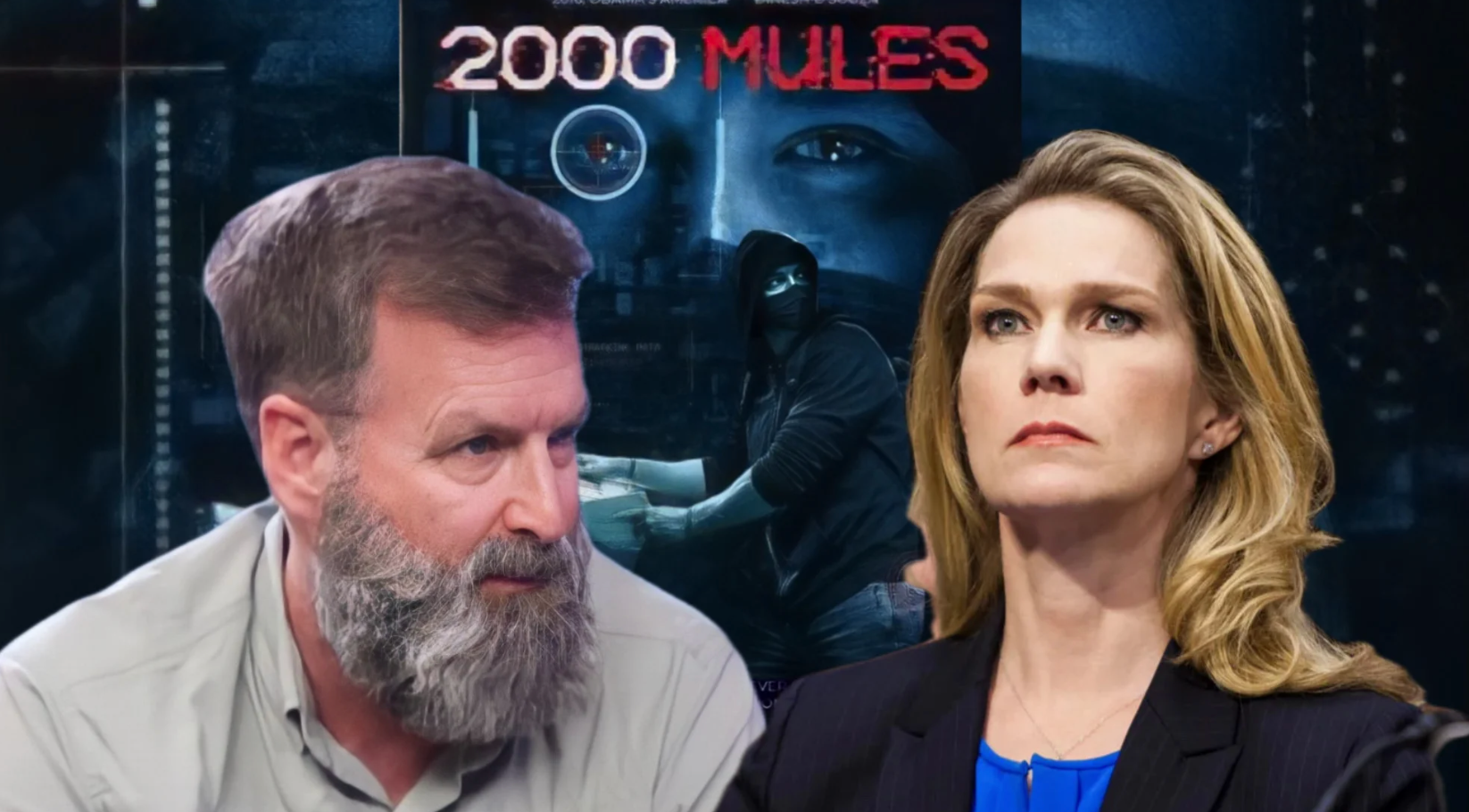
    Late last week it was reported that Gregg Phillips and Catherine Engelbrecht were threatened with jail time if they didn’t comply with the court.  Today they were placed in jail.

    On Friday it was reported that the 2000 Mules creators were being threatened by the court.

    “2000 Mules” Investigators Gregg Phillips and Catherine Engelbrecht Threatened with Jail Monday If They Do Not Identify Confidential Informant in Konnech Investigation

    Konnech CEO Eugene Yu was arrested earlier this month in Michigan in connection with “theft of personal data.” The alleged stolen data belonged to poll workers and was the subject of TrueTheVote’s “PIT” in Arizona last August, where Catherine Engelbrecht and Gregg Phillips singled out the company. During the PIT conference, Phillips and Engelbrecht alleged…

    Phillips released a Truth last night on Truth Social:

    This morning Phillips and Engelbrecht were arrested and put in jail.  They are being charged with a process crime – obstruction of justice.


    They will be in custody for at least one day.  They are trying to get them on process crimes.


    In chaotic Texas court hearing, True the Vote leaders found in contempt

    https://ift.tt/kaKbzEi

    Sign up for The Brief, our daily newsletter that keeps readers up to speed on the most essential Texas news.

    After a chaotic day of testimony on Thursday, a federal judge in Texas found Catherine Engelbrecht and Gregg Phillips — known as leaders of the group True the Vote — in contempt of court. They are facing accusations of defamation and computer crimes from a company at the center of a viral right-wing social media campaign engineered by the conservative voting organization.

    The judge informed the pair they would face jail time if they do not comply with the terms of a court order by Monday at 9 a.m.

    “I expect both defendants to be present,” said U.S. District Judge Kenneth Hoyt, a Ronald Reagan appointee, looking at their table. Marshals, he said, would be ready to arrest them.

    Thursday’s finding of contempt was the latest in a string of twists in the civil suit filed in September by Konnech, a Michigan-based company that provides poll worker management software to elections offices.

    In filings and testimony, the basic facts and plot lines have shifted from week to week, often producing unexplained contradictions. True the Vote’s telling involves a lengthy middle-of-the-night hotel rendezvous, double-crossing federal agents, confidential informants, and security threats on two continents.

    Konnech’s lawsuit, on the other hand, alleges that True the Vote’s baseless and racist accusations against the company’s CEO, Eugene Yu, forced him and his family to flee their home in fear for their lives and damaged the company’s business. Meanwhile, Yu was arrested and charged by the Los Angeles district attorney on allegations of storing government data in China, in breach of its contract, that appear similar to at least some of the allegations True the Vote has made, and Los Angeles officials have said they received an initial tip from Phillips.

    For years, Engelbrecht and Phillips have come under fire for promoting election conspiracy theories while offering scant evidence to support them. But their current campaign against Konnech is forcing them to back up what they’ve said since August on far-right social networks and platforms in the more skeptical setting of a federal courtroom.


    Thursday’s hearing, which took place on the 11th floor of the federal court building in downtown Houston, was the first time either Engelbrecht or Phillips have appeared in court in the matter. Engelbrecht and Phillips testified only after the judge demanded they do so — Hoyt needed their testimony so he could rule on whether the pair should be held in contempt of court for refusing, for weeks, to hand over information he’d ordered they produce to the plaintiffs.

    At issue is the name and contact information of individuals Phillips and Engelbrecht have alleged were present at a Dallas hotel meeting in January 2021, when True the Vote was allegedly given proof Konnech was improperly storing the personal data of “millions” of U.S. poll workers on a server in China. True the Vote then used that information to fuel months of vaguely defined accusations about the company and Yu in podcasts and appearances.

    Phillips and Engelbrecht repeatedly claimed Yu was an agent of the Communist Party of China. China, they said, had used the poll worker data to influence the 2020 election. The claims have powered weeks of fundraising for True the Vote, and Phillips and Engelbrecht have enlisted their followers to do additional research on Konnech. It’s an undertaking they’ve named “The Tiger Project.”

    True the Vote’s legal team had already, in a court hearing earlier this month, produced one name: Mike Hasson.

    Not that they wanted to.

    “On behalf of my clients we don’t want to release the name of this individual,” True the Vote attorney Brock Akers told Judge Hoyt in an Oct. 6 hearing. The “analyst” was, he said, in “danger from forces of the Chinese Communist party.” Hoyt didn’t buy it, and demanded Akers hand over the name, which Akers wrote on a yellow legal pad and read aloud for the record.

    True the Vote would only provide Hasson’s name, though. Asked Thursday for contact information or more detailed information about Hasson’s identity, Phillips told the court he had no way of contacting Hasson and had only communicated with him through unspecified messaging “apps.” He had not seen Hasson, he said, since the night at the hotel in January 2021.

    Shown a photo of a man who Konnech’s attorneys believed to be Hasson, Phillips said he didn’t recognize him. Shown the same photo, Engelbrecht also demurred. “My general recollection is that he was younger than I, and Caucasian. But beyond that I really couldn’t tell you,” said Engelbrecht.

    On Friday, True the Vote’s attorney’s moved to seal the photo, which Konnech’s attorneys had entered as an exhibit, “to safeguard the privacy of” the man depicted, in the event he is not indeed Mike Hasson.

    Konnech’s attorneys — Dean Pamphilis and Nathan Richardson of the Houston office of Kasowitz Benson Torres — were convinced Hasson hadn’t worked alone, given True the Vote’s insistence over weeks of broadcasts that the work had been done by “analysts” and “guys” in the plural.

    The attorneys pressed the pair for more names.

    Phillips, who took the stand first, said one other “analyst” had been present, though he said he didn’t believe this man had been involved in Hasson’s research. Phillips refused to name the man or describe the reason for his presence — as did Engelbrecht, who took the stand next.

    “Every name I give you gets doxxed and harassed,” Engelbrecht said to Richardson. “I know what happened to Mike after his name was released and he’s in hiding.”

    At that, the judge interjected. “Excuse me,” Hoyt said. “How do you know he’s in hiding?”

    “I’ve been … it’s been rumored. In fairness, it’s been rumored,” she responded.

    She and Phillips told the court the second unnamed person was a “confidential informant” for the FBI. Phillips told the court the man would be at risk of harm from drug cartels on the border if identified, refusing to elaborate. Despite prompting from the judge, who expressed disbelief at the need for such discretion, both Phillips and Engelbrecht refused to name the person.

    Hoyt has now given True the Vote’s attorneys until a Monday morning hearing to disclose the man’s name to Konnech’s attorneys, or Engelbrecht and Phillips will be held in jail until it is released.

    Shortly after the hearing, Phillips announced Hoyt’s decision on Truth Social. “Doing the right thing isn’t always easy but it’s always right,” he posted. “We were held in contempt of court because we refused to burn a confidential informant or our researchers. We go to jail Monday unless we comply.”

    The post is thematically consistent with the image Engelbrecht and Phillips attempted to craft in the courtroom: That they are the victims of a smear campaign and have attempted in good faith to address election vulnerabilities, even at the expense of their own physical safety.

    In addition to multiple lawyers, a paralegal, and a small handful of True the Vote associates, Engelbrecht and Phillips were accompanied on Thursday by two security guards. Dressed in suits with matching American flag lapel pins, the pair stood at attention on either side of an alcove in the hallway, where Engelbrecht, Phillips and a few others had gathered before the hearing.

    Staring straight ahead, the two men pretended not to hear the group’s conversation, loud enough to be audible throughout most of the hallway.

    “I’m the sacrificial lamb,” Phillips said, before being comforted by his attorney, who told Phillips he would seek to take the case “as incrementally as possible.” Later a staffer offered her reassurance to others: “She’ll get her revenge,” she told them, apparently referring to Engelbrecht. “They always do.”

    The bodyguards would then spend much of the day accompanying the small swarm of True the Vote associates in and out — and in and out — of the courtroom. The group’s attorneys, who were routinely admonished by Hoyt for flouting basic courtroom procedure, repeatedly requested breaks to consult with Engelbrecht and Phillips in whispers as they determined next moves.

    On one break, Engelbrecht and her attorneys were gathered at a table in the courthouse cafeteria. I approached to ask Engelbrecht for a comment — Votebeat was publishing an unrelated story about True the Vote’s backing of an effort to monitor Arizona drop boxes that afternoon, and that morning the group had been sued for defamation in Georgia — only to be blocked by the second security guard, a tall, thin man wearing black running shoes with his suit.

    “I’m sorry, I can’t let you go any further,” he said, stopping me a few feet from where they sat, citing unspecified “security concerns.”

    Later, Engelbrecht would sit next to me in the courtroom gallery, unattended by security, having recognized me from prior coverage. “There is so much more to this,” she said, promising to say more when True the Vote’s present legal situation cleared. “It’s not what it seems.”

    Neither she nor her team took additional questions from the press.

    Engelbrecht and Phillips’ Thursday testimony offered the most insight into the tangled relationship between True the Vote, Konnech, and the district attorney of Los Angeles than any development so far. But the latest hearing highlighted how some aspects of True the Vote’s story have shifted from initial court filings, and how some of their answers in court conflict with their prior public descriptions of events.

    In an event called “The Pit” held in Phoenix in mid-August and live-streamed on Right Side Broadcasting, Phillips and Engelbrecht told participants they’d “stumbled upon” hard evidence of a Chinese communist plot to influence the 2020 election. It revolved, they said, around a company called Konnech.

    The allegations hit right-wing social media like a bomb, sparking calls to county offices that had contracted with Konnech. Over several weeks in August and September, Engelbrecht and Phillips repeatedly called attention to their fight against Konnech in podcasts and interviews.

    In an Aug. 23 episode of the Elijah Streams Podcast (which tells listeners its “mission is to encourage you in your faith through a unique blend of patriotism and prophecy”),

    Phillips describes a meeting with some of his paid consultants. “My guys invited me to Dallas on a Friday night. We met in a hotel room, towels under the doors,” he said, nonchalantly.

    “Really?” interviewer Steve Shultz asked, impressed at the spectacle. “Wow.”

    “It was pretty weird,” Phillips offered in response. “It was like some kind of a James Bond kind of thing or some sort of weirdness like that.”

    He told Shultz he arrived at the hotel close to midnight. One of the analysts plugged his laptop into the hotel TV, and the group looked at “rows and rows” of data for hours.

    “I’m looking at this live. By 4:30 in the morning I was pretty well scared this was bad,” he said, expressing absolute confidence in the skills of those who’d helped him get the information. “Man, those are the best analysts in the country. In the world, maybe.”

    As he tells the story in interviews, events, and podcasts, Phillips often describes aspects of the night differently. Occasionally, his versions contradict. In one, for example, he said he and the others in the hotel room that night were able to crack into Konnech’s data because they guessed the password, which had been “password.” In others, he insists there was no password at all, and “no hacking.”

    Central to many of the claims made by Engelbrecht and Phillips is a mounting tension with the FBI — an increasingly popular positioning in far right circles, where calls to “Defund the FBI” have seen a swell in popularity given former President Trump’s recent tangle with the agency. In one podcast, Phillips said the group “engaged with [the FBI] as an operational asset in a counterintelligence operation” against Konnech over a period of more than a year and a half before things changed. In another, Phillips claimed the FBI turned on him, accusing him of “stealing the Chinese internet” and threatening to investigate True the Vote. Though the specifics vary, the pair make clear they feel the FBI has not appropriately addressed the extent of their complaints.

    “The media, and now possibly even the FBI and other agencies in the federal government are supporting this nonsense. This is crazy,” Phillips said in a Sept. 2 podcast, looking to Engelbrecht for a response. “I agree,” she said.

    As the defamation suit got under way, the larger plot points appeared similar in sequence to the facts True the Vote’s lawyers represented to the court, conveyed in dry legal language that was considerably less dramatic.

    In late September, the group’s attorney — Brock Akers, an attorney in Houston who’d initially represented True the Vote in the matter — said in a court filing that True the Vote had “turned over data and information to the Federal Bureau of Investigation which had been given to them.” He offered few details as to who had provided the data or by what means.

    Then, details began to shift.

    In a hearing two weeks later, the same attorney told Judge Hoyt that True the Vote had never been in possession of the data. Mike Hasson, not Phillips or Engelbrecht, Akers said, “actually has the data who then turned it over to the FBI.”

    In Phillips’ testimony on Thursday, he said again that he’d spent more than four hours in a Dallas hotel with Hasson and an unnamed third party. From there, his explanations also begin to diverge from the previously established timeline.

    When Pamphilis asked Phillips about previous claims that he and “his guys” had broken into Konnech’s data by guessing a simple password, Phillips said he had not personally accessed any information and did not know how the data Hasson showed him had been obtained. Asked if he was told about the existence of a password by someone else, Phillips said he didn’t remember.

    “I don’t have recollection,” said Phillips.

    Phillips said Hasson did not directly access any Konnech data that night in January 2021. Instead, Phillips said Hasson simply showed him files and screenshots that had been previously gathered. They could not have possibly downloaded the files — which Phillips said totaled “somewhere in the 350-terabyte range” — on hotel internet, Phillips said confidently. Lawyers for Konnech did not remark on the enormousness of the file size. (It takes about 2 billion document pages to amount to 350 terabytes, an amount of data that would fill nearly 1,500 standard laptops.)

    Phillips and Engelbrecht told the court that True the Vote and its supporters continued to research Konnech after Hasson revealed what he’d found, relying on “open source” research tools and public records requests sent to Konnech’s government customers. The fruits of this additional probe were shared with the FBI and LA County, they said.

    It was the unclear status of these ongoing investigations and acute concern for the safety of confidential FBI informants that prevented them from offering more extensive information as part of their Thursday testimony, both Engelbrecht and Phillips told the court.

    Hoyt asked Phillips and Engelbrecht additional questions when attorneys turned over the witnesses. While the judge attempted to clarify whether Phillips and his “analysts” were or were not claiming to have broken through a password, confusion arose as to the provenance of a Truth Social post written by a supporter and “re-Truthed” by Phillips. The poster claimed Phillips and his analysts used a default password to access Konnech’s data, mimicking Phillips’ earlier language. One of True the Vote’s attorneys — John Kiyonaga, who had already been instructed by the judge not to interrupt proceedings — jumped to his feet to object.

    “Excuse me, take your seat and don’t get up again,” Hoyt said to Kiyonaga, who continued to protest.

    “You are mischaracterizing her testimony, and that is unfair,” Kiyonaga barked.

    “Take your seat,” Hoyt said again.

    Engelbrecht, as Phillips had before her, ultimately provided no clarity on the existence of a password.

    By the end of the hearing, which had lasted for nearly five hours, Hoyt had lost all patience with True the Vote and its team. “I’ve been asked to make a finding of contempt, and that is my finding,” he said. “They are both in contempt of court.”

    The ruling came so swiftly that many of those seated at the defense table did not immediately register a reaction. Then, Engelbrecht took a slow breath. A paralegal, seated at the end of the table, stared at the judge. Kiyonaga looked as though he might erupt. True the Vote’s cohort of 12 then quietly left the courtroom, gathering their binders and bags and regrouping to whisper in the hallway.

    The next day, Friday, True the Vote attorney Michael Wynn submitted nearly 30 pages of evidence to the court, which he indicated was an effort by his clients to “purge contempt in advance of the hearing” on Monday. None of the documents identify the unnamed person present in the Dallas hotel room, nor do they more specifically identify Mike Hasson.

    Among the documents, however, are screenshots of text messages between Engelbrecht and several people True the Vote claims are FBI agents. Few messages sent by the identified agents mention Konnech, though Engelbrecht repeatedly and directly asks for updates on the company. As a whole, the screenshots do little to bolster True the Vote’s version of events.

    One set of text messages are between Engelbrecht and a person the documents identify as a San Antonio-based FBI agent named “Kristina,” though the screenshots list her name as “Kaykay.” They show several largely unsuccessful attempts by Engelbrecht to contact the agent in late September and early October.

    On Oct. 12 — exactly one month after Konnech filed suit against True the Vote — Engelbrecht wrote her lengthiest correspondence to Kakyay. “We have been drug into a vicious lawsuit filed against us by Konnech,” she wrote in part, before claiming that she, Phillips and Hasson were “all in danger.”

    “We have all been doxxed. It is all over the press,” she said. “Lastly, there is the possibility that I have been poisoned.”

    via The Texas Tribune

    October 31, 2022 at 04:37PM


  • YEA RIGHT…BRAZIL (MAGA CAPITAL OF THE WORLD) JUST VOTED FOR COMMUNISM 51-49%

    YEA RIGHT…BRAZIL (MAGA CAPITAL OF THE WORLD) JUST VOTED FOR COMMUNISM 51-49%

    Socialist Criminal and Globalist Favorite Lula de Silva Defeats Jair Bolsonaro in Brazil Presidential Election — SOUTH AMERICA GOES SOCIALIST

    https://ift.tt/suGJV6m

    With 93% reporting Socialist criminal Lula Luiz Inacio Lula da Silva is poised to be elected the new Brazilian president, defeating populist incumbent Jair Bolsonaro.

    Spanish Publinews reported:

    The leftist former president had 50.46% of the votes, compared to 49.54% for the far-right president.

    The latest survey by the Datafolha Institute predicted a narrow result, with 52% of the voting intentions for former President Lula compared to 48% for President Bolsonaro.

    TRENDING: Emergency Broadcast: J-6 Political Prisoner Jake Lang Put in Isolation in Maximum Security Prison for Recording Audio for TGP – HAS NEVER BEEN CONVICTED OF A CRIME, HAS BEEN JAILED SINCE JAN 2021 – AUDIO

    In the first round, the polls underestimated the potential of Bolsonaro, who finally finished behind only by five points (43%-48%).

    The 67-year-old president has sent mixed messages about whether he will recognize the results in the event of defeat. On Friday he assured that he will do it: “Whoever has the most votes, he wins.”

    The Brazilian election is run by machines.

    The red flags pointed to Benford’s Law.

    Matthew Tyrmand explains on GETTR.

    The Socialist-Marxists are now in charge of the entire continent in South America. Good luck.

    via The Gateway Pundit https://ift.tt/l4nUC5V

    October 31, 2022 at 07:00AM

    BREAKING: Forensic Experts Suggest Mathematical “Red Flags” In First Round of Brazilian Presidential Election, Cites Benford’s Law

    https://ift.tt/6DeSodI

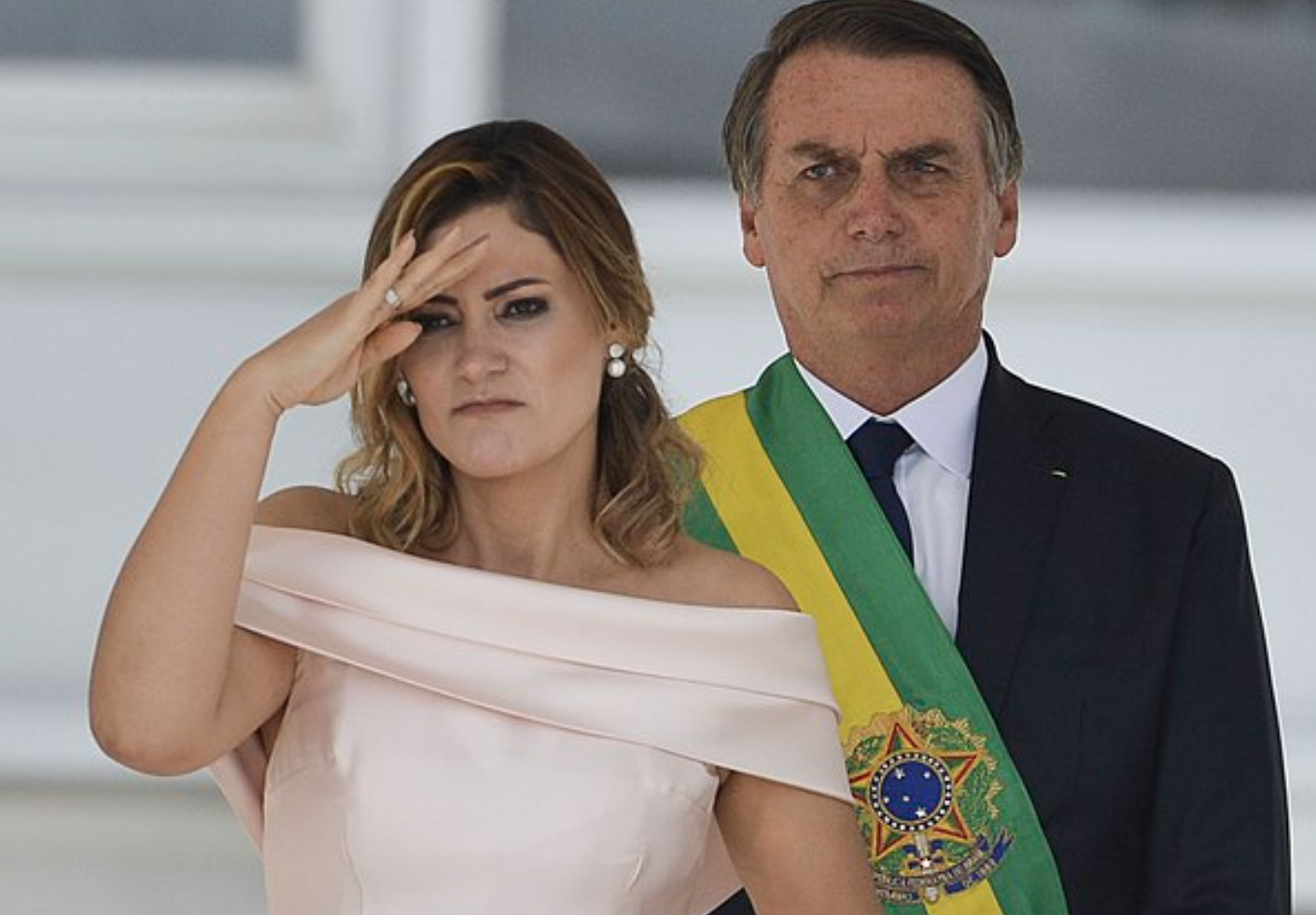
    Image by Marcelo Camargo/Agência Brasil

    Please Follow us on Gab, Minds, Telegram, Rumble, Gab TV, GETTR, Truth Social 

    This dossier was provided to us by a credible expert source and was created by a small group of technical experts in the fields of mathematics, political science, and forensic analysis, all who are well versed in election statistics and electoral anomalies.

    The source provided this document and demonstrated the credibility of the authors who are presenting here their statistical findings on the first round of the Brazilian elections (held Sunday October 2nd).

    The source group applied Benford’s Law, a highly recognized statistical formula, to analyze publicly available data provided by the Brazilian Electoral Court (TSE). The formula showed inconsistencies in voting tabulation in several regions across the country.

    The links to the TSE’s publicly available data is in the document, and other experts are invited to conduct the same Benford’s Law test on the data. The voting tabulation graphs are also available — showing the region, the candidate, and the digit analyzed. Several charts show Benford’s Law curve in a certain format, while the actual curve of the vote tabulation veers completely off from it. This is what points to manipulation according to the expert source.

    ‘NO AD’ subscription for CDM!  Sign up here and support real investigative journalism and help save the republic!‘

    Benford’s Law never definitively proves fraud in and of itself. It is a methodology that is used to detect anomalies in large datasets, and thus help an auditor focus his audit on the clusters of data that present the anomalies. It serves as a “red flag” that, according to our source, should catalyze an audit review of the data in a system where auditors operate in good faith.

    According to the source: the data patterns outlined in the dossier contain many strong anomalies that are glaring red flags. This is especially the case in the northeastern region of the country.

    The curves and graphs in these compiled chart patterns present similarities to questionable elections in Iran and Venezuela in the past. This also greatly alarmed the expert source team.

    We recommend that people read the document themselves and draw their own conclusions.

    It is important to highlight that people in Brazil are unable to report news on such matters due to fears of Court persecution. As both Fox News and the New York Times have recently reported, there is clear indication that the Supreme and Electoral Courts are biased and will clamp down on anyone who investigates election integrity in Brazil or journalists reporting information that might be construed as calling into question the integrity of the election systems or the court’s own enforcement actions.

    According to our source, the Brazilian central electoral body insists on obfuscating the transparency of the electoral process, which should be crystal clear and open to all forms of visibility and provides for an open and public count that allows for a subsequent physical audit. That any experts from the sciences have to publish this document without attribution for fear of running afoul of the Brazilian federal courts politically motivated meting out of “justice” and their Praetorian guard police force’s unconstitutional enforcement activity at the court’s behest, is a great tragedy for contemporary Brazil.

    Needless to say, the threat to democracy in the stifling of open debate, especially on controversial issues, such as electoral mechanisms and systems, is manifestly clear.

    N.b. This report has been released for distribution after the second round polls closed so as not to interfere with the electoral decision making of any Brazilian citizen voters.

    DOWNLOAD THE PDF FILE BELOW

    .

    .

    .

    .

    .

    .

    .

    .

    .

    .

    .

    .

    via CD Media https://ift.tt/Kqd3l7Y

    October 31, 2022 at 07:03AM

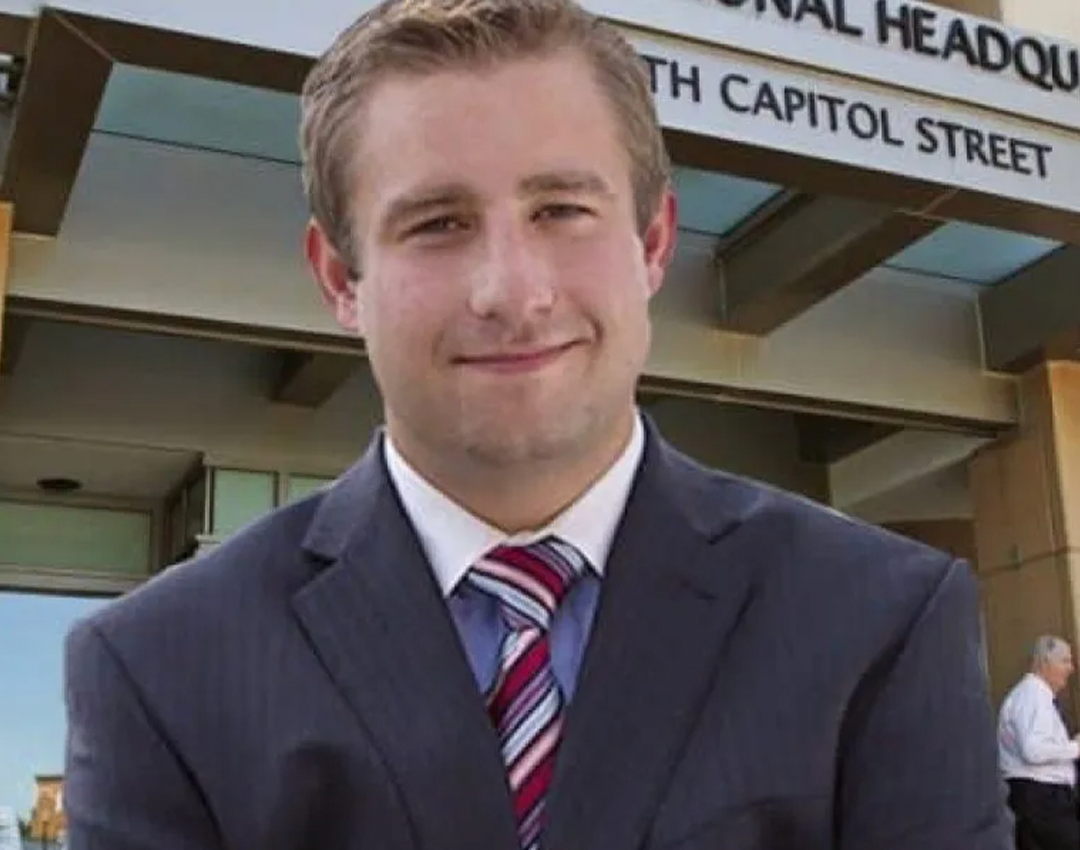
  • HUGE: FBI Now Wants 66 Years Before Releasing Information on Seth Rich

    HUGE: FBI Now Wants 66 Years Before Releasing Information on Seth Rich

    HUGE: FBI Now Wants 66 Years Before Releasing Information on Seth Rich

    https://ift.tt/vFIdctR

    THIS IS A HUGE DEVELOPMENT–

    In September US District Judge for the Eastern District of Texas ordered the FBI to “produce the information it possesses related to Seth Rich’s laptop.”

    In our previous reporting, The Gateway Pundit’s Joe Hoft reported on the FBI’s refusal to release documents on Seth Rich. To this day we still don’t have good information on Seth Rich’s murder. He was shot in the back twice in the early morning near his home. He died later in the hospital. The police recorded the event as a robbery and yet Rich’s phone, wallet, and personal items were with him when the police arrived.

    Some people suspect Rich was the source of the emails that went to WikiLeaks before the 2016 Election related to Hillary and her corrupt actions over many years. These emails were ignored by the corrupt mainstream media but were shared by Wikileaks and on social media at that time.  The left blamed Wikileaks as one reason why Hillary Clinton lost to President Trump in 2016.

    TRENDING: BREAKING UPDATES: Sources Claim Attacker Screamed “Where Is Nancy!”, Tried to Tie Up Paul Pelosi; Speaker’s Husband ‘Severely Beaten’ with Hammer to His Head and Body in ‘Targeted’ Attack on SF Home

    A short time after Seth Rich’s death, the Russia collusion story was created. It is also suspected in certain circles that the Russia collusion story was created to keep eyes off of Seth Rich’s murder.

    The FBI denied possessing any information or files related to the Seth Rich murder. But that was not true and eventually, the information was discovered.  The FBI was forced to admit they were holding information on Seth Rich.

    Attorney Ty Clevenger brought the government to court and last month the FBI was ordered to turn over information on Seth Rich’s computer that they possessed, and documents pertaining to Crowdstrike and the purported hack of the DNC in 2016.

    And now, once again, the FBI is stalling!

    What are they hiding? Why won’t they turn the information over?

    Ty Clevenger at Lawflog reported earlier this month that the FBI is stalling on the release of the documents:

    Yesterday the government asked for more time to respond to U.S. District Judge Amos Mazzant’s September 29, 2022 order directing the FBI to produce all records related to Seth Rich’s laptop. Somewhat relatedly, the FBI is withholding three reports produced by CrowdStrike in August of 2016 regarding the purported hack of the Democratic National Committee.

    First the laptop. The FBI wants two more weeks so it can prepare a motion for reconsideration. As a courtesy, we have not objected to the request. According to the government’s motion, “the FBI is uncertain how to comply with the Court’s order as written, and the FBI is seeking input from a pending appellate consultation regarding the order to properly address this issue.”

    The order itself is pretty straightforward, at least with respect to Seth’s personal laptop, because it directs the FBI to “produce the information it possesses related to Seth Rich’s laptop and responsive to Plaintiff’s FOIA requests within 14 days of this Order.” On the other hand, the order does not discuss Seth’s work laptop, which is also in the possession of the FBI.

    I’m waiting for the FBI to explain what it thinks needs to be clarified, then I may be filing my own motion for clarification. Meanwhile, the FBI has cited only one narrow basis for withholding the records related to Seth’s laptop, namely his privacy. I’m not sure why it takes four weeks and an appellate lawyer to figure out why the judge did or didn’t get that issue right.

    In any event, I’m reminded of something that I learned almost thirty years ago when I was a newspaper reporter: people with nothing to hide don’t try to hide nothing.

    Now this…
    On Friday, Chris Wray’s FBI asked for 66 years before releasing any information on the Seth Rich investigation.
    What are they hiding?

    The Epoch Times reported:

    The FBI is asking a U.S. court to reverse its order that it produce information from Seth Rich’s laptop computer.

    If the court does not, the bureau wants 66 years to produce the information.

    Rich was a Democratic National Committee staffer when he was killed on a street in Washington in mid-2016. No person has ever been arrested in connection to the murder.

    U.S. District Judge Amos Mazzant, an Obama appointee, ruled in September that the bureau must hand over information from the computer to Brian Huddleston, a Texas man who filed a Freedom of Information Act (FOIA) request for the info.

    The FBI’s assertion that the privacy interest Rich’s family members hold outweighed the public interest was rejected by Mazzant, who noted the bureau cited no relevant case law supporting the argument.

    via The Gateway Pundit https://ift.tt/9LkrDsl

    October 28, 2022 at 07:09PM

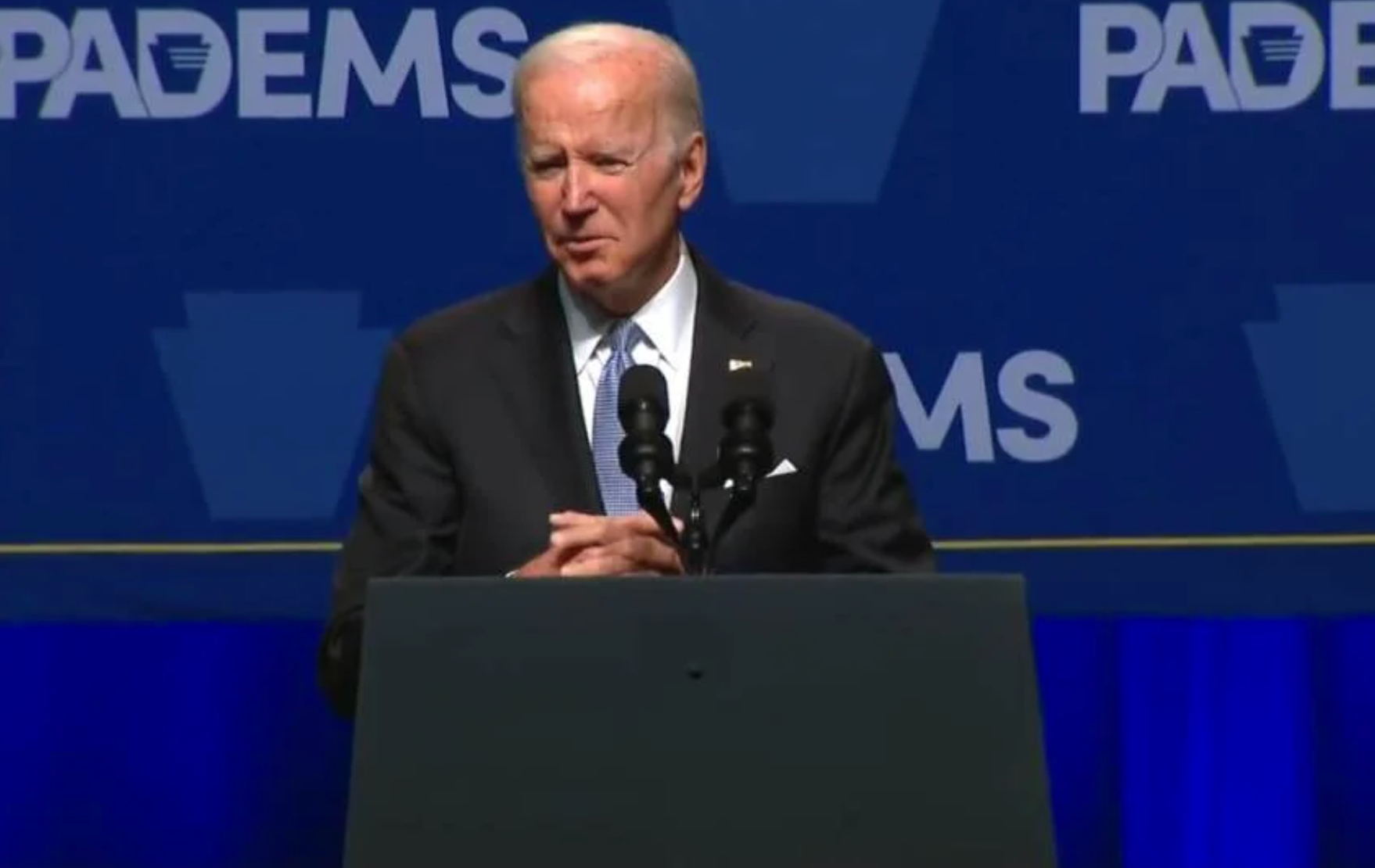
  • PELOSI SMOLLIETTE: Biden Blames Republicans for Attack on Paul Pelosi

    PELOSI SMOLLIETTE: Biden Blames Republicans for Attack on Paul Pelosi

    Biden Blames Republicans for Attack on Paul Pelosi (Video)

    Joe Biden blamed Republicans for the attack Paul Pelosi, the husband of Speaker of the House Nancy Pelosi (D-CA), in remarks made at a Democrat fundraising dinner in Philadelphia Friday night.

    Biden said he had spoken to Nancy Pelosi and provided her transportation from D.C. to San Francisco to be with her husband. Biden called Paul Pelosi “Bobby” in his remarks.

    Biden claimed the attacker was chanting the same thing as the January 6 rioters: “Where is Nancy?”, but said he wasn’t really sure that was said by the attacker but that he had seen it reported.

    Transcript by TGP:

    …Folks. Before I begin, I want us to take a short pause to send our love to Nancy and Paul Pelosi. I’ve been on the phone with Nancy. Arranged for her to be able to get from Washington out to, out to see her husband Bobby who, she’s in the plane right now heading out there.

    And you’ve seen the news. He was attacked in their home. And when I spoke to the Speaker she said that he’s doing okay. He went to the hospital, he was operated on and he seems to be coming along well. He’s in good spirits, and the whole family’s there.

    While this invasion’s ongoing, the news reports indicate it was intended to be an attack on the house Nancy Pelosi lives in–the third ranking person in the United States in line to be president.

    You know it’s reported that the same chant was used by this guy they have in custody that was used on January 6th in the attack on the U.S. Capitol. I’m not making this up. This is reported, I can’t guarantee it. You can tell you what’s been reported. The chant was, “Where is Nancy? Where is Nancy? Where is Nancy?”

    This is despicable. There’s no place in America–there’s too much violence, political violence, too much hatred, too much vitriol. And what makes us think that one party can talk about stolen elections, COVID being a hoax? That it’s all a bunch of lies and not affect people who may not be so well-balanced. What makes us think! That it’s not it’s not going to corrode the political climate?

    Enough is enough is enough! Every person of good conscience needs to clearly and unambiguously stand up against the violence in our politics, regardless of what your politics are. All of us, all of us together as Americans.

    Knowing Paul and Nancy and the family as I do, they’re tough as they come. We’re praying for him. We’re optimistic for his full recovery.

    Does Dark Brandon know Joe gave this speech?

    via The Gateway Pundit

    October 29, 2022 at 08:38AM

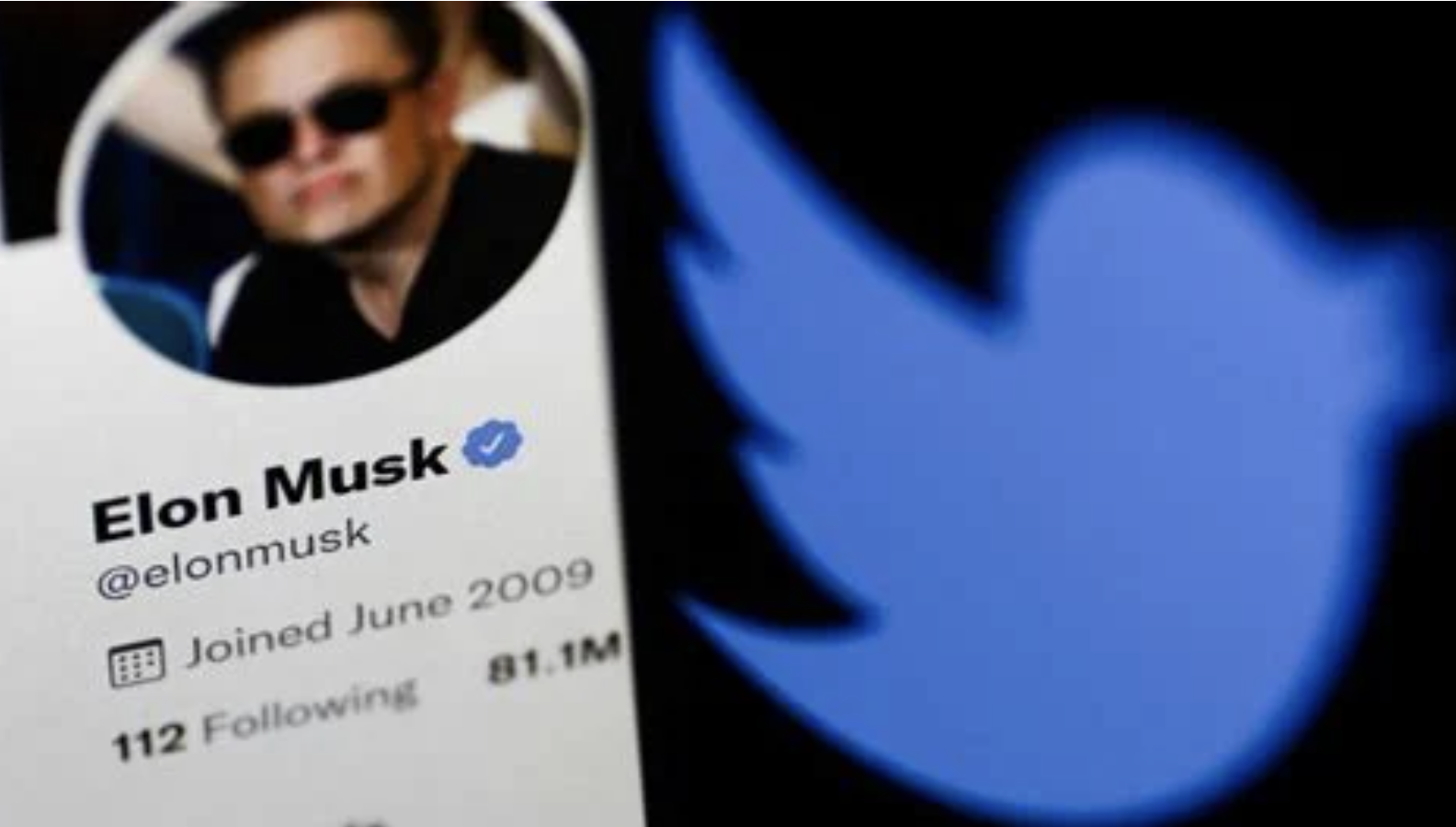
  • Elon Musk Takes Over Twitter “I Will Be Digging In More Today” – LIBS GO NUTSO!

    Elon Musk Takes Over Twitter “I Will Be Digging In More Today” – LIBS GO NUTSO!

    October 28, 2022 at 05:05PM “I Will Be Digging In More Today”

    The Gateway Pundit reported that Elon Musk and Twitter reached a deal on Thursday.

    Elon Musk purchased Twitter for $54.20 per share – or about $44 billion.

    Elon’s first act was to rid the company of dead weight.

    “Twitter CEO Parag Agrawal and finance chief Ned Segal have left the company’s San Francisco headquarters and will not be returning, sources said.” – According to CNBC.

    Vijaya Gadde,  an immigrant from India who hates the First Amendment and was behind the censorship of conservatives and Trump supporters, was also fired on Thursday.

    TGP reported that Elon Musk is allegedly set to reinstate all permanent Twitter bans per Bloomberg.

    The newspaper also reported that Musk is set to take over as CEO of the company, at least in the short term. Musk also brought in Tesla engineers to review the platform’s code.

    “Musk also intends to do away with permanent bans on users because he doesn’t believe in lifelong prohibitions, the person said. That means people previously booted off the platform may be allowed to return, though it was unclear if that included former president Donald Trump, the person said,” according to the Bloomberg report.

    After the deal was finalized, the Babylon Bee’s account appeared to be reinstated following the news that Elon Musk will reinstate all suspended accounts.

    Recall, the satirical outlet was suspended from Twitter for “hateful conduct” after it crowned Biden’s newly appointed Assistant Health Secretary, Rachel Levine.

    However, several accounts on Twitter are still shadowbanned.

    According to Jack Posobiec, Elon Musk is now working with popular Twitter personality the “Chief Turd,” @catturd, to free the Twitter algorithm.

    “As of now, I’m still Shadowbanned, ghostbanned, searchbanned, and Twitter removed 1200 followers today – as usual,” popular account @catturd wrote on Friday.

    “Nothing has changed – I’ll report again tomorrow.”

    After @catturd voice out his concern, the new Twitter boss responded and said, “I will be digging in more today.”

    The Gateway Pundit was banned from Twitter after we released exclusive footage of a late night ballot drop at the TCF Center in Detroit following the election.

    Contributing Editor Joe Hoft had his account banned after posting exclusive information from Hunter Biden’s laptop before the 2020 election.

    via The Gateway Pundit https://ift.tt/9LkrDsl

  • Federal Judge Threatens True The Vote With Jail Time For Contempt

    Federal Judge Threatens True The Vote With Jail Time For Contempt

    October 28, 2022 at 06:46AM Federal judge holds tight-lipped chiefs of election denial group in contempt


    True the Vote’s principals said they could not divulge the name of an FBI informant involved in a hack of poll workers’ personal data. A judge said they had no choice.

    A bowl of stickers is set out for voters in Steubenville, Ohio, in March 2020. (AP Photo/Gene J. Puskar, File)

    HOUSTON (CN) — Leaders of the election-monitoring group True the Vote have until Monday morning to identify a man privy to the download of personal information of 1.8 million U.S. poll workers from a software company’s server, or they will be detained for contempt, a federal judge warned Thursday.

    True the Vote, its founder Catherine Engelbrecht and contractor and former board member Gregg Phillips are leading proponents of the conspiracy theory voting fraud cost Donald Trump the 2020 presidential election.

    With U.S. District Judge Kenneth Hoyt threatening them with fines and arrest in a contempt hearing Thursday, they took the witness stand and alleged they were working as confidential informants for the FBI from 2021 to May of this year, helping with an investigation of Konnech Inc., a Michigan-based company that sells software to help manage election equipment and poll workers.

    The hearing centered on a meeting in a Dallas hotel room in early 2021.

    Phillips testified a friend of his named Mike Hasson summoned him to the hotel and after they rolled up towels and placed them under the door, Hasson plugged his laptop into a TV and showed him data Konnech maintained for U.S. poll workers —including Social Security numbers, phone numbers, email addresses and banking information — that Hasson said he had obtained by accessing a password-protected server in China.

    According to a defamation and computer fraud lawsuit Konnech filed on Sept. 12 in Houston federal court, its Chinese-American CEO and founder Eugene Yu and his family had to leave their home due to threats from True the Vote supporters after Phillips and Engelbrecht spread lies at events and on podcasts the company is a vehicle of the Chinese Community Party to manipulate U.S. elections.

    The same day Konnech sued, Hoyt issued a temporary restraining order, directing Phillips and Engelbrecht to identify each person involved in taking Konnech’s data.

    The saga took an unexpected twist Oct. 4 when Yu was arrested by local police in Michigan working with investigators from the Los Angeles County District Attorney’s Office.

    District Attorney George Gascón said Konnech has a contract with LA County that mandates it keep election worker information on secure servers in the United States, and a probe by his office had found probable Konnech was storing the data on servers in China.

    Two days later, Hoyt convened a contempt hearing at the behest of Konnech’s attorneys, Dean Pamphilis and Nathan Richardson of Benson Kasowitz Torres, because Phillips’ and Engelbrecht’s attorneys were refusing to identify who had accessed Konnech’s data.

    They said it would jeopardize national security and was an “FBI matter.” But under pressure from Judge Hoyt, they named Hasson in open court at the Oct. 6 hearing, despite their concerns it would somehow endanger Hasson.

    A few days before Yu’s Oct. 14 arraignment in Los Angeles County on charges of grand theft by embezzlement of public funds and conspiracy to embezzle public funds, which together carry a maximum sentence of eight years in prison, True the Vote’s attorneys revealed Phillips had testified before the grand jury that indicted Yu.

    Back in Houston, Hoyt scheduled another contempt hearing because True the Vote’s counsel still had not complied with the TRO and named everyone who had been in that Dallas hotel room or seen the filched data.

    True the Vote’s initial counsel withdrew from the case, and it hired new lawyers, John Kiyonga of Alexandria, Virginia and Michael Wynne with Gregor Cassidy Wynne of Houston, to represent them at Thursday’s hearing.

    Wynne started off trying to appease Judge Hoyt and avoid any contempt order against his clients with a sworn affidavit from Phillips, stating the only people who have seen Konnech’s stolen data besides Hasson and Phillips were two Texas-based FBI agents to whom Hasson had given the data.

    Pamphilis, Konnech’s attorney, complained that he had spent the last 45 days “chasing these guys around,” trying to get information they insisted they couldn’t give up due to national security concerns and had incurred $130,000 in attorney’s fees.

    “I want them to put on the record today all info required by the [TRO]. And if not be fined a specific amount or confined to jail until they do comply,” he said.

    Judge Hoyt agreed. “A motion for contempt can’t be answered with an affidavit,” he said. “It has to be addressed with testimony or suffer the consequences. Failing to testify can lead to them [Phillips and Engelbrecht] being incarcerated. … This isn’t criminal contempt, it’s coercive contempt. They hold the key to the jailhouse. They can get out if they testify.”

    After Phillips, Engelbrecht and their entourage of attorneys and bodyguards retired to a side room for a conference, they returned to the courtroom and Phillips took the stand.

    Phillips, 62, in a blue suit jacket and sporting a long salt-and-pepper beard said, “I’m a contractor for True the Vote and was on its board from 2014 to 2017.”

    Phillips testified he does not know how Hasson accessed Konnech’s data. He also revealed the involvement of a mystery man: He said a third FBI confidential informant had been in the hotel room with him and Hasson, as he considered both himself and Hasson to also be CIs for the agency, helping it with voter fraud investigations.

    On cross-examination, Pamphilis tried to pry the man’s identify from Phillips.

    “There was somebody else in the room with you, who was it” Pamphilis asked.

    “I’m not at liberty to say,” Phillips replied.

    Judge Hoyt interjected, “I’m ordering you to.”

    “I’m a confidential informant, I can’t do it,” Phillips said.

    Engelbrecht, 52, then took the stand. Punctuating her testimony with long dramatic pauses, she also declined to name the third man in the Dallas hotel room: “I can’t give the name because he’s an informant.”

    Engelbrecht said she and Phillips lost their FBI confidential informant status in May after the criminal division of the Arizona Attorney General’s Office, which had been working with the pair on election fraud investigations, started calling different FBI offices and inquiring about them.

    “The Arizona AG’s Office made so many calls it caused us to lose that status,” she said, before acknowledging that the agency had recently asked the FBI and IRS to investigate True the Vote because it had not delivered promised data proving widespread fraud in the 2020 election.

    Engelbrecht and Phillips co-produced, with conservative commentator Dinesh D’Souza, a documentary called “2000 Mules” in which they purport to show, using cellphone app geolocation data and surveillance footage how 2,000 people, “mules,” working for unnamed nonprofits potentially stuffed 380,000 fraudulent ballots in drop boxes in five swing states that Joe Biden narrowly won in the 2020 election.

    Near the end of a four-hour hearing that felt like eight hours, Wynne, True the Vote’s attorney, asked Engelbrecht if she would reveal the mystery man’s name if he could confirm with the FBI it is OK to do so.

    “Yes,” she replied. “But I’m just very concerned about security.”

    Hoyt pointed out that as a federal judge, he has the “highest security clearance of anyone in this country” and said Engelbrecht and Phillips must divulge the man’s identity before a hearing Monday morning

    “They are both in contempt of court. And they have until 9 a.m. Monday to cure it, otherwise I’ll ask the U.S. Marshals to detain them,” Hoyt pronounced.

    via www.courthousenews.com

  • Meta Suffers Staggering Overnight Plummet as Zuckerberg Doubles Down on ‘Terrifying’ Strategy

    Meta Suffers Staggering Overnight Plummet as Zuckerberg Doubles Down on ‘Terrifying’ Strategy

    October 27, 2022 at 03:56PM Meta Suffers Staggering Overnight Plummet as Zuckerberg Doubles Down on ‘Terrifying’ Strategy

    Meta stock plunged Thursday in pre-market trading as investors seeking profits are losing patience with the underperforming company.
    As of 9:30 a.m Eastern Time, Meta’s stock was at $98.45 per share, down over 31 percent from Wednesday’s close, according to Yahoo Finance.

    Investors are grumpy over the ever-increasing costs of Meta’s virtual reality projects that are not paying out a significant return on a mammoth investment.

    Reuters quoted analysts it did not name as saying Meta’s investments were “confusing and confounding” and its inability to cut costs “extremely disturbing.”

    “The roll out and take up of the group’s virtual reality products leaves a lot to be desired, despite the seemingly never-ending upwards spiral of the research and development budget,” Sophie Lund-Yates, Hargreaves Lansdown’s lead equity analyst, said, according to Business Insider

    Meta shareholder Altimeter Capital Management, a technology-focused hedge fund, wants Meta to cut its metaverse investments in half from the current annual level of $10 billion.

    Altimeter said such huge investments “in an unknown future is super-sized and terrifying, even by Silicon Valley standards,” according to Reuters.

    Meta, the parent company of Facebook, said costs could rise 16 percent next year and that losses at Reality Labs, where metaverse research and development is taking place,  “will grow significantly” next year.

    Will Americans change their technology habits if the economy tanks?

    Yes: 67% (34 Votes)

    No: 33% (17 Votes)

    Reality Labs lost $5.8 billion in the first six months of the year. Its third-quarter losses amounted to $3.67 billion, according to Reuters.

    During a conference call, Jefferies analyst Brent Thill told Meta executives, “I think kind of summing up how investors are feeling right now is that there are just too many experimental bets versus proven bets on the core … I think everyone would love to hear why you think this pays off.”

    CEO Mark Zuckerberg said he was staying the course.

    “It would be a mistake for us to not focus on any of these areas that will be fundamentally important to our future,” he said.

    “I know that sometimes when we ship a product … people say: ‘Hey, you’re spending all this money, and you’ve produced this thing,’ and I think that’s not really the right way to think about it.”

    “We’re doing leading work that will become … eventually mature products at different cadences in different periods of time over the next five to 10 years,” he said.

    Zuckerberg touted a $1,500 virtual and mixed reality headset called Quest Pro and a social metaverse platform where people use avatars to express themselves.

    Paolo Pescatore, an analyst at PP Foresight, was not sold.

    “The metaverse … feels like … one big gamble given the economic crisis,” he said.

    “People are not rushing out of their seats to buy a VR headset or even watch 360-degree videos … The new device still feels like an expensive toy,” he said.

    As noted by Business Insider, Meta’s shares were down just over 61 percent for the year, even before Thursday’s erosion.

    A slowdown in digital advertising linked to the economic slowdown is impacting all tech platforms. Alphabet, the parent of Google, suffered a fall in its stock price after a Wednesday report indicating a revenue decline from YouTube and Google Network.

    via The Western Journal

  • John Fetterman Opens only Senate Debate with “Hi, Goodnight Everybody”

    John Fetterman Opens only Senate Debate with “Hi, Goodnight Everybody”

    October 26, 2022 at 07:00AM John Fetterman Opens only Senate Debate with “Hi, Goodnight Everybody” (Video)

    John Fetterman opened his only debate tonight with, “Hi Goodnight everybody.”

    Moderator: Lt. Governor you’re running for a seat that could decide the balance of power in Washington. What qualifies you to be a US Senator? You have 30 seconds.

    Advertisement – story continues below

    John Fetterman: “Hi, goodnight everybody.”

    What a trainwreck.

    Advertisement – story continues below

    Here’s more on Fetterman’s mental health.

    via The Gateway Pundit https://ift.tt/Vjhs7tr

  • EPIC: Trump Supporters Drop Jan. 6 Truth Bombs On Fake News MSNBC

    EPIC: Trump Supporters Drop Jan. 6 Truth Bombs On Fake News MSNBC

    October 25, 2022 at 04:50PM Watch: Trump Supporters Drop Jan. 6 Truth Bombs On MSNBC

    An MSNBC discussion with Pittsburgh-area Trump supporters that aired Monday morning highlights how average conservatives really feel about January 6th.

    While mainstream media and Democrat politicians continue to push the narrative that the massive protest was “worse than 9/11” or the attack on Pearl Harbor, these working-class Republicans showed they understand what actually took place.

    For example, when MSNBC host Elise Jordan told the focus group Pennsylvania GOP gubernatorial candidate Doug Mastriano was “at the insurrection” and that he breached “a restricted area,” one man explained Capitol Police were filmed removing barriers and holding open doors for demonstrators to enter the building.

    “They opened the gates and let them in,” one man said, with another guy noting Mastriano “didn’t strike anybody” and “didn’t hurt anybody.”

    A woman in the focus group pointed out the only person who died on January 6th was the unarmed female protester Ashli Babbitt, and the MSNBC analyst incorrectly claimed, “A police officer did die.”

    Explaining the facts to the mainstream media reporter, a couple of the Trump supporters said officer Brian Sicknick died of a stroke the day after the incident, which is accurate.

    Perhaps realizing she was not as informed as the focus group, Jordan moved on and asked what they thought about January 6th overall.

    Jordan also echoed a recent claim made by Nancy Pelosi (D-Calif.) that the protesters spread poop on the walls of the U.S. Capitol.

    Avoiding falling for the bait, several of the Trump voters said the scene on Jan. 6th was nothing compared to the BLM riots of the summer before where cities were burned to the ground, billions of dollars in damages was caused and dozens of people were killed.

    One woman noted “antifa” was spotted instigating the violence at the Capitol on January 6th as well.

    The Pittsburgh conservatives also criticized the Biden administration for holding several individuals in jail as political prisoners despite the fact they never committed any vandalism or assault on the infamous day.

    Next, the mainstream media reporter asked the group if they think President Trump could have stopped the violence.

    Again proving to be more knowledgeable on the subject than Jordan, the GOP voters informed MSNBC viewers the initial breach of the Capitol took place while Trump was still speaking and that he specifically advocated for a “peaceful” rally.

    The overload of truth in the brief segment was too much to handle for MSNBC, which brought on a panel of eight left-wing propagandists to pick apart the claims.

    Joe and Mika Scarborough of MSNBC‘s “Morning Joe,” Democrat charlatan Reverand Al Sharpton and a slew of others chimed in.

    Hypocrite Joe Scarborough was upset the conservatives called the Jan. 6th protests “mostly peaceful,” which is obviously the phrase used by the left throughout the George Floyd BLM riots that caused more death and damage than Jan. 6th by far.

    Flat-out lying to his audience, Joe then said, “There were four cops who died” on January 6th.

    Joe Scarborough misled the MSNBC audience by making that statement when in reality, officer Brian Sicknick died of a stroke over 24 hours after the protest, officer Jeffrey Smith of the Metropolitan Police Department killed himself on January 15 and officer Howard S. Liebengood of the Capitol Police died by suicide four days after Jan. 6th.

    Two Metropolitan Police Department officers who responded to the Capitol on Jan. 6 committed suicide in July, six months after January 6th.

    The “Morning Joe” host admitted he has many friends who hold the same views about the Capitol incident as the GOP focus group and said he can’t discuss the topic with them if he wants them to remain friends, “Because they’ve been lied to.”

    Yes, the person who just lied minutes earlier about four police officers dying due to the January 6th protest says his friends are being lied to.

    Mainstream media is too out of touch with reality to understand the segment backfired and exposed MSNBC content as the low-IQ drivel it truly is.


    Of course, the big fish the left is using Jan. 6th to go after is Donald Trump.


    via Infowars https://ift.tt/M4OWjJD